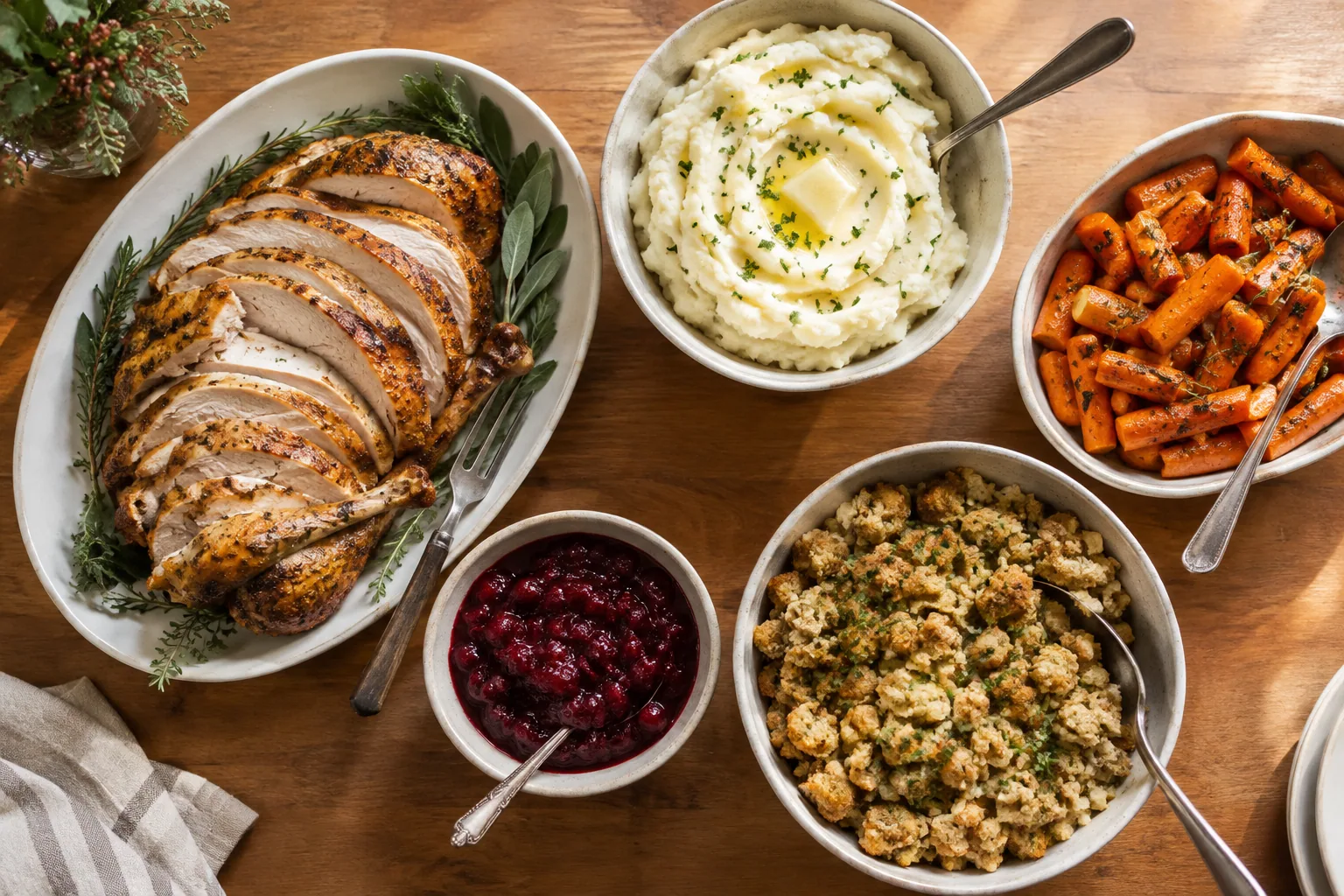
You can build a gluten-free Thanksgiving meal around plain turkey, mashed potatoes, roasted vegetables, cranberry sauce, gluten-free stuffing, gravy thickened without wheat, and a gluten-free dessert. The basic meat, fruit, and vegetables are naturally gluten-free, but added sauces, seasonings, broth, bread, and toppings need checking before they go in your cart.
Gluten-free foods for a complete Thanksgiving menu
Use this menu as your starting shopping list. Naturally gluten-free ingredients do not make every prepared version gluten-free, so match each dish to its label check.
| Dish | Naturally gluten-free base or required substitution? | What to buy | Main gluten-related check |
|---|---|---|---|
| Roast turkey | Plain, unseasoned turkey is naturally gluten-free | Plain turkey, oil or butter, herbs | Added solutions, marinades, seasoning packets, stuffing, and included gravy |
| Mashed potatoes | Potatoes are naturally gluten-free | Potatoes, milk or suitable alternative, butter | Instant mixes, broth, and flavored additions |
| Roasted vegetables | Plain vegetables are naturally gluten-free | Carrots, Brussels sprouts, squash, oil | Seasoning blends, glazes, and sauce packets |
| Cranberry sauce | Cranberries and sugar are naturally gluten-free | Fresh cranberries and sugar, or prepared sauce | Added flavorings and mix-ins in prepared versions |
| Stuffing or dressing | Traditional bread needs replacing | Gluten-free stuffing mix or bread, broth, onion, celery | Gluten-free status of bread, broth, and optional sausage |
| Gravy | Ordinary wheat-flour gravy needs replacing | Cornstarch or a labeled gluten-free flour blend, suitable broth | Broth, drippings, gravy mixes, and thickener |
| Pumpkin pie or fruit crumble | Crust or topping needs a gluten-free recipe | Gluten-free crust, or fruit and labeled gluten-free oats | Filling, cookie crumbs, flour, oats, and toppings |
You do not need a specialty substitute for every dish. A menu built around plain ingredients, with targeted swaps for stuffing, gravy, and dessert, follows the same approach used in this collection of gluten-free Thanksgiving dishes.
Check the turkey, broth, and gravy ingredients
Choose the turkey by its ingredients, not its holiday packaging
A plain, unseasoned turkey is the simplest starting point. An injected, self-basting, marinated, or preseasoned bird has additional ingredients to review, and a turkey stuffed with conventional bread is not a gluten-free choice.
Look for wording such as “contains a solution of,” then read the solution’s ingredients. Check any separate seasoning or gravy packet too. “Natural flavors” is not another name for gluten, but it also does not tell you enough by itself to resolve an unclear product.
If the ingredients leave you unsure, choose a clearly labeled gluten-free option or contact the manufacturer before buying. Do not assume a turkey’s included gravy has the same gluten status as the meat.
Buy the broth before planning the gravy
Broth may go into the turkey pan, stuffing, mashed potatoes, and gravy. Check cartons, stock cubes, concentrates, and powdered mixes individually rather than assuming they are interchangeable.
For gravy, use cornstarch or a labeled gluten-free flour blend instead of ordinary wheat flour. Follow a gravy recipe written for your chosen thickener, including its liquid amounts and mixing method; different thickeners do not behave identically. Use drippings only from a turkey prepared without gluten-containing stuffing, coatings, or seasonings.
Main-dish and gravy checklist:
- [ ] Plain turkey, or a turkey with verified suitable added ingredients
- [ ] Gluten-free broth, stock, or concentrate
- [ ] Cornstarch or the gluten-free flour blend specified by your recipe
- [ ] Butter or oil, herbs, and checked seasoning blends
- [ ] Separate review of any included gravy or seasoning packet
Choose gluten-free stuffing and bread substitutes
Pick one stuffing route before shopping so you buy the right bread or grain and enough liquid for that recipe.
| Route | What to buy | What to follow |
|---|---|---|
| Packaged stuffing mix | Labeled gluten-free mix plus its listed additions | Package directions and serving yield |
| Bread-cube stuffing | Gluten-free bread, broth, onion, celery, herbs | A recipe written for gluten-free bread, including drying or toasting instructions |
| Rice-based dressing | Rice, broth, vegetables, herbs, optional additions | A rice-dressing recipe with its own liquid amounts and yield |
Traditional stuffing uses wheat-bread cubes; gluten-free stuffing uses gluten-free bread that is diced and dried or toasted. You do not necessarily need a special stuffing loaf, but the bread must be gluten-free and prepared as the recipe directs.
Check supporting ingredients too: broth, sausage, seasoning blends, and packaged sauces can change the dish’s suitability. Choose your recipe and serving yield first, then copy its quantities onto your list rather than substituting bread or rice by guesswork.
Picking out visible bread does not make conventional stuffing gluten-free. The bread has already mixed with the broth, vegetables, and other ingredients. Prepare the gluten-free version separately from the start, preferably in its own baking dish.
Build side dishes without hidden gluten
Plain potatoes, sweet potatoes, green beans, and other vegetables give you flexible options. The ingredients added for creaminess, crunch, or convenience are where you need a closer look.
| Side dish | Ingredient or preparation to check | Practical swap |
|---|---|---|
| Mashed potatoes | Instant potato mixes, gravy, flavored additions | Mash plain potatoes with butter and milk or suitable alternatives |
| Sweet potato casserole | Flour-based topping, cookie crumbs, packaged topping mixes | Use a gluten-free topping recipe and checked ingredients |
| Green bean casserole | Condensed cream soup and conventional crispy fried onions | Use labeled gluten-free cream soup or a homemade sauce thickened without wheat, plus labeled gluten-free fried onions or breadcrumbs |
| Roasted vegetables | Seasoned frozen packs, glaze packets, sauce mixes | Buy plain vegetables and add oil, herbs, and salt |
| Cranberry sauce | Flavorings and mix-ins in prepared sauces | Make a simple cranberry-and-sugar sauce or review the prepared product |
For green bean casserole, check both the sauce and the topping. Replacing only the fried onions leaves the soup unresolved; replacing only the soup leaves the topping unresolved.
Gluten-free substitutions can still contain milk, eggs, soy, or nuts. If your guests avoid other ingredients, check those separately rather than treating “gluten-free” as a complete answer. This guide to what free-from labels do and do not tell you explains that distinction.
Pick desserts and baking ingredients
Choose the dessert before buying a flour blend. A recipe written for a particular blend is a better plan than assuming every gluten-free flour will work in an ordinary pie or cake recipe.
| Dessert | What to buy | What still needs checking |
|---|---|---|
| Gluten-free pumpkin pie | Labeled gluten-free crust or ingredients for a gluten-free crust recipe | Pumpkin filling mix, spices, and toppings |
| Crustless pumpkin dessert | Ingredients for a recipe specifically written without a crust | Flour or other binders in the filling and any garnish |
| Fruit crumble | Fruit, labeled gluten-free oats, and the recipe’s specified flour or starch | Oats, spice blends, and toppings |
| Packaged gluten-free dessert | A labeled gluten-free pie, cake, cookies, or other dessert | Other allergens and preparation or serving instructions |
Ordinary pie crust, conventional cookie crumbs, and wheat flour need replacing. Check for barley malt in cookies, crumb bases, and other packaged dessert ingredients as well.
For an oat crumble, buy oats labeled gluten-free, not just a container of plain oats. For a crustless pumpkin dessert, use a crustless recipe rather than simply pouring any pie filling into a dish and assuming the result will bake the same way.
At a bakery counter, ask about the ingredients and shared handling: preparation surfaces, trays, cutting tools, and display utensils. If staff cannot explain how the dessert is made and handled, a clearly labeled packaged option may be easier to evaluate.
Turn the menu into a grocery checklist
Choose one dish in each menu category, then transfer the exact quantities from your selected recipes. Cross out optional items before shopping so you do not buy several substitutes for the same job.
The plain staples below are naturally gluten-free starting ingredients. Packaged foods, including flavored versions of those staples, need a gluten-free label or closer ingredient review.
| Store section | Plain staples | Packaged products to check |
|---|---|---|
| Produce | Potatoes, sweet potatoes, onions, celery, green beans, carrots, squash, cranberries, apples, fresh herbs | Seasoned vegetable kits, prepared toppings, sauce packets |
| Meat | Plain, unseasoned turkey | Injected or basted turkey, sausage, gravy packets |
| Chilled foods | Plain milk, butter, eggs, as your recipes require | Flavored spreads, refrigerated dough, prepared mashed potatoes |
| Pantry ingredients | Rice, oil, sugar | Broth, stock cubes, stuffing mix, cranberry sauce, cream soup, seasoning blends, crunchy toppings |
| Baking supplies | Cornstarch, plain fruit for filling | Gluten-free bread, pie crust, flour blend, labeled gluten-free oats, cookie crumbs, filling mixes, desserts |
Read beyond a wheat-free claim
Wheat-free is not the same as gluten-free. Wheat, barley, and rye are gluten sources, so a product can exclude wheat while still containing another gluten-containing grain. Use this background guide to gluten if you need help separating the terms on your list.
For a practice label check, imagine a dessert topping marked “wheat-free” with these ingredients: “rice flour, sugar, barley malt extract, oil.” The barley malt extract means that wheat-free claim does not make it a gluten-free choice; rye flour would also be a problem, as would wheat flour. This is an illustrative example, not a label from a particular product.
Use this order in the aisle:
- Look for a gluten-free claim on products such as stuffing, bread, oats, gravy, and dessert mixes.
- Read the ingredient list, checking for wheat, barley, rye, and malt ingredients that need clarification.
- Check any other allergens you or your guests avoid.
- If the information remains unclear, choose another product or ask the manufacturer.
Recipes change, and the current package label is the final authority. Recheck familiar products rather than relying on last Thanksgiving’s purchase.
If barcode scanning helps you sort through packaged ingredients, Bokha can help identify gluten, wheat, other supported allergens, traces, and additives. It is an optional shopping aid, not a medical device or a guarantee that a product is suitable. See how a gluten-free barcode scanner can support package checks before you shop.
Keep gluten-free dishes separate when serving
Plan the serving setup before food reaches the table. A dish made with suitable ingredients can still pick up gluten from shared preparation or serving tools.
- Clean preparation surfaces, cookware, and utensils before starting.
- Use separate utensils for conventional stuffing, rolls, and gluten-free dishes.
- Use a fresh butter or spread container, or set aside a clean portion before crumb-covered knives reach it.
- Keep conventional bread and stuffing away from gluten-free serving dishes.
- Give every dish its own serving spoon and identify which dishes are gluten-free.
- Set aside portions for the person avoiding gluten before buffet service begins.
- If a serving spoon moves between dishes, do not assume removing visible crumbs fixes the affected food.
Cooking does not remove gluten. If you need help scheduling separate preparation and storage, use this meal-prep organization guide to turn your chosen menu into a workable kitchen plan.
FAQ
Can I make gluten-free Thanksgiving dishes ahead and freeze them?
Yes, many gluten-free dishes can be made ahead, but freezing instructions and texture depend on the recipe. Choose recipes with make-ahead guidance, cool and package food promptly, and label each container with the dish and date. Keep crunchy toppings separate when the recipe recommends it, and follow its thawing and reheating directions.
What should I ask a host before bringing a gluten-free Thanksgiving dish?
Ask which dishes contain gluten, what broth and seasonings they use, and whether you can have a separate serving utensil and space away from bread or stuffing. You can say, “I’ll bring a gluten-free side in its own dish with a serving spoon. Could we set aside a portion before the buffet opens?” Confirm those arrangements before you finalize your grocery list.