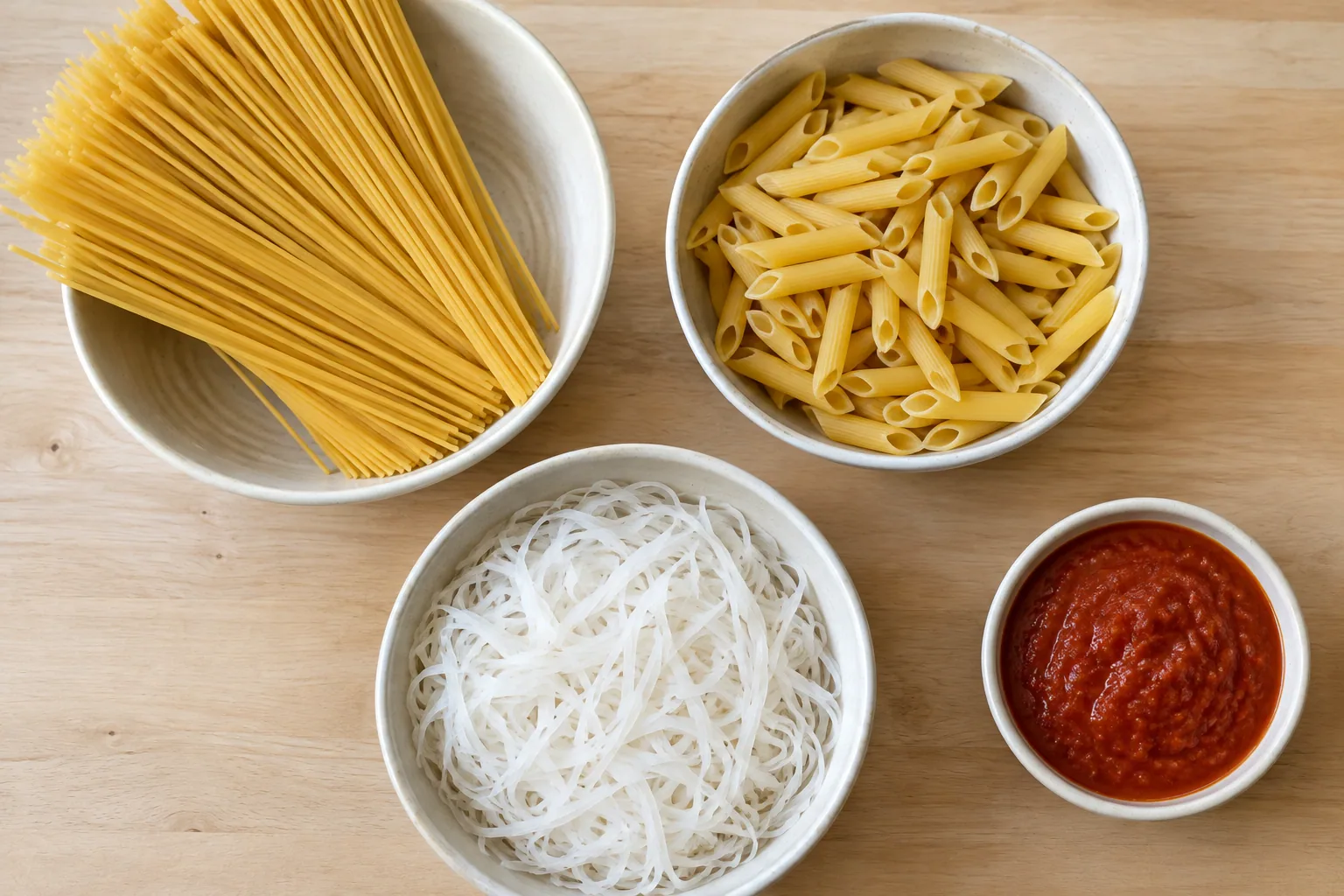
Many dried durum-wheat pastas are made with semolina and water, without egg. Fresh pasta and egg noodles often contain egg, but these are starting points, not guarantees: check the exact package before buying.
Which pasta is usually made without eggs?
Start with plain dried spaghetti, penne, fusilli or elbow macaroni. Many versions have no egg ingredients, but shape alone tells you nothing about the recipe. Fettuccine, for example, can be a dried wheat pasta or an egg-based pasta.
Rice noodles and legume-based pasta are other options to investigate. Gluten-free pasta needs its own check because a recipe without wheat can still contain egg.
Keep these three kinds of information separate:
- No egg ingredients listed: Egg does not appear in the declared recipe. This does not describe manufacturing conditions.
- An explicit egg-free claim: The manufacturer specifically describes that product as egg-free. Check that the claim applies to your exact pack.
- Cross-contact information: Statements about shared equipment, facilities or possible traces address a different question from the ingredient list.
Do not treat one as a substitute for the others.
Compare common pasta types before choosing
Use this table to decide which packages to inspect first, rather than to approve an entire category.
| Pasta type | Usual base ingredients | What specifically needs checking |
|---|---|---|
| Dried semolina pasta | Durum-wheat semolina and water; some versions include enrichment ingredients | Egg in the recipe, flavored variations and egg-related precautionary statements |
| Fresh pasta | Wheat flour, water and often egg | Egg, egg yolk or egg white in the dough, including refrigerated and frozen products |
| Egg noodles | Wheat flour and egg | These generally contain egg; choose a different product with a checked ingredient list |
| Rice noodles | Rice flour and water; some include other starches | Added ingredients, seasonings and egg-related warnings |
| Legume pasta | Chickpea, lentil or other legume flour, sometimes with additional ingredients | The complete flour or starch blend, any egg ingredients and precautionary wording |
| Gluten-free pasta | Rice, corn, legumes or other gluten-free flour and starch blends | Egg used in the formulation; “gluten-free” does not mean egg-free |
| Filled pasta | Dough surrounding cheese, meat, vegetables or another filling | Egg in either the dough or filling, plus any included sauce |
Ravioli and tortellini need two ingredient checks within the same list: one for the dough and one for the filling. A vegetable filling does not establish that the dough is made without egg.
Packaged pasta options to check, without brand-wide promises
The ranges below are shopping leads, not a current, manufacturer-verified product shortlist. Exact U.S. pack sizes, ingredient lists, egg claims and precautionary wording are not confirmed here, so none is presented as an approved purchase.
| U.S. shopping lead | Option to investigate | What to establish on the exact pack |
|---|---|---|
| Barilla classic wheat pasta | A conventional dried spaghetti or penne | Whether the recipe lists egg and whether there is egg-related precautionary wording |
| Barilla gluten-free pasta | A gluten-free alternative to wheat pasta | The full formulation and whether that specific product carries an explicit egg-free claim |
| Banza pasta | A legume-based alternative | The exact ingredients, egg-related wording and any current manufacturing statement |
| Tinkyada brown rice pasta | A rice-based alternative | The exact ingredients and any current egg-free or facility claim applying to that product |
Do not extend a claim from one shape, range or package to another. A brand can sell products with different recipes and manufacturing arrangements.
For a repeat purchase, save a photo of the product name, pack size, ingredient panel and allergen wording. Add the date you checked it. This gives you a specific product to ask about rather than relying on a brand name alone.
How to check a pasta package for egg
Use the same sequence for each package, including products you have bought before.
- Read the full ingredient list. Look for egg, egg white, egg yolk, albumen and ovalbumin. Check ingredients in parentheses, especially in fillings, flavorings and bundled sauces.
- Read any allergen declaration. A statement such as “Contains: Egg” identifies egg as an ingredient. Do not use a separate allergen box as a replacement for reading the full list.
- Inspect precautionary statements. Look for wording such as “may contain egg,” “made on shared equipment” or “made in a facility that also processes egg.” These describe possible cross-contact, not an intentional recipe ingredient.
- Match claims to the exact product. Confirm the shape, pack size and market when checking a website or contacting the manufacturer.
- Ask rather than guess. If the package and online information conflict, or manufacturing information is unclear, seek clarification before deciding.
Warning formats vary by market. No “may contain” statement does not establish that cross-contact is absent, and different precautionary phrases should not be treated as a reliable ranking of risk. The guide to precautionary allergen labels explains these distinctions in more detail.
A useful manufacturer message is: “For [product name, size, barcode and lot code] sold in [country], does the recipe contain egg? Is it made on equipment that also handles egg, and what egg cross-contact information applies to this pack?”
Recipes change, and the package label is the final authority for the product you are buying. If you need help deciding which cross-contact information fits your avoidance needs, ask your allergy professional.
For help comparing packages, Bokha lets you scan pasta and sauce barcodes for egg, other supported allergens, traces and additives. It is a shopping aid, not a medical device or a safety guarantee; use it alongside the label.
See how an egg barcode scanner can support your shopping checks, or use the egg allergen reference for further background.
Check sauces, fillings and meal kits separately
Pasta without egg does not make the whole dish egg-free. Carbonara-style sauces commonly use egg, some pesto recipes include it, and stuffed-pasta fillings can contain egg even if the dough does not.
Check every sauce sachet, topping and seasoning packet in a meal kit. If you buy plain noodles and a separate sauce, read both packages rather than assuming the sauce matches the pasta’s dietary claims.
Simple combinations give you fewer components to check:
- Dried spaghetti with tomato sauce and vegetables.
- Penne with olive oil, garlic and roasted vegetables.
- Rice noodles with vegetables and a separately checked sauce.
- Legume pasta with a checked tomato-based sauce.
Check each packaged component independently. Keep other restrictions separate too: egg-free does not mean dairy-free, wheat-free or gluten-free. For sauces and seasonings beyond the pasta aisle, use these tips for spotting allergens in ingredients from different cuisines.
Cooking pasta without egg for familiar dishes
You can use checked dried pasta in spaghetti dishes, pasta salads and baked pasta. For a recipe written for fresh egg pasta, follow the replacement pasta’s own cooking directions rather than copying the original cooking time.
- Spaghetti dishes: Cook the replacement according to its package, then combine it with a separately checked sauce.
- Pasta salads: Check the dressing as well as the pasta, especially if it contains mayonnaise or another egg-based ingredient.
- Baked pasta: Follow any package directions for baking or precooking. Do not assume every alternative needs the same time in boiling water.
- Egg-noodle dishes: Try a checked dried wheat shape, rice noodle or legume pasta, recognizing that the texture will differ. Replacing the noodles does not remove egg from the sauce.
Rice and legume pastas can behave differently from wheat pasta, so follow the individual package’s guidance on cooking, draining and rinsing. Changing the cooking time will not necessarily reproduce the texture of fresh egg pasta.
If your household also prepares egg-containing pasta, use clean preparation surfaces, utensils and colanders. Do not reuse the egg pasta’s cooking water or transfer your checked pasta into an unwashed serving bowl.
FAQ
Is egg free pasta vegan?
Not necessarily. Pasta without egg may still contain milk, cheese, meat or other animal-derived ingredients, especially in fillings and sauces. For a vegan meal, check the full ingredient list of the pasta and every accompanying component rather than relying on an egg-free claim.