Chocolate chips described as allergen-free are made without specified allergens, not every possible allergen. Choose a bag by its exact ingredients, named exclusions, and manufacturing statements, then check that its size and melting behavior suit your recipe.
Which chocolate chips should you consider?
Enjoy Life, Pascha, and Free2b are starting points for your search, not blanket recommendations. Don’t extend a claim from one brand’s mini chips to its chunks, flavored chips, or other chocolate products.
A useful shortlist needs exact product variants, not just brand names. Before treating any option as a match, collect these details from the package and the manufacturer’s current information:
- Product name and chip size: Include the chocolate type, such as semisweet mini chips or dark chocolate chunks.
- Full ingredients: Copy the list rather than summarizing it as “chocolate and sugar.”
- Named exclusions: Record which allergens the manufacturer explicitly says the product excludes. Missing information is not a confirmed exclusion.
- Manufacturing statement: Keep the exact wording about shared equipment, facilities, or dedicated production.
- Country of sale and date checked: Compare information intended for your market, and note when you checked it.
This guide uses U.S. labeling rules for the checks below. Don’t assume a product sold under the same brand in another country has the same formulation or manufacturing statement.
Match each free-from claim to your exclusions
Front-of-package claims answer different questions. Use this table to decide what still needs checking.
| Claim | What it addresses | What you still need to check |
|---|---|---|
| Dairy-free | A claim about dairy exclusion | Milk-derived ingredients and milk cross-contact information |
| Peanut-free | Peanuts specifically | Tree nuts and their manufacturing statements separately |
| Tree-nut-free | Tree nuts covered by the claim | Peanuts separately, plus the claim’s exact scope |
| Soy-free | Soy exclusion | Ingredient details, including lecithin, and manufacturing information |
| Vegan | Ingredients of animal origin | Allergen exclusions and cross-contact statements |
| Gluten-free | Gluten | Milk, soy, peanuts, tree nuts, and any separate wheat exclusion you need |
Milk allergy and lactose intolerance are different concerns: milk proteins and milk sugar are not interchangeable label checks. A lactose-related claim should not be treated as a milk-protein exclusion.
In the U.S., the nine major allergens are milk, egg, fish, crustacean shellfish, tree nuts, peanuts, wheat, soy, and sesame. The FDA explains the major-allergen labeling requirements, but those nine do not cover every possible food allergen.
“Top 9” and “top 14” refer to different allergen lists, not universal freedom from allergens. Read the actual list behind the claim, particularly on imported products. For more examples of what a front label leaves unanswered, see our guide to the limits of free-from claims.
Check milk ingredients, lecithin, and added flavors
Read the full ingredient list even when the front says “dark,” “plant-based,” or “dairy-free.” Use these chocolate-specific checks:
- Milk powder, whey, and butterfat: These are milk-derived ingredients. Dark chocolate can contain milk.
- Cocoa butter: This is cocoa fat, not dairy butter. Its name alone is not evidence of milk.
- Soy lecithin: The stated source is soy. Don’t overlook it because it appears near the end of the list.
- Sunflower lecithin: Its named source differs from soy lecithin, but it does not establish that the whole product is soy-free.
- Unspecified lecithin: Don’t guess its source. Check the allergen declaration and ask the manufacturer if your question remains unresolved.
- Nut fillings and flavored inclusions: Review the ingredients inside fillings, cookie pieces, or other additions, not just the chocolate portion.
Lecithin is an emulsifier; that does not make every emulsifier an allergen. Our lecithin ingredient guide can help you recognize it while comparing labels. If you need an individual decision about soy lecithin and soy allergy, ask your allergy professional.
A dairy-free claim also deserves a manufacturing check. FDA sampling found undeclared milk in some chocolate products labeled dairy-free, so the front label should not be your only decision point.
Separate ingredient exclusions from cross-contact statements
An ingredient list tells you what is intentionally used. A “may contain” warning, shared-equipment statement, or dedicated-facility claim addresses a different question: possible cross-contact during production.
| Statement | What it tells you | What it does not establish |
|---|---|---|
| “Made without milk” | A stated ingredient exclusion | Whether milk is handled on the line or in the facility |
| “May contain milk” | A precautionary warning | A measured amount or frequency of milk presence |
| “Made on shared equipment” | Equipment is shared within the statement’s scope | Whether an allergen is present in a particular bag |
| “Made in a dedicated facility” | A manufacturing claim with a defined scope | Exclusion of allergens the statement does not name |
U.S. precautionary allergen statements are voluntary. Their wording does not reliably rank actual allergen presence, and no warning is not proof of no cross-contact, as explained in the FDA’s discussion of allergen labeling.
When information is unclear, send the manufacturer a focused question:
“I’m checking [full product name, package size, and barcode], sold in [country]. Which allergens share its production line? Does your published allergen and facility statement apply to this exact variant in this country?”
You can also ask how shared equipment is cleaned and how those procedures are verified. Don’t substitute a general brand FAQ for a product-specific answer. Our guide to precautionary allergen statements explains the wording you may encounter.
Choose the chip size your recipe needs
Once a product matches your label requirements, compare its baking format.
| Format | Useful for | Recipe check |
|---|---|---|
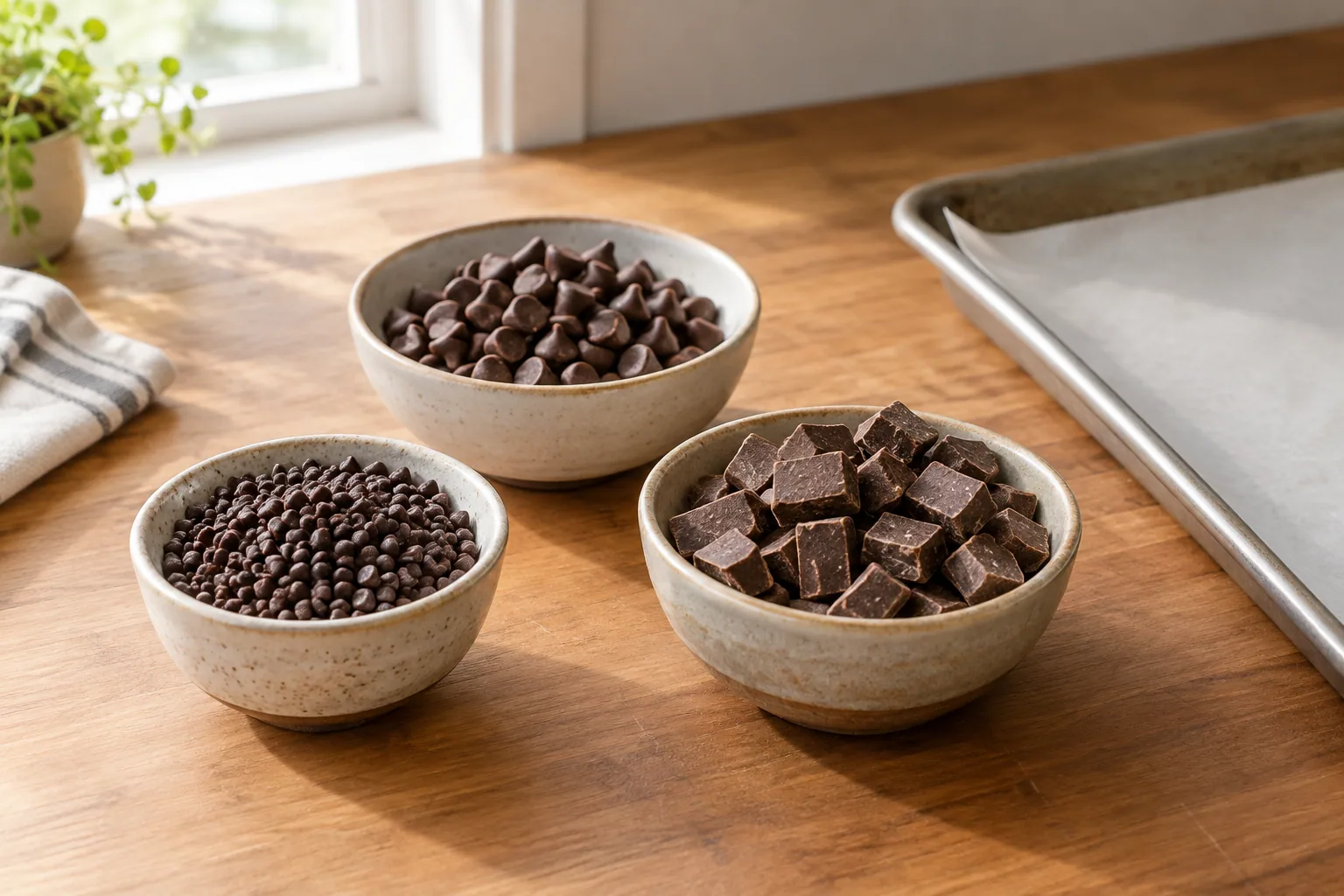
| Mini chips | Smaller cookies, muffins, and more even chocolate distribution | Confirm the recipe’s amount rather than estimating by chip count |
| Standard chips | Cookies and general baking | Match the recipe’s chocolate type and sweetness where possible |
| Chunks | Larger chocolate pockets | Check that larger pieces suit the dough or batter |
Chips designed to hold their shape may melt differently from baking chocolate. For a smooth coating, ganache, or drizzle, check the exact product’s melting directions rather than assuming every chip is interchangeable.
When substituting, compare the recipe’s specified weight, chocolate type, and intended use. A dark chip, semisweet chip, and white baking chip can change sweetness and appearance even if all meet your exclusions.
Check the rest of the bake, too: flour, butter substitutes, flavorings, decorations, and shared utensils or baking equipment. Choosing suitable chips does not resolve the other ingredients or preparation conditions.
Use this final supermarket checklist
Before putting a bag in your cart:
- Match the variant and country. Check the full name, chip size, and package you are actually buying.
- Read every ingredient. Include ingredients within fillings and flavored additions.
- Read the allergen and manufacturing statements. Keep ingredient exclusions separate from cross-contact information.
- Resolve missing information. Contact the manufacturer before choosing if a statement does not answer your specific question.
- Check the recipe fit. Confirm the amount, chocolate type, and whether the chips need to hold their shape or melt smoothly.
Recipes change, and the package label is the final authority.
For an optional second check, Bokha lets you scan barcodes on iOS or Android to flag supported allergens, traces, and additives. This guide to barcode scanning for packaged foods explains its role as a shopping aid, not a medical device or a guarantee of safety; a lactose flag does not replace checking for milk proteins.
Pick up your candidate bag, turn it over, and compare its ingredient and manufacturing statements with your own exclusion list before adding it to the cart.