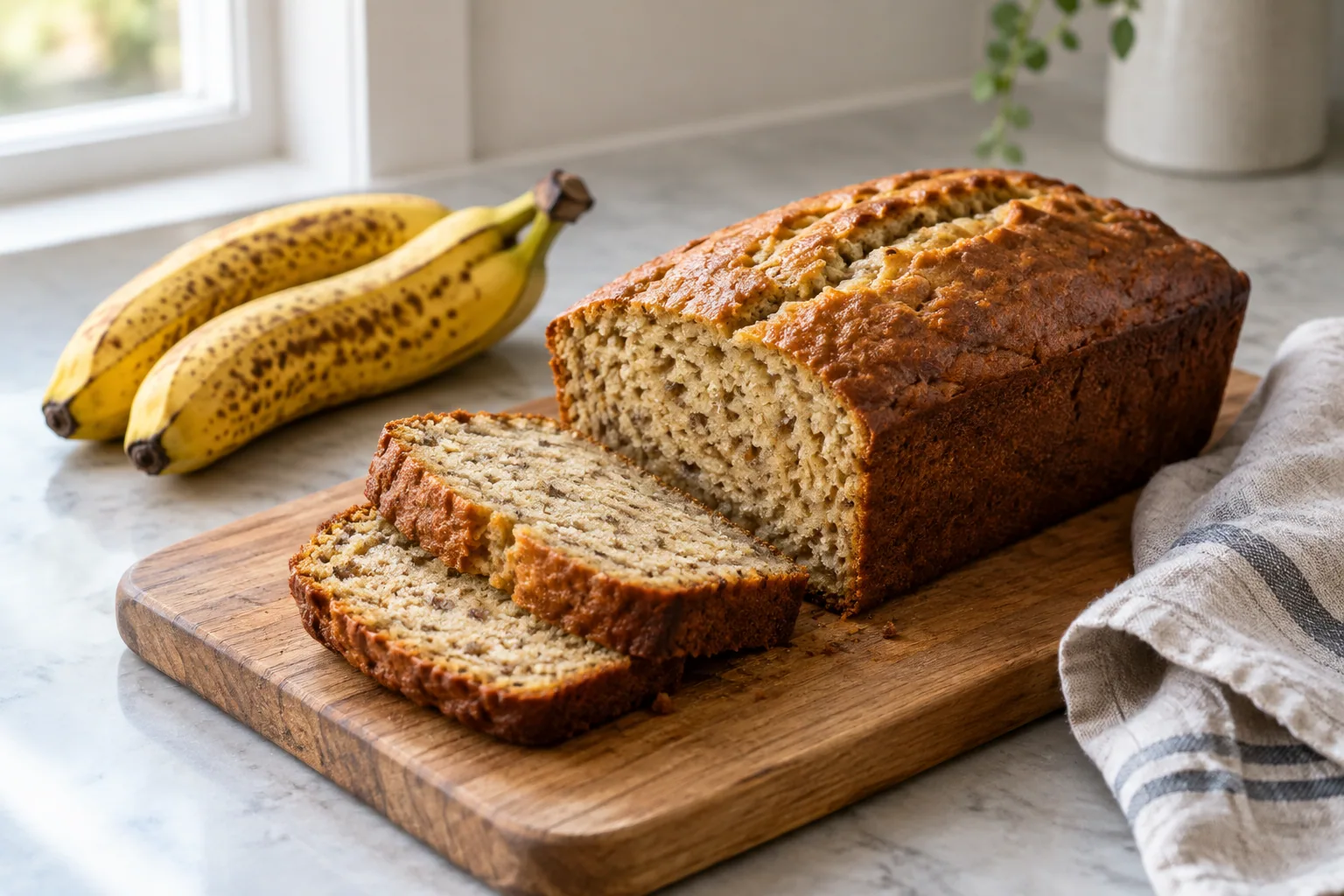
You can make banana bread without eggs or a commercial egg replacer using ripe bananas and familiar pantry ingredients. For dependable results, choose a recipe formulated without eggs rather than simply leaving them out of another recipe: the balance of banana, flour, fat, and liquid still matters.
Start with a recipe designed to work without eggs
An egg-free loaf can use ripe bananas, all-purpose flour, sugar, oil, baking soda, and salt. But an ingredient list alone isn’t a complete recipe. Before mixing, make sure your chosen recipe specifies:
- Mashed banana by weight, not just “three bananas.”
- Flour and sugar amounts in grams and US measurements.
- The exact oil quantity and any additional liquid or leavening.
- Loaf pan dimensions, oven temperature, and a baking-time range.
- Doneness cues and cooling instructions.
Don’t combine the wet ingredients from one recipe with the dry ingredients from another. And don’t add an egg substitute to a recipe already designed without eggs unless its instructions call for one.
Measure ripe bananas and keep substitutions limited
Use bananas with heavily spotted skins and soft flesh rather than firm, green-tinged fruit. Mash them before measuring so whole pieces and air gaps don’t distort a cup measurement. If your recipe gives a gram amount, weigh the peeled, mashed banana directly into a bowl.
Bananas contribute moisture and help give the loaf body, but they aren’t a universal replacement for eggs. Adding extra banana to compensate for missing eggs can leave the center too wet.
Keep flour, fat, and liquid consistent
For your first loaf, use the flour and fat named in the recipe. A gluten-free flour blend, melted butter, and oil aren’t automatically interchangeable, and adding milk because the batter looks thick can upset the moisture balance.
Egg-free doesn’t automatically mean dairy-free, gluten-free, or nut-free. Check every ingredient against your own avoidance needs, including the flour, fat, flavorings, and additions.
If you want chocolate chips, follow a recipe that specifies an addition amount rather than pouring them in freely. Use this guide to checking chocolate chips for your specific allergen needs before choosing a bag.
For a different pantry-based breakfast, keep this egg-free pancake recipe handy rather than trying to turn banana bread batter into pancakes.
Prevent a wet center before the loaf reaches the oven
A few preparation checks make troubleshooting much easier:
- Preheat the oven fully. Put the loaf in only after it reaches the recipe’s temperature. An oven thermometer can help you check a suspected temperature mismatch.
- Use the specified pan size. A smaller pan makes a deeper loaf, so the center may still be wet when the outside looks baked.
- Measure banana and other liquids carefully. Don’t add an extra banana just to use it up.
- Mix only until combined. Once the flour is incorporated, stop rather than beating the batter smooth.
- Check the center, not just the crust. A browned top doesn’t prove the middle is baked.
Look for moist crumbs, not wet batter
Insert a skewer into the center of the loaf. A few moist crumbs are different from a coating of wet, paste-like batter. If you hit a chocolate chip, check another spot.
If the top is browning before the middle is done, loosely cover it with foil and continue checking. Don’t increase the oven temperature to hurry the center along.
A sunken loaf can result from an underbaked center or an imbalanced batter. For your next batch, check your banana measurement, pan size, and oven temperature before changing the recipe.
Let the loaf cool before judging its texture
Follow the recipe’s pan-cooling instructions, then transfer the loaf to a rack. Cutting while it’s hot can make a moist crumb compress and fall apart, so wait until it has cooled before slicing.
If a fully cooled loaf still crumbles, review your flour measurement and any substitutions. Don’t assume another spoonful of banana or oil will fix it.
Cool completely before wrapping or freezing
Let the loaf cool completely before wrapping it so trapped steam doesn’t leave the surface damp. For longer storage, wrap it well to exclude air and freeze it; general baked-goods guidance supports a freezer window of about two to three months.
Slice before freezing if you want individual snacks. Separate the slices with parchment, place them in a freezer container or bag, and label with the baking date. Thaw a portion at room temperature; if you prefer it warm, reheat gently and check frequently to avoid drying it out.
Use the finished recipe’s room-temperature storage instructions rather than assuming every banana bread keeps for the same number of days. Fresh toppings or perishable fillings can change those instructions.
For a packed snack, put a cooled slice in a clean container. Check the destination’s food policy separately: homemade bread without eggs doesn’t automatically meet every school’s requirements.
Check packaged ingredients for egg before baking
Read the full ingredient list, any “Contains” statement, and precautionary wording such as “may contain egg.” Ingredients that warrant attention include egg white, egg yolk, albumin, ovalbumin, and lysozyme, as outlined in this egg-avoidance ingredient guide.
Check packaged additions individually:
- Chocolate chips and decorations: Read the ingredients and advisory statements, even if you’ve bought the brand before.
- Baking mixes: Check both what’s in the mix and what the preparation directions require you to add.
- Commercial egg replacers: Review their own ingredients and cross-contact information. The product name isn’t enough.
- Vegan products: Vegan positioning doesn’t guarantee the absence of egg cross-contact.
Recipes change, and the package label is the final authority. If the wording leaves you uncertain, ask the manufacturer about the specific product and its egg cross-contact controls.
At the store, Bokha can scan barcodes to help identify egg, other supported allergens, traces, and additives. It’s a shopping aid, not a medical device or a guarantee of safety; use the egg-scanning guide alongside your package checks.
Before mixing, wash shared bowls, utensils, pans, and work surfaces, and use clean measuring tools rather than ones just used for an egg-containing batter.
FAQ
Can I use frozen bananas for egg free banana bread?
Yes, but follow a recipe that gives instructions for thawed bananas, since they can release substantial liquid. Thaw them before mashing and measuring, and follow that recipe’s directions about keeping or draining the liquid. Don’t automatically add every drop or discard it all.
Can I turn this egg free banana bread into muffins?
An egg-free banana bread batter may work as muffins, but the baking time and yield won’t match a loaf. Use muffin directions supplied with your chosen recipe rather than guessing a conversion. Before mixing, check that it gives the muffin temperature, fill level, and doneness cues.