Why Some Foods Cause Allergies More Often Than Others: Science, Culture & Risk
Food allergies do not affect all foods equally. A handful of ingredients account for most severe reactions, most label warnings, and most of the day-to-day caution families live with. That is not an accident. It reflects a mix of biology, exposure patterns, cooking behavior, and food policy. In other words, some foods become allergenic more often because their proteins are especially good at provoking immune responses, because those proteins survive heat or digestion, and because people around the world eat them in ways that shape sensitization over time.
In the U.S., the scale is significant. Estimates suggest roughly 8% of U.S. children and up to 10% of adults have IgE-mediated food allergies, with global prevalence around 250 million people affected according to StatPearls on PubMed-NCBI. The CDC also reported that in 2024, about 6.7% of U.S. adults and 5.3% of children under 18 had a diagnosed food allergy. These numbers help explain why food allergy is not a niche issue, but a common public health and daily living concern.
Why Food Allergies Cluster Around Certain Foods
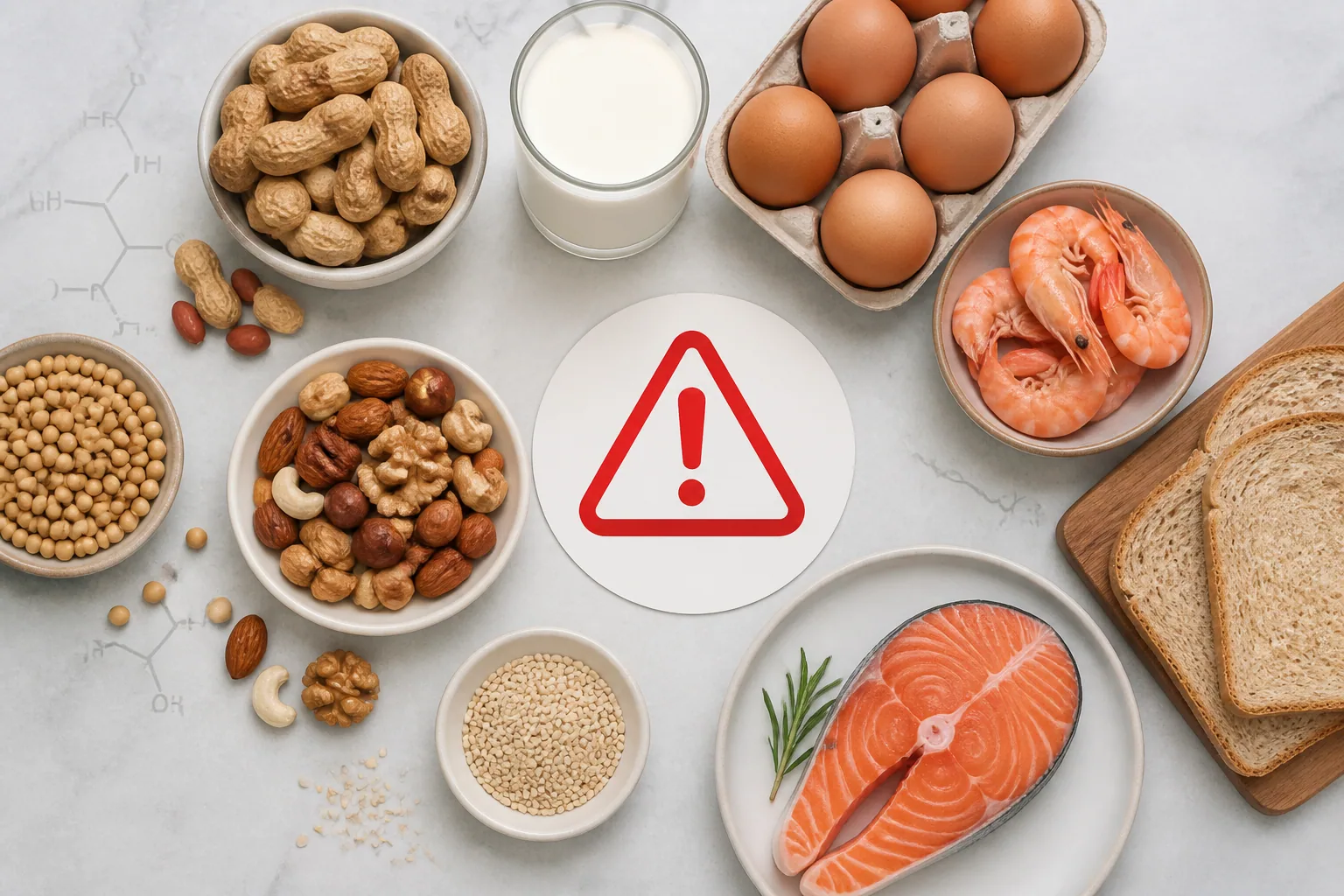
If you look at food allergy patterns long enough, the same foods keep appearing: milk, eggs, peanuts, tree nuts, wheat, soy, fish, shellfish, and sesame. That clustering is one of the biggest clues that food allergy is not random. The human immune system is not reacting to calories or flavor. It is reacting to specific proteins. Some food proteins are more likely to be recognized as threats because of their structure, how they are processed, and how they interact with the immune system.
That is also why the U.S. created a legal category of major allergens. Under FALCPA, the original “Big Eight” were milk, eggs, fish, shellfish, tree nuts, peanuts, wheat, and soybeans. Sesame was later added under the FASTER Act, effective January 1, 2023. FoodSafety.gov notes that more than 90% of documented food allergies and serious reactions in the U.S. at the time FALCPA was enacted were caused by those original eight allergens. So the law follows the biology, but also reinforces it by making those foods easier to identify on labels.
How the Immune System Decides a Food Protein Is a Threat
A food allergy usually begins with sensitization. The immune system encounters a food protein and mistakenly treats it like a danger signal. Instead of ignoring it, the body starts making IgE antibodies against that protein. On later exposure, those IgE antibodies trigger mast cells and basophils to release histamine and other inflammatory chemicals, which can cause hives, swelling, vomiting, wheezing, or anaphylaxis.
But why does this happen to certain foods and not others? One reason is that not all proteins are equally visible to the immune system. Some are stable enough to remain intact through digestion, which gives immune cells more opportunity to encounter them. Others break down quickly and are less likely to provoke a lasting response. Stability matters because the immune system often reacts to proteins that survive long enough to present themselves repeatedly in a recognizable form.
What Makes Allergenic Proteins So Potent
Allergenic proteins tend to have a few traits in common. They are often small, abundant in the food, resistant to breakdown, and structured in a way that preserves key binding sites, or epitopes. These features make them hard for the body to ignore. When a protein resists digestion, it is more likely to reach the gut immune system in a form that still looks dangerous.
Peanut allergens are a good example. Research summarized by the FDA on thresholds for major food allergens notes that thermal processing and food processing history can change allergenic potential, but some allergens remain notably resilient. Peanut proteins such as Ara h 1 and Ara h 2 are well known for resisting heat denaturation and digestion, which helps explain why peanut allergy can be so persistent and clinically important. In practical terms, roasting or cooking does not reliably make peanut proteins harmless.
Egg allergy shows a similar pattern. Ovomucoid, an egg white protein, is strongly heat stable, which is one reason some people react to baked or cooked egg and why egg allergy can persist even when other food proteins lose potency with heat. The more a protein maintains its shape under stress, the more likely it is to continue acting like an allergen.
Heat, Digestion, and Why Some Allergens Survive Cooking
Cooking changes food proteins in important ways. Heat can unfold proteins, break down structures, and make them easier to digest. For many foods, this reduces allergenicity. But not all allergens behave the same way. Some are heat labile, meaning they are easily altered by cooking. Others are thermostable and remain recognizable to the immune system even after roasting, baking, or boiling.
This difference matters in real life. A person with an allergy to one form of food may tolerate it when cooked, while another may react to the raw and cooked versions alike. Egg proteins are especially useful for understanding this pattern. Some egg-allergic patients tolerate baked egg because heating changes some proteins enough to reduce their reactivity, but ovomucoid can remain stubbornly allergenic. Peanut proteins are similarly hard to neutralize with ordinary cooking methods.
Digestion adds another layer. Enzymes in the stomach and intestines break proteins into fragments. If a protein is resistant to digestion, more of its allergy-causing structure survives. That is part of the reason allergenic potency is often linked not just to the protein itself, but to how it behaves under heat, acid, and enzymes. In food allergy, survival is not a metaphor, it is part of the mechanism.
Cross-Reactivity: When One Allergy Resembles Another
Sometimes people do not react to a food because of a true primary food allergy, but because of cross-reactivity. This is common in pollen-food allergy syndrome, also known as oral allergy syndrome. In this situation, the immune system recognizes a similar protein in a food and mistakes it for the pollen protein it already knows.
A classic example involves birch pollen. The birch pollen allergen Bet v 1 cross-reacts with Mal d 1 in apples. Research on cross-reactivity between aeroallergens and food allergens notes that about 70% of individuals with birch pollen allergy develop symptoms when eating raw fruits or vegetables. These symptoms are often mild and localized, such as itching in the mouth or throat, because the relevant proteins are labile and are usually broken down by heat and digestion.
That is why raw apple can cause a reaction while applesauce may not. The food is similar, but the protein form is not. Cross-reactivity makes allergy patterns more confusing for patients, but it also helps explain why some reactions are limited to fresh produce and why cooking can sometimes reduce symptoms dramatically.
The Most Common Food Allergies in the U.S. Right Now
The most commonly recognized food allergens in the U.S. remain milk, egg, peanut, tree nuts, soy, wheat, fish, shellfish, and sesame. Together, these ingredients represent the food allergy profile most clinicians and families encounter. They are also the foods most often required to appear on labels under federal law.
Population data show that food allergy is common in both adults and children, but not in the same way. The CDC’s 2024 estimates put diagnosed food allergy at 6.7% in adults and 5.3% in children. That does not mean the same foods cause the same problems in both groups. Childhood food allergy often centers on milk, egg, peanut, and tree nuts, while adult-onset allergy is more likely to involve shellfish, certain tree nuts, or new reactions that appear later in life.
The broader literature supports that adult food allergy is not rare or merely a childhood condition carried forward forever. A U.S. study of adults with convincing food allergy found that 48% developed at least one of their current food allergies during adulthood. That is an important correction to the common assumption that food allergies are always diagnosed early and then remain static across the lifespan.
Children vs Adults: Which Allergies Appear Early and Which Persist
Children often develop allergies to foods they eat early and frequently, especially milk, egg, peanut, and wheat. These foods are common in infancy and early childhood diets, so the immune system has many chances to encounter them. Some of these allergies can improve over time, particularly milk and egg, although persistence varies widely from person to person.
Adults, by contrast, more often present with shellfish allergy and certain tree nut allergies, and they may develop new allergies after years of tolerating a food. This can be startling, but it makes sense biologically because sensitization can arise later in life through different immune pathways or after changes in exposure patterns.
What is especially important is that food allergy is not a single disease with one timeline. It is a family of conditions with different natural histories. Some start in infancy and fade. Others start in adulthood and persist. Some are driven by digestion-resistant proteins, while others are shaped by cross-reactivity or environmental sensitization.
Which Food Allergies People Often Outgrow and Which They Usually Don’t
Milk and egg allergies are among the more commonly outgrown childhood food allergies, though not always. Many children become tolerant as their immune systems mature. That is one reason pediatric allergists often reassess these allergies over time rather than assuming they are permanent.
Peanut, tree nut, shellfish, and fish allergies are more likely to persist. Their proteins are often highly stable and clinically potent, and reactions can be severe even in small amounts. Persistence also reflects the fact that immune memory can remain highly efficient once sensitization is established.
Sesame has become especially important to watch because it now sits alongside the other major allergens in U.S. labeling law. Like peanut and tree nuts, sesame can cause serious reactions and can be easy to miss if consumers are not checking labels carefully. The legal designation reflects the growing recognition that this food is not a minor concern for allergic consumers.
How Early Exposure and Eating Habits May Influence Risk
One of the biggest shifts in allergy science over the last decade is the idea that timing matters. Exposure is not just about how much of a food someone eats, but when they eat it and in what developmental context. For some children, early introduction may reduce allergy risk rather than increase it.
A U.S. nationwide survey of infants aged 7 months to 3.5 years found that 17.2% of caregivers had introduced peanut before 7 months of age, and 41.8% between 7 and 12 months. Egg introduction before 1 year was even more common at 66.4%. The timing varied significantly by race and ethnicity and by caregiver age, which suggests that feeding practices are shaped by culture, advice, access, and family experience, not just biology.
Clinical trials support the idea that early exposure can be protective. In the LEAP-Trio follow-up, regular peanut consumption from infancy to age 5 reduced peanut allergy incidence in adolescence by 71% compared with avoidance. And in the PreventADALL trial in Norway and Sweden, early introduction of peanut, egg, milk, and wheat at 3 to 4 months reduced food allergy risk by 36 months of age, with a number-needed-to-treat of 63. These findings do not mean every infant should be fed every allergen without guidance, but they do show that the old assumption that avoidance always prevents allergy is too simple.
What Culture and Regional Diets Reveal About Allergy Patterns
Culture matters because culture shapes exposure. The foods a community eats often, starts early, or uses in daily cooking are the foods that appear most often in allergy conversations. If a food is central to a cuisine, people are more likely to be exposed repeatedly and at key developmental windows. That can influence both sensitization and detection.
Regional diet patterns also help explain why some allergens stand out more in some countries than others. For example, peanut is a major concern in the U.S., while sesame can be more prominent in cuisines where it is used heavily in oils, pastes, and baked goods. Shellfish also shows up frequently in adult allergy because it is common in many diets and because adult-onset reactions are increasingly recognized.
This does not mean culture alone causes allergy. Rather, exposure patterns, food preparation methods, genetics, and environmental context all interact. The same food can be eaten in different ways across cultures, and those differences may affect how proteins are presented to the immune system. That is one reason allergy prevalence can look different across countries even when the foods are broadly similar.
Why Peanuts, Milk, Shellfish, Eggs, and Sesame Stand Out
These foods stand out for different reasons, but they share one key trait: they can produce clinically meaningful reactions at very low exposure levels in sensitized people. Peanuts and tree nuts are packed with stable proteins that survive roasting and digestion. Milk and egg are common in childhood diets, which makes early sensitization more likely, while egg also contains heat-stable proteins like ovomucoid. Shellfish allergens are especially important in adults and can be severe. Sesame, now recognized in U.S. labeling law, has emerged as a major allergen because its reactions can be substantial and its ingredients can appear in many processed foods.
The U.S. regulatory response reflects this reality. The fact that more than 90% of serious reactions at the time of FALCPA’s enactment were linked to the original major allergens is a clear sign that these foods deserve special attention. The law does not create the allergy burden, but it makes the burden easier to manage by forcing clear disclosure.
How U.S. Law Defines Major Food Allergens
In the United States, food labeling law is designed around the foods most likely to cause serious allergic reactions. FALCPA, passed in 2004, defined the original Big Eight major allergens: milk, eggs, fish, shellfish, tree nuts, peanuts, wheat, and soybeans. Foods containing these ingredients must be disclosed in plain language so consumers can identify them quickly.
That framework was expanded by the FASTER Act, which added sesame as the ninth major allergen effective January 1, 2023. This was a major change for consumers because sesame can appear in bread, seasoning blends, sauces, tahini, and snacks under names that are not always obvious. By bringing sesame into the major allergen list, U.S. law acknowledged that the risk profile had evolved and that labeling needed to catch up.
FALCPA, the FASTER Act, and What Labels Must Disclose
For allergic consumers, label law is not trivia. It is a safety tool. Under these rules, manufacturers must clearly identify major allergens in their ingredient lists or in a nearby statement. That helps shoppers avoid hidden exposures and reduces the burden of decoding technical ingredient names.
Still, labels are only part of the picture. Cross-contact can happen during manufacturing, and precautionary statements are not always standardized in a way that makes risk perfectly clear. That means consumers often need to combine label reading with knowledge of ingredient names, product categories, and their own threshold for reactions.
This is where technology can help. Tools like Bokha: Food Allergy Scanner App, available at https://findthe.app/bokha, can speed up label checks by scanning barcodes and identifying allergens in seconds. For people managing multiple allergies or shopping in a hurry, that kind of support can make grocery trips less stressful and more efficient.
What This Means for Parents, Patients, and Prevention Questions
For parents, the most important takeaway is that food allergy prevention is no longer based on broad avoidance alone. Evidence increasingly suggests that early, appropriate introduction of certain foods may reduce risk for some children. That does not replace medical advice, especially for infants with eczema, existing allergies, or a strong family history. But it does change the conversation from fear to guided exposure.
For newly diagnosed patients, understanding why a food is allergenic can make management feel less mysterious. Some allergens are persistent because the proteins survive heat and digestion. Others trigger symptoms because they resemble pollen proteins. Some are important because they are common in the diet and therefore common in early life. Once these patterns are understood, label reading, dining decisions, and emergency planning become easier to rationalize.
For curious readers, the big picture is simple: food allergy patterns are the product of biology meeting behavior. The immune system decides whether a protein is a threat, but culture decides how often that protein is eaten, how it is prepared, and when exposure begins. Law then steps in to reduce the practical danger by making the most common allergens visible on labels.
Key Takeaways: Science, Culture, and Risk in One Picture
Some foods cause allergies more often than others because they contain proteins that are especially stable, especially abundant, or especially likely to cross-react with other allergens. Heat and digestion can reduce allergenicity for some foods, but not for all. Peanut and egg proteins, for example, can remain potent after cooking, while pollen-related fruit allergies often improve with heat because the proteins are more fragile.
Food allergy also changes with age. Children are more likely to react to milk, egg, and peanut early in life, while adults may develop new allergies later, including shellfish and some tree nuts. Some allergies are outgrown, others persist, and exposure patterns can shape risk in ways that differ across households and cultures.
Finally, U.S. labeling law exists because these allergens matter so much in real life. The Big Eight, plus sesame, are not arbitrary categories. They reflect the foods that most often cause meaningful reactions. Understanding that helps parents, patients, and shoppers make better decisions, one label, one meal, and one informed choice at a time.