Why New Food Laws in 2026 Mean You’ll Need to Scan Ingredient Labels Even More Carefully
If you already read every ingredient panel like it’s a safety checklist, 2026 may make that habit even more important. A mix of proposed federal changes, new FDA work on allergen thresholds and gluten cross-contact, and California’s restaurant disclosure law are pushing U.S. food labeling toward more detail and, hopefully, more clarity. But for people with celiac disease, food allergies, intolerances, and the caregivers shopping for them, more rules do not automatically mean fewer surprises. In practice, it means you will need to scan labels more carefully, ask better questions, and pay closer attention to how ingredients, allergens, and cross-contact are disclosed.
Why 2026 Could Be a Turning Point for Allergen Labeling
For years, food labeling in the U.S. has improved in steps rather than leaps. The FASTER Act added sesame to the list of major allergens in 2023, bringing the federal total to nine: milk, eggs, fish, crustacean shellfish, tree nuts, peanuts, wheat, soybeans, and sesame. But people with celiac disease and gluten sensitivity have long lived with a frustrating gap between what labels technically require and what shoppers actually need to know. A label may say wheat, but not whether barley or rye are present. It may list an ingredient but not make cross-contact obvious. It may offer a “may contain” statement in one product and omit one on a near-identical item.
That is why 2026 feels like a possible turning point. The conversation is no longer only about listing the biggest allergens. It is also about whether the law should force clearer disclosure of gluten-containing grains, standardized threshold-based guidance, and more transparent restaurant menu information. If these changes move forward, the label in your hand could become more informative, but also more complex to interpret.
What the Proposed Celiac Safety Act of 2026 Would Change
One of the biggest proposals on the federal side is the Celiac Safety Act of 2026, H.R. 9048, introduced in the U.S. House of Representatives on May 28, 2026. According to the Celiac Disease Foundation’s summary of the bill, it would amend the Federal Food, Drug, and Cosmetic Act to add “gluten-containing grains” to the definition of a major food allergen. That would mean wheat, barley, rye, and their hybrids would sit under one broader disclosure category.
This matters because the current system mostly singles out wheat, while barley and rye can still be harder to spot. For someone with celiac disease, that can lead to extra label reading, extra doubt, and extra risk. If the bill becomes law, any packaged food containing those grains would need to list “gluten-containing grains” in the allergen declaration. In other words, barley and rye would no longer hide in the shadows of ingredient lists as easily as they often do now.
The proposal would also allow an 18-month compliance period after enactment. That timeline is important. Manufacturers would need time to update packaging, ingredient systems, supplier documentation, and internal compliance checks. For consumers, that likely means a transition period where old and new labels overlap, so careful reading would still be necessary even after the law changes.
Could Gluten-Containing Grains Become Major Allergens?
This is one of the most important questions for people with celiac disease and gluten-related disorders. Right now, federal law clearly names wheat as a major allergen, but barley and rye are not treated the same way in the main allergen declaration. That creates a loophole in everyday shopping. A product can avoid the word wheat while still containing ingredients from barley or rye, which are still unsafe for many people who must avoid gluten completely.
If gluten-containing grains are formally recognized in the way the Celiac Safety Act proposes, the practical effect would be bigger than a simple wording change. It would push the market toward a more unified view of gluten risk. Instead of forcing consumers to mentally map every grain name to a safety decision, labels could become more consistent. That would especially help parents, caregivers, and people who shop quickly under stress or time pressure.
It would also likely influence how manufacturers think about reformulation. Once a grain family is treated as a major allergen category, companies often become more cautious with sourcing, labeling, and documentation. That does not eliminate risk, but it can raise the standard of visibility.
The FDA’s New Push for Clearer Allergen and Gluten Guidance
The federal picture is not only about Congress. In January 2026, the FDA issued a Request for Information on labeling and preventing cross-contact of gluten in packaged foods, including considerations about disclosing ingredients derived from gluten-containing grains. The agency also held a virtual public meeting and listening sessions in February 2026 on food allergen thresholds and their potential applications. That meeting focused on risk-based threshold frameworks, standardizing advisory labels such as “may contain” statements, and improving cross-contact controls.
That combination signals a broader FDA effort: move beyond only asking whether an ingredient is present, and also ask how much of an allergen matters, when advisory warnings should be used, and how manufacturers should manage unavoidable cross-contact. For consumers, this could eventually mean labels that are more standardized and easier to compare across brands. It could also mean more attention to processing details, shared equipment, and manufacturing safeguards.
The challenge is that clearer guidance does not always mean simpler shopping. Threshold-based thinking may improve safety, but it may also introduce new terms, new disclosures, and new distinctions that shoppers will need to learn. People who already scan every label may find themselves reading even more carefully, not less.
What Threshold-Based Labeling Means for Consumers
Threshold-based labeling is a big idea with everyday consequences. The basic concept is that not every tiny trace has the same health meaning, and regulators may use scientific thresholds to decide when an allergen level is meaningful enough to require action or disclosure. The FDA’s 2026 meeting on allergen thresholds suggests that this approach is being considered more seriously.
For consumers, this could eventually improve consistency. Right now, one company may use a vague precautionary statement while another uses a much more specific one, even when the production setup is similar. A threshold framework could reduce that inconsistency. It may also encourage manufacturers to base warnings more on risk than on fear of legal liability alone.
Still, threshold systems are not a free pass. A person with a severe allergy may not want to rely on fine distinctions when the stakes are high. And for celiac disease, where even small amounts of gluten can be a problem, shoppers may still prefer products with strong, explicit controls and clear certification. In other words, thresholds may help regulators and manufacturers manage risk, but consumers will still need to interpret labels in the context of their own tolerance and medical advice.
Why Cross-Contact Disclosure Matters More Than Ever
Cross-contact is one of the most frustrating parts of food shopping because it sits in the space between ingredients and contamination. A product may not intentionally include an allergen, yet it can still be exposed during manufacturing, transport, or preparation. That is why the FDA’s 2026 RFI and listening sessions matter so much: they show growing interest in how to disclose and control gluten cross-contact, not just ingredient presence.
Better cross-contact disclosure could help consumers distinguish between a food that contains an allergen as a deliberate ingredient and one that may carry accidental exposure due to shared lines or facilities. But it also raises a practical issue. Once labels become more detailed, the language can become harder to parse quickly. Shoppers may have to decide whether a statement is a serious warning, a legal formality, or a sign that a product is still safe enough for their needs.
This is why careful scanning remains essential. More disclosure is helpful only if it is read in context. If you have celiac disease or manage a serious allergy, it is not enough to see a reassuring front label. You still need to check the ingredient list, the allergen declaration, and any precautionary statement, then compare that against the product’s manufacturing history and your own risk level.
How California’s ADDE Act Could Change Restaurant Safety
Packaged food is only part of the story. California’s Allergen Disclosure for Dining Experiences Act, or ADDE Act, effective July 1, 2026, changes what chain restaurants must disclose. It applies to chain food establishments with 20 or more locations under the same name and requires written notification of the nine major food allergens for each standard menu item.
That is a major shift for dining out. Instead of asking staff to verbally remember ingredients from memory, diners may soon have access to allergen information directly on printed menus, menu boards, or digital formats. Where QR codes or other digital formats are used, a written alternative must also be available. The law also covers derivatives of allergens, such as casein for milk or a flour-based roux for wheat, while highly refined oils are generally exempt if allergenic proteins have been removed.
For families who eat out regularly, this could reduce guesswork and lower the burden on servers who are trying to answer complex questions during a busy shift. But it will not solve every problem. Menus can change, recipes can vary by location, and kitchen cross-contact still exists. Even with disclosure, diners will still need to ask how food is prepared and whether a safe option is actually practical in that restaurant.
What These New Rules Mean for Parents, Caregivers, and App Users
If you are shopping for a child, a family member, or a patient with food restrictions, these new rules may help, but they will also raise the amount of information you need to process. Parents and caregivers often have to make quick decisions in a grocery aisle, in a school setting, or while choosing takeout after a long day. More detailed labels can help, but only if you have a reliable way to interpret them fast.
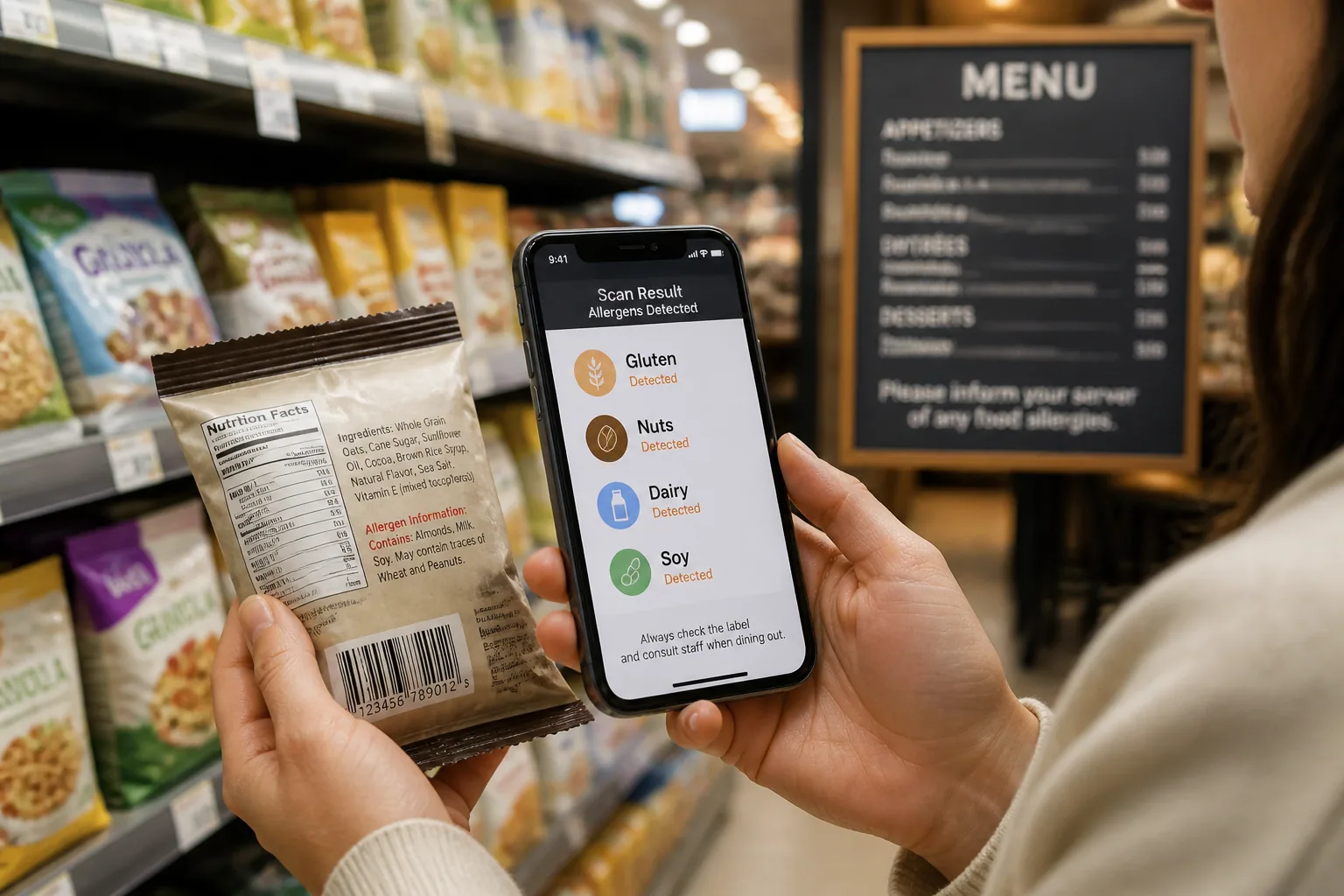
That is where food scanner apps can be genuinely useful. A product like Bokha: Food Allergy Scanner App, available on iOS and Android, lets you scan a barcode and discover allergens in less than a second. It detects 13 allergens, including gluten, lactose, peanut, egg, soy, fish, shellfish, tree nuts, wheat, mustard, celery, mint, and sulphites, along with traces and additives. For busy caregivers, that kind of shortcut can save time and reduce the chance of missing a risky ingredient.
As labels get more nuanced, an app can act as a second layer of checking. It will not replace medical judgment or a careful look at the package, but it can help you sort safer products from questionable ones more efficiently. You can learn more here: https://findthe.app/bokha
Where Food Labels May Still Fall Short in 2026
Even with better laws, there will still be gaps. A label can only disclose what the manufacturer knows, chooses to report, or is required to list. It may not capture supply chain changes made late in production, nor every possible cross-contact scenario. Restaurants may disclose allergens per menu item, but staff may still be unaware of ingredient substitutions, seasonal specials, or shared prep surfaces.
Another limitation is that legal definitions do not always match lived experience. A federal rule may identify an ingredient category, but that does not always tell you whether a food is safe for celiac disease, a non-IgE intolerance, or a severe anaphylactic allergy. The same ingredient can pose different levels of risk depending on the person. That is why consumers should be careful not to treat compliance as a guarantee.
There is also the issue of transition. During an 18-month compliance window or while new restaurant rules roll out, both old and new labeling styles may coexist. Some products will be updated quickly, others slowly. Consumers may need to stay alert for outdated packages, menu changes, and inconsistent wording across brands.
Smart Habits for Reading Labels and Eating Out Safely
The best response to all this change is not panic, but a better routine. Start with the ingredient list, then find the allergen statement, then check for any precautionary language such as shared equipment or possible cross-contact. If the product uses unfamiliar grain names, do not assume they are safe just because the front label looks clean. When in doubt, verify the source of the ingredient or choose a product that is clearly labeled for your needs.
When dining out, ask specific questions. Instead of “Is this gluten-free?” try asking whether the kitchen uses shared fryers, whether the sauce contains wheat-based thickeners, whether the menu item is prepared on separate surfaces, and whether substitutions change the allergen profile. Specific questions tend to produce more useful answers than broad ones.
It also helps to build a shortlist of trusted brands and restaurants rather than starting from scratch every time. Save products you have already vetted. Keep notes on what changed when a label changed. Use scanner tools when you are shopping quickly, especially when a package contains additives, trace warnings, or unfamiliar derivatives. The goal is not just to avoid one risky item, but to create a repeatable system that makes everyday eating less stressful.
What to Watch Next in U.S. Allergen Law
The next year or so will likely show whether 2026 becomes a real turning point or just another step in a long regulatory process. Watch the Celiac Safety Act to see whether Congress expands the federal definition of major allergens to include gluten-containing grains. Follow FDA updates on allergen thresholds, cross-contact guidance, and any movement toward more standardized precautionary labeling. And if you live in California or buy from chain restaurants there, pay attention to how ADDE Act disclosures appear on menus and ordering platforms once the law takes effect.
For consumers, the big takeaway is simple: better laws may be coming, but they do not replace careful habits. In fact, they may require them more than ever. The safest approach in 2026 will probably be a mix of reading labels closely, asking direct questions, using scanner apps to move faster, and staying informed as the rules evolve. In a food system that is becoming more transparent, the people who benefit most will be the ones who keep scanning just as carefully as before, if not more.