Why Labels Lie: Unpacking Ambiguous Terms That Can Hide Allergens
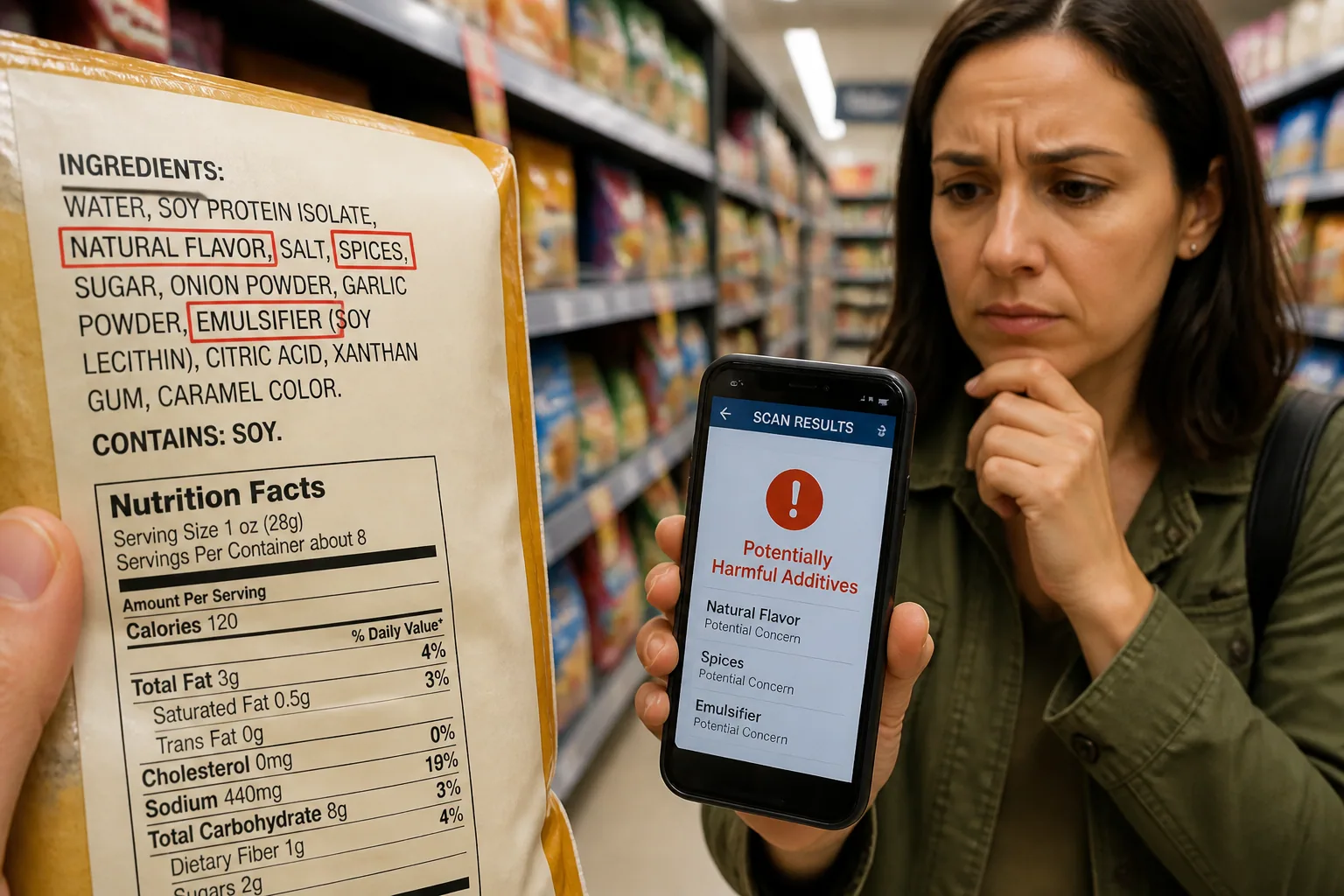
For people with food allergies, a packaged food label is supposed to be a safety tool. In practice, it can feel more like a puzzle. That is because some of the most common ingredient words on labels are not specific at all. Terms like “spices,” “natural flavor,” “flavoring,” “emulsifier,” and even “protein isolate” can legally hide a mixture of ingredients, and those mixtures may include major allergens. When you are trying to avoid a reaction, that kind of language is not just frustrating. It can be risky.
This is why label reading for allergy management cannot stop at the ingredient list. You need to understand which words are broad categories, how compound ingredients work, when regulations allow vague wording, and where allergen statements still leave gaps. The good news is that once you know what to look for, you can make label reading much smarter and safer.
Why Vague Ingredient Terms Are a Real Allergy Risk
The biggest problem with vague ingredient terms is that they can look harmless when they are not. A label may say “natural flavor” or “spices” without identifying the actual source materials inside that ingredient. Under U.S. labeling rules, those umbrella terms are often allowed, even if the hidden components include common allergens. The FDA’s regulations permit broad terms such as “natural flavor,” “flavoring,” “spice,” and “emulsifier” to appear without listing every component individually. Source: https://www.law.cornell.edu/cfr/text/21/101.22
For someone with a food allergy, that creates a dangerous information gap. A label can appear technically compliant while still concealing ingredients that matter a lot to your health. That is why reactions sometimes happen even when a product seems safe at first glance. The language is broad enough to satisfy labeling rules, but not always clear enough to protect consumers who need ingredient-level transparency.
This issue is especially serious with sesame, which became the 9th major food allergen under the FASTER Act effective January 1, 2023. Sesame must now be listed explicitly when it is present as an ingredient. But older products, existing stock, and some products still in the marketplace may not fully reflect that change yet, so seeing an outdated or vague label is still possible. Source: https://www.fda.gov/food/nutrition-food-labeling-and-critical-foods/food-allergies?lv=true
The Difference Between Component Names and Compound Ingredients
To read labels more accurately, it helps to understand the difference between component names and compound ingredients. A component name is an ingredient that stands on its own, such as salt, sugar, or wheat flour. A compound ingredient is an ingredient made from multiple ingredients, such as “seasoning,” “sauce,” or “natural flavor.”
Compound ingredients are where hidden allergens often appear. The package may list the compound ingredient name, but not each item inside it. That means the label may tell you a product contains “spice mix” without telling you whether that mix includes mustard, sesame, milk, or wheat. If an allergen is part of that mix, the manufacturer may still need to declare it, but not always in a way that is easy to spot immediately.
The FDA specifically notes that spices can be declared simply as “spices” on the finished product label. The agency also says that if a major food allergen is present in a spice mix ingredient and is an incidental additive in the finished food, it still must be declared on the label of the finished food. Source: https://www.fda.gov/media/117410/download
In theory, this should protect consumers. In real life, though, it often means you need to read very carefully, because the allergen may be disclosed somewhere else on the package, or it may be missed entirely if the label is old, incomplete, or incorrectly printed.
Common Label Terms That Can Hide Allergens
Some terms deserve extra attention every time you see them. “Natural flavor” is one of the most common because it sounds descriptive, but it can cover many different source ingredients. “Flavoring” works the same way. “Spices” is another broad term that may refer to an unspecified blend. “Emulsifier” can also be vague, especially when it is part of a processed food where the exact source matters to you.
There are also ingredient names that sound precise but still warrant caution. “Protein isolate,” for example, may sound like a purified ingredient, but the source protein could be milk, soy, wheat, or another allergen. A product listing “whey protein isolate” is not necessarily safe for someone avoiding dairy, because whey comes from milk. In a 2025 case involving Hearthy Foods, the FDA issued warning letters after its Whey Protein Isolate product failed to list milk allergen explicitly, despite containing milk protein, and the label did not disclose all ingredients. Source: https://www.fda.gov/inspections-compliance-enforcement-and-criminal-investigations/warning-letters/hearthy-foods-inc-712415-02102026
This is the core problem with label ambiguity. Some words are not wrong, but they are incomplete. They may describe a category rather than the actual allergen source. If your allergy is to sesame, mustard, milk, soy, or wheat, that missing detail can matter just as much as the rest of the ingredient list.
When Regulations Allow Ambiguous Wording
Ambiguous wording is not always a mistake. In many cases, regulations explicitly allow it. For example, the FDA allows certain flavor and spice terms to be listed broadly instead of broken down ingredient by ingredient. That can simplify labels for manufacturers, but it also shifts the burden onto consumers who must infer risk from incomplete wording. Source: https://www.law.cornell.edu/cfr/text/21/101.22
The problem is that even when a rule says a manufacturer may use a broad term, that does not mean the label is easy to interpret for allergy safety. A product can comply with labeling rules and still leave a consumer guessing whether a hidden allergen is present. That is why the presence of an allergen statement matters so much, but also why it is not enough to rely on one line alone.
Sesame is a good example of why regulatory change does not instantly solve the problem. Under the FASTER Act, sesame must be called out as a major allergen, yet products already in circulation or older labels may still create confusion. That lag between rule changes and what consumers actually see on shelves is one reason it pays to stay cautious even when the law has improved.
Real-World Label Examples That Led to Reactions or Recalls
Real-world incidents show how serious this issue can be. The FDA has reviewed adverse reaction reports involving undeclared sesame, and nearly half of those incidents involved products listing “spice(s)” or “flavor(s)” without a parenthetical allergen disclosure. Among those reactions, 44% were severe and almost half required medical treatment. Source: https://www.fda.gov/media/143521/download
That is a powerful reminder that vague wording is not just a paperwork problem. It can be tied directly to emergency care and severe reactions. It also shows why products with generic “spices” or “flavor” labels deserve a second look, especially when sesame is a concern.
The nonprofit CSPI has also documented products containing ambiguous ingredients like “natural flavor” or “spices” that turned out to include undeclared sesame. In one example, Schwan Foods’ Chicken Lo Mein confirmed that its “natural flavor” component did contain sesame. Source: https://cspinet.org/sites/default/files/attachment/seeds-of-change-report.pdf
Recalls add another layer of evidence. A recent national recall by Salem Foods in July 2026 was triggered because ground spices and spice blends omitted declaration of wheat, sesame, and mustard. Source: https://recalls-rappels.canada.ca/en/alert-recall/various-salem-foods-brand-ground-spices-and-spice-blends-recalled-due-undeclared-0
These examples all point in the same direction: broad ingredient terms can hide the exact substance that causes a reaction, and sometimes the problem is only discovered after someone gets sick or a product is recalled.
How to Investigate a Suspicious Ingredient List
If a label feels unclear, slow down and investigate it like a detective would. Start by reading the entire package, not just the ingredient list. Check the “contains” statement, any “may contain” or shared facility statements, and any allergen callouts elsewhere on the box. Then look for compound ingredients that might conceal an allergen source, such as seasoning, flavoring, broth, protein blend, or spice mix.
Next, compare the label against your specific allergy, not just the major allergens you see printed in bold. If you avoid sesame, for example, be especially careful with “spices,” “flavor,” and older products that may not reflect current labeling expectations. If you avoid milk, do not assume “whey protein isolate” is neutral. If wheat is your concern, “modified food starch,” “seasoning,” or “protein isolate” may still deserve a manufacturer check depending on the product and region.
A useful habit is to document what you find. Take a photo of the front of the package, ingredient list, allergen statement, and lot code. If there is ever a problem, that information makes it much easier to trace what happened and whether the label matched the product inside.
When to Trust Allergen Statements and When to Dig Deeper
Allergen statements are important, but they are not magic. They are usually the first thing to trust when they are clear, current, and consistent with the ingredient list. If the package says “contains milk and soy” and the ingredient list clearly supports that, then the statement gives you useful quick guidance.
You should dig deeper when something feels off. That includes products with vague terms and no clear allergen statement, products that seem to have changed packaging recently, imported goods with unfamiliar labeling formats, and items with a long shelf life where the formula may have changed since your last purchase. You should also be cautious when the label includes a lot of processing language but little ingredient specificity.
Manufacturing and packaging errors are another reason not to trust the label blindly. The USDA notes that recalls often stem from wrong packaging, incorrect labeling, or formulation changes in ingredient suppliers, especially in spice or flavor-related situations. Source: https://www.fsis.usda.gov/policy/fsis-directives/7230.1
In other words, even a familiar brand can become unsafe if a supplier changed, a label was swapped, or the wrong batch was packaged. If you have a severe allergy, the safest approach is to treat every new package as its own investigation.
Using Scanner Apps and Digital Tools More Effectively
Label-scanning tools can save time, but only if you use them as part of a broader safety routine. Scanner apps are helpful because they reduce the time it takes to interpret a barcode and check likely allergens. Bokha: Food Allergy Scanner App, for example, lets you scan products barcodes and discover allergens in less than a second, while also detecting traces and additives. You can learn more here: https://findthe.app/bokha
Tools like this are especially useful when you are shopping under time pressure or comparing multiple products quickly. They can help you screen for the allergens you personally avoid, including major allergens and some additives. That said, no app should replace reading the physical label when you have a severe allergy. Formulas change, labels get updated, and apps are only as current as their data sources.
The smartest approach is to use scanner apps as a first pass, then confirm uncertain products by reading the label and, if needed, contacting the manufacturer. That combination gives you speed without giving up caution.
What to Ask Manufacturers Before You Buy
If a label is vague, asking the manufacturer directly is often the best next step. Keep your questions short, specific, and documented. Ask whether the product contains your allergen, whether any ingredient in a compound ingredient is derived from that allergen, whether the product is made on shared equipment, and whether the formula has changed recently. If the response is by email, save it.
It helps to ask about source ingredients, not only final label statements. For example, “Does the natural flavor in this product contain sesame, milk, soy, wheat, or any other major allergen?” is much more useful than “Is this product safe?” The first question is answerable. The second can lead to vague reassurance that may not reflect the actual ingredient makeup.
If a company cannot answer clearly, that is information too. It may mean they do not have strong allergen controls, or they are unable to verify the source of a compound ingredient. Either way, uncertainty should push you toward caution rather than assumption.
How to Advocate for Clearer Labels and Safer Food Choices
Consumers can make labels safer over time by asking better questions and pushing for better transparency. When you write to a manufacturer, be specific about the wording that confused you. Say exactly which ingredient term caused uncertainty and why it matters for your allergy. That gives the company a concrete reason to improve its disclosures.
You can also support organizations that push for clearer labeling rules and stronger allergen enforcement. The more consistently consumers report confusion around terms like “spices,” “natural flavor,” and “emulsifier,” the more likely it is that manufacturers will see a business case for clearer labels. Clearer labels are not just helpful for people with allergies. They also build trust.
At the same time, keep building your personal system. Save products you trust, keep a list of brands that answer questions well, and use apps and manufacturer contacts to verify anything uncertain. Label-reading should not feel like blind guesswork. With practice, it becomes a process of checking, confirming, and choosing the safest option available.
That is the real goal: not perfection, but a smarter routine that reduces risk. When you understand how ambiguous ingredient terms work, you are no longer relying on the label to tell the whole story. You are reading between the lines, asking better questions, and taking back some control over what ends up on your plate.