Why Being Part of the Allergen Community Improves Safety and Emotional Well-Being
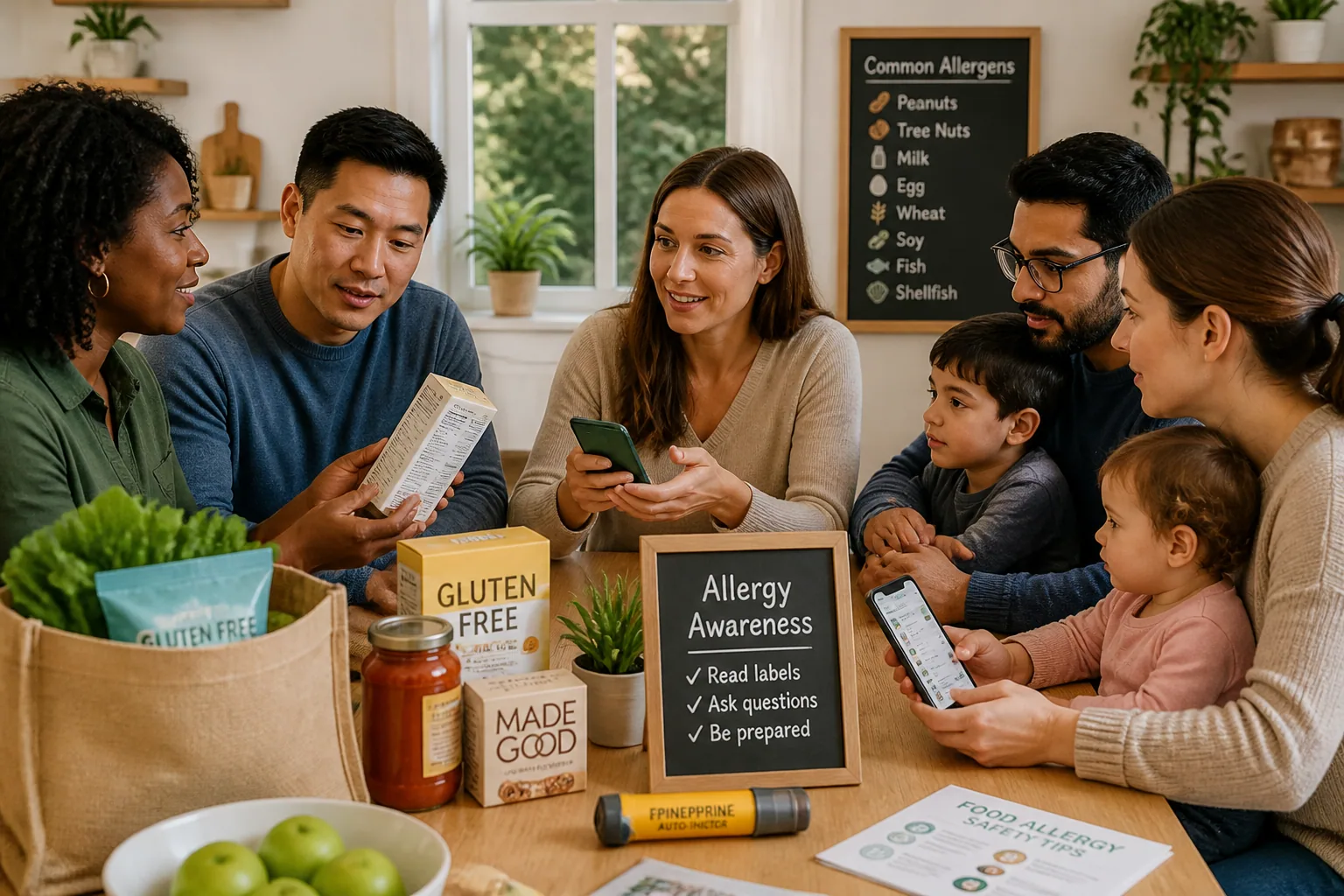
Living with food allergies can be surprisingly isolating, even when you are surrounded by people every day. Adults often feel like they should already have it all figured out, while parents can feel responsible for spotting every risk before a child ever comes near it. In reality, food allergy management is a constant process of checking, asking, verifying, and sometimes guessing. That is exactly why community matters so much. Being part of the allergen community can make daily life safer through shared alerts, label-reading tips, and real-world advice, but it can also make it feel far less lonely.
The scale of the issue is larger than many people realize. About 10.8% of U.S. adults, which is more than 26 million people, report one or more current food allergies that meet clinical standards, while nearly 19% believe they have an allergy that may not be medically confirmed. Nearly 48% of food-allergic adults developed at least one convincing allergy as adults, 51% have had moderate to severe reactions, and 38% have visited an emergency department at least once because of allergies. Those numbers help explain why people are constantly looking for better tools, trusted advice, and the reassurance that they are not handling this alone.
Why Food Allergy Isolation Is More Common Than People Realize
Food allergies can be socially invisible until something goes wrong. Unlike many health conditions, the burden is carried quietly through reading ingredient panels, questioning servers, checking school policies, or declining food at gatherings. That can create a kind of everyday vigilance that other people do not always notice. Many adults and parents end up feeling like they are the only ones constantly thinking about cross-contact, precautionary allergen labeling, or whether a familiar product has changed its recipe.
The emotional load is real. Research shows that more than 30% of individuals with food allergies have an identifiable anxiety disorder, compared with about 12% of people without allergies, and mood disorders are also more frequent. The Food Allergy and Anaphylaxis Connection Team’s GAPS study found that two-thirds of adults with food allergies report significant psychological distress, mostly driven by fear of reactions, while three-quarters of caregivers report similar distress. The National Indicator Report also shows that 54% of adult patients and 32% of children with food allergies report panic or anxiety, yet only 27% of caregivers have ever consulted a mental health or psychological professional about those concerns. That gap is one reason peer support can matter so much.
Food allergy communities help normalize the constant mental math. When someone else says they also triple-check snacks, avoid certain bakeries, or bring their own food to a birthday party, it immediately reduces the sense of being the only one living this way. It validates the effort, the fear, and the fatigue. That validation is not a small thing. It is often the first step toward feeling more confident instead of more trapped by the condition.
How Community Alerts Help People Spot Risky Products Faster
One of the biggest benefits of an allergen community is speed. Food labels change, manufacturing lines shift, and products that looked safe last month may no longer be safe today. In one study of adults followed for a year, the average was about one accidental reaction per person per year, which shows how often real-world mistakes still happen. Another finding was even more striking: around 37% of tested products not intended to contain an allergen actually did, often without a precautionary allergen labeling statement. That means a community warning can sometimes catch a risk before a family finds out the hard way.
Crowdsourced alerts work because many eyes are better than one. One person might notice a newly added warning on a package, another may report that a favorite snack now has different facility language, and someone else may share that a restaurant changed fryers or sauce suppliers. These updates are especially useful when the danger is not obvious from the front of the package. Research on accidental reactions found that key risk factors include misreading or ignoring labels, non-ingredient allergens present in products, and ambiguous or absent precautionary allergen statements. Community reports can help people stay alert to exactly those hidden risks.
This is where allergy-focused apps can be especially helpful. Tools like SensiGuard use user-defined allergy profiles and crowd-sourced scans to produce alerts, while Spokin helps families share warnings and experiences about places and foods. SYE, or Allergen & Food Scanner, uses a large open food database and distinguishes among contains, may contain, and facility-level risk tiers. These tools are not a replacement for reading labels, but they can make the first pass faster and often flag items worth a second look.
Label-Reading Hacks and Safety Checks Shared by Peers
Label reading is one of those skills that gets sharper over time, but peer advice can accelerate the learning curve. In allergy communities, people often share the little habits that make a huge difference. For example, some families always read the ingredient list from start to finish, even on a product they have bought many times before. Others compare the ingredient list with the precautionary allergen statement, because the second line can reveal a facility risk that is easy to miss when you are in a hurry.
One of the most useful community lessons is to treat labels as changing documents rather than permanent promises. A product can be reformulated without much fanfare. A local store may carry one package from one plant and another from a different plant. Someone in the community may post a photo of a label change days or weeks before you would notice it yourself. That kind of sharing is especially valuable for families managing multiple allergens, where a tiny change can alter whether a product is a safe option or not.
Peer communities also tend to develop practical routines that reduce mistakes. People remind each other to check for non-obvious ingredients, to be cautious with sauces, seasonings, and bakery items, and to remember that terms like may contain do not mean the same thing as contains. Some communities also exchange reminders about hidden ingredients and additive concerns, which can matter for people who are allergic or intolerant to more than just the top major allergens. The point is not to become fearful of everything. It is to become systematically careful, which is a very different thing.
Using Community Advice for Parties, School, Restaurants, and Travel
The value of community becomes even clearer in situations where food is social. Parties, classroom events, restaurant meals, and travel all add layers of uncertainty because the person preparing or serving the food may not understand the allergy the way you do. That is why people in allergen communities spend so much time comparing notes on what actually works in everyday life.
At parties, parents often share strategies like bringing a clearly labeled safe dish, serving it before it is placed near other foods, and asking hosts not to reuse utensils. For school events, community advice often centers on communication and consistency, such as writing down allergies for teachers, coordinating with the school nurse, and sending backup snacks so a child is never left out. In restaurants, people often recommend calling ahead, asking specific questions about fryers, marinades, and shared prep surfaces, and choosing places that have been recommended by others with similar allergies.
Travel is another area where community knowledge is extremely useful. People often share airport snack ideas, hotel room food storage tips, and ways to explain allergies in another language. They also recommend researching grocery stores and restaurants before leaving, rather than trying to improvise once hunger and exhaustion set in. These are the kinds of practical details that are hard to find in a general medical pamphlet but easy to learn from someone who has already lived through the same scenario.
How Shared Experience Reduces Anxiety and Builds Confidence
Food allergy anxiety is not irrational. It grows from repeated reminders that mistakes can be serious. But community helps keep that anxiety from turning into total avoidance or chronic isolation. When someone shares the exact steps they take before eating out, or the way they managed a child’s first birthday party without incident, it shows that careful participation is possible. That can be incredibly reassuring for both adults and caregivers.
Support groups can make measurable differences. In one institutional survey, 77.7% of parents said support group participation reduced their anxiety, 71.4% said it improved their child’s quality of life, and 64.3% felt better about family activities involving food allergy. Those numbers matter because they show that emotional support is not just a nice extra. It can directly affect how safe and capable people feel in their daily lives.
Online support spaces also tend to balance emotional and practical support in a way that is especially helpful for chronic conditions. Studies of online support groups show nearly equal levels of content focused on empathy, coping, and shared experience, alongside informational support like label-reading, safety rules, and product recommendations. That combination is powerful because it tells people both what to do and how to keep going.
The Best Ways to Use Apps, Forums, and Local Groups Safely
Allergen communities are most helpful when they are used thoughtfully. Apps, forums, and local groups can each play a different role. Apps are often best for quick checks and alerts. Forums are good for discussion and pattern recognition. Local groups can be great for real-world recommendations, especially when you want to know which restaurants, camps, or schools take allergies seriously in your area.
The best approach is usually to use these tools as a starting point, not the final decision. A product scan may suggest a possible issue, a forum post may flag a restaurant, and a local parent group may recommend a safe brand. But the final step should still be your own verification. That means reading the label, checking the manufacturer if needed, and confirming that a restaurant understands your allergy and cross-contact risks. Community support works best when it sharpens your decision-making instead of replacing it.
This is where a practical app can save time in a very real way. Bokha: Food Allergy Scanner App lets you scan product barcodes and discover allergens in less than a second, including 13 allergens, traces, and additives. For busy parents and adults trying to shop quickly, that kind of support can make grocery trips less stressful and help narrow down safe options faster. You can learn more at https://findthe.app/bokha.
How to Verify Crowdsourced Allergy Information Before Acting on It
Crowdsourced information is useful, but it should always be verified before you rely on it. People in support groups can make mistakes, misread labels, or share outdated advice. That does not mean the community is unreliable. It means it should be used the same way you would use any other tool: carefully and with cross-checking.
A good verification habit starts with asking when the information was posted and whether it applies to your exact product, restaurant, or situation. A restaurant recommendation from last year may no longer be accurate if the chef changed, the menu was updated, or the kitchen practices shifted. A product warning may only apply to a specific size, country, or production lot. Whenever possible, compare the community report with the current package, the manufacturer, or the venue itself.
It also helps to look for patterns rather than one-off claims. If multiple people independently report the same label change, cross-contact concern, or menu problem, the information is more credible. On the other hand, if a single post is vague, emotional, or unsupported by a photo or specific details, it should be treated as a prompt to investigate rather than a final answer. The safest communities encourage this kind of careful checking instead of rewarding speed over accuracy.
Building Your Own Trusted Allergy Support Network
The strongest allergen communities are usually the ones you build intentionally. That might include an online group for quick questions, a local parent network for school and activity advice, a few trusted friends who understand emergency plans, and an allergist or dietitian who can help interpret the medical side. The goal is not to collect hundreds of contacts. It is to have a reliable circle of people and tools that help you act with more confidence.
A trusted network should also reflect your specific needs. Someone with peanut and tree nut allergies may need different advice than someone avoiding milk, gluten, or multiple allergens. A parent managing a child’s school plan may need different support than an adult navigating office lunches or business travel. The more your network understands your real life, the more useful it becomes.
What community ultimately provides is not just information, but steadiness. It helps you notice risky products faster, learn from other people’s label-reading habits, handle social situations more calmly, and feel less alone in a process that can otherwise become exhausting. Food allergies are still serious, and careful verification still matters, but community makes the work more manageable. And for many adults and parents, that sense of shared burden is one of the most important safety tools of all.