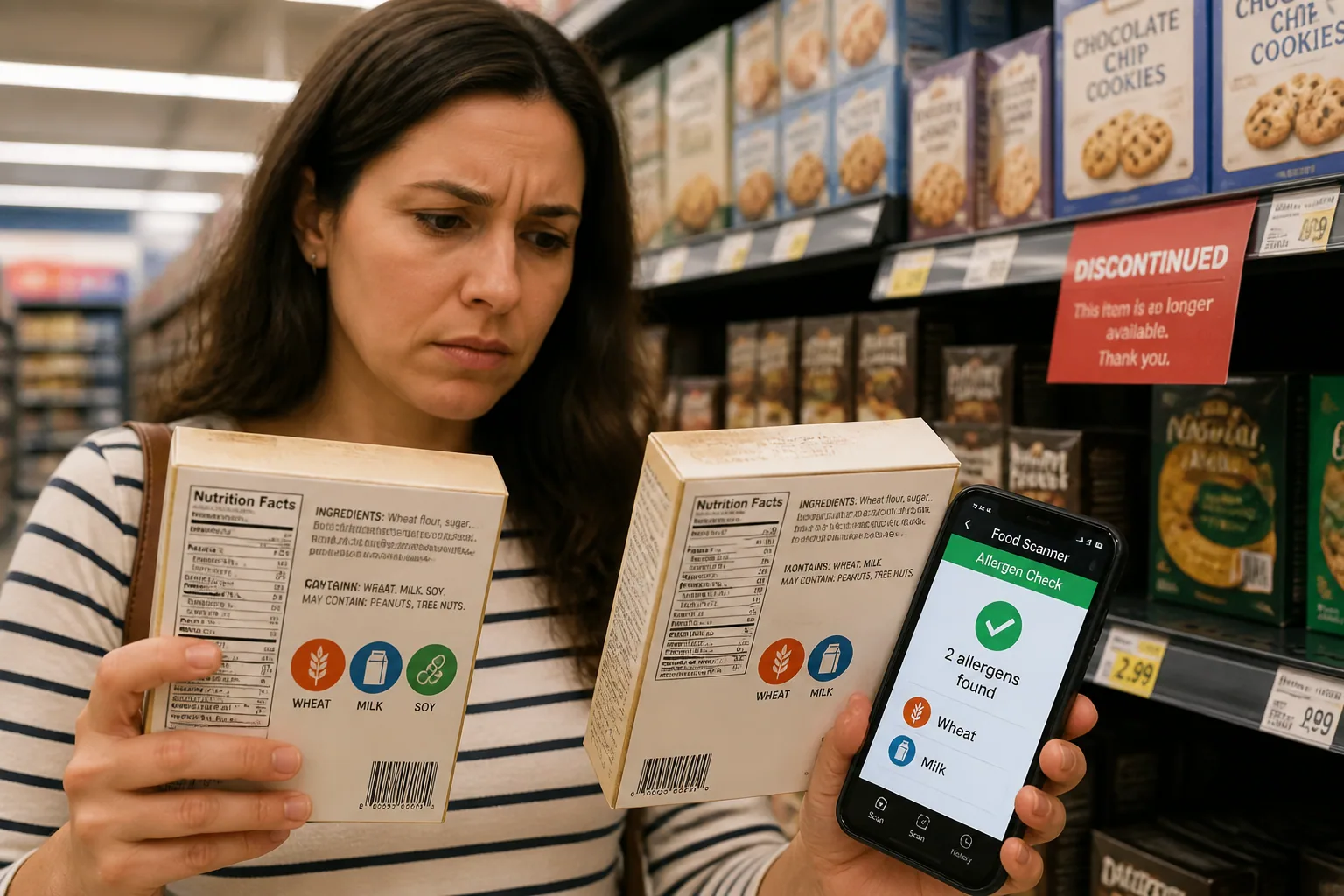
When Labels Change: How to Handle Allergen Reformulations and Discontinued Products
If you live with food allergies, shop for a child with allergies, or help a picky eater who relies on a handful of trusted foods, product changes can feel like a small crisis. One week a snack is perfectly fine, and the next week the same box may have a new recipe, a new supplier, or a new warning. Even worse, a favorite product can disappear entirely without much notice.
The hard part is that these changes are not always obvious. A familiar package can look almost identical while the ingredient list, allergen statement, or manufacturing process has shifted. That is why allergy safety is not just about finding safe foods once. It is about checking again, every single time.
Why Trusted Products Change in the First Place
Manufacturers do not usually reformulate products on a whim. There are many practical reasons behind ingredient changes. Some brands are responding to consumer demand for healthier products. According to FoodNavigator, over 60% of consumers globally want brands to reformulate products to be healthier, including 83% reducing sugar intake, 57% cutting sodium, and 66% wanting more protein in food and beverages. That pressure pushes companies to adjust recipes, sometimes in ways that affect allergens or cross-contact risk. Source: https://www.foodnavigator.com/Article/2026/05/26/the-art-and-science-of-better-for-you-reformulation/
There are also business reasons. Ingredient price spikes, global tariffs, regulatory requirements, and changing consumer preferences can all push a company to swap ingredients or suppliers. FoodNavigator notes that these are among the top drivers of reformulation, especially when brands are trying to manage cost and keep products on shelves. Source: https://www.foodnavigator.com/Article/2026/01/13/5-reasons-for-food-reformulation/
Retailers are doing this too. FMI reports that nearly two-thirds of grocery retailers are actively reformulating private-label products, with many targeting artificial dyes, sugar, and additives. That means store brands, which many families trust because of consistency and price, may change more often than people realize. Source: https://www.foodbusinessnews.net/articles/29908-private-label-reformulation-trends
How Reformulations Can Create New Allergen Risks
A reformulation is not automatically unsafe, but it can introduce new ingredients, new processing aids, or new cross-contact possibilities. A product that used to be free of milk may suddenly include whey. A chocolate bar may switch from a peanut-free line to a shared facility. A “better-for-you” update may replace one stabilizer with another ingredient that matters to your family.
The main danger is assuming that a product is safe because it was safe before. Allergy safety guidelines stress checking labels every time, even on items you have bought for years. A single supplier change or recipe tweak can create a new allergen exposure risk. FoodAllergy.org explicitly advises reading labels each time you buy. Source: https://www.foodallergy.org/resources/tips-staying-safe-food-allergies
This is especially important because allergens can hide under alternate names. Milk ingredients may appear as casein or whey. Flavorings can be vague. And when laws change, companies may update how they present allergen information on the package, which makes older label knowledge less reliable. FoodAllergy.org and FDA resources both warn that label literacy has to stay current. Source: https://www.allergyhome.org/handbook/files/2013/05/Living-Confidently-with-Food-Allergies-US-version.pdf
There is also a regulatory angle. Before and after the FASTER Act added sesame as the ninth major U.S. allergen, 240 products added sesame to their ingredient lists and 182 removed it. That is a good reminder that legal and labeling shifts can produce unexpected changes in what appears on a package. Source: https://www.choicesmagazine.org/choices-magazine/submitted-articles/unintended-consequences-of-allergen-food-labeling
What to Check on Labels Every Time You Rebuy
When you repurchase a previously safe product, do not just glance at the front of the box. Go straight to the ingredient list and the allergen statement. In the United States, the FDA requires that products containing any of the nine major allergens, milk, egg, fish, crustacean shellfish, tree nuts, wheat, peanuts, soybeans, and sesame, must declare the food source clearly in the ingredient list or in a Contains statement. Source: https://www.fda.gov/food/nutrition-food-labeling-and-critical-foods/food-allergies
Check for three things every time. First, look for new ingredients. Second, read the Contains statement carefully. Third, scan for advisory statements like “may contain” or “processed in a facility with,” but remember these are voluntary and inconsistent across brands. The FDA notes that these advisory warnings are not standardized, so they should be treated as extra caution, not as a guarantee either way. Source: https://www.fda.gov/consumers/consumer-updates/have-food-allergies-read-label
It also helps to slow down when you see familiar language. “Natural flavors,” “seasoning,” “starch,” “protein blend,” and similar terms may conceal allergens depending on the product and country. If a label seems vague or different from before, treat that as a signal to investigate further instead of assuming nothing changed.
Packaging Clues, Batch Codes, and Other Signs Something Changed
Sometimes the label itself tells you a product is different, even before you compare ingredients. A new packaging design, a different nutrition panel format, a redesigned front-of-pack claim, or a “new recipe” badge can all hint at a reformulation. So can a change in the plant code, lot code, or best-by placement.
Batch codes are useful because they can help you identify whether you are looking at an older stock item or a newly produced version. If a familiar item suddenly has a different code pattern or package layout, that may mean it came from a new production run with a changed ingredient profile. For allergy families, that is enough reason to pause and recheck everything.
The package may also reveal manufacturing changes through updated certifications, different allergen icons, or a new statement about shared equipment. None of these details should be ignored. In fact, small packaging changes are often the earliest sign that a product is no longer exactly the one you trusted before.
How Often to Recheck Previously Safe Products
The short answer is: every time. The practical answer is to make rechecking a habit, not a reaction. Even if you buy the same cereal, crackers, or sauce every week, treat each purchase as new. That is the safest mindset because suppliers, formulas, and labeling can change at any point.
Some families prefer to recheck only when the packaging looks different. That is a useful minimum, but it should not be your only rule. A product may change without a dramatic redesign. A small ingredient swap, a factory move, or a new regulatory requirement can happen behind an otherwise familiar label.
A good rhythm is to review the label when you first encounter a product, then verify it again before every purchase, and especially after any long gap in buying it. If you have not bought it in months, assume it may have changed until you confirm otherwise.
Using Apps and Barcode Scanners to Track Ingredient Changes
Because label checking takes time, many shoppers now use apps and barcode scanners to speed up the process. These tools are especially helpful in a busy supermarket aisle when you need a fast answer and want to compare multiple products side by side.
This is where Bokha can help. Bokha: Food Allergy Scanner App lets you scan product barcodes and discover allergens in less than a second, which can make routine shopping less stressful. It detects 13 allergens, traces, and additives such as colorants and preservatives, so you can quickly spot products that may no longer fit your needs. You can learn more here: https://findthe.app/bokha
An app will not replace your judgment, but it can support it. A good scanner helps you notice when a familiar product now includes a problem ingredient or when a newer version deserves a manual double-check. That extra layer of visibility is useful when you are building a safer shopping routine around products that tend to change.
When and How to Contact Manufacturers for Clear Answers
If a label is unclear, if a product has changed unexpectedly, or if you need to know whether a facility also handles your allergen, contact the manufacturer directly. This is often the best way to get details that the package does not fully explain. Ask specific questions about ingredients, suppliers, shared lines, cleaning protocols, and whether the formula has changed since your last purchase.
It helps to keep your questions short and concrete. For example: Has the recipe changed in the last six months? Has the product been moved to a new facility? Does the product now include sesame, dairy, or another allergen? Is there a risk of cross-contact on the same line? The more precise your question, the more useful the answer is likely to be.
This matters even more now that ingredient changes are under growing scrutiny. Industry reporting notes that companies are facing more pressure to document and sometimes report ingredient changes, including a proposed FDA rule to require pre-notification for new ingredients or additives. That does not replace direct consumer communication, but it shows that transparency is becoming more important across the food system. Source: https://apnews.com/article/794c137570e53ad8598dc6ca526fac10
How to Build a Backup List of Safe Alternatives
One of the best ways to reduce stress is to stop relying on a single favorite product. Instead, build a backup list of safe alternatives for the foods you use most often. If one bread, snack, sauce, or dessert changes, you will already have a few replacements ready to try.
Your backup list should include products that are easy to buy, realistically affordable, and safe for your allergen profile. It is also smart to note where you found them, whether they are available locally, and what makes them suitable. That way you are not trying to reconstruct your research in the middle of a rushed shopping trip.
This list should be living, not static. Recheck backup options regularly too, because alternatives can be reformulated as well. The goal is to avoid a single point of failure in your household food routine.
What to Do When a Go-To Product Is Discontinued
Discontinuation can be frustrating because it removes a known safe option from your routine entirely. If a product disappears, start by confirming whether it is truly discontinued or simply out of stock, repackaged, or temporarily reformulated. Manufacturers sometimes retire one size or one flavor while keeping the core product available elsewhere.
If it is truly gone, compare the old ingredient list with possible replacements. Look for products made by the same company first, since brands sometimes launch similar items under a new name. Then widen your search to competitors and store brands that meet the same allergen standards.
This is also the point where patience matters. The emotional impact of losing a trusted product is real, especially for children or people with very limited safe foods. Give yourself time to replace the item thoughtfully rather than rushing into an unsafe substitute out of convenience.
Using Allergy Communities, Forums, and Support Groups to Find Replacements
When a product disappears, community knowledge can be incredibly helpful. Allergy forums, parent groups, and support communities often notice reformulations quickly and share replacement ideas that are hard to find in official product descriptions. People who manage the same allergies may already know which brands are safe, which lines are risky, and which products suddenly changed.
These communities are especially useful for learning how other families interpret label language, how they contact manufacturers, and which products have remained stable over time. They can also help you feel less alone when a long-trusted food changes without warning.
That said, community advice should be used as a starting point, not a final safety check. Always verify the current label yourself and, when needed, confirm with the manufacturer before trying a suggested replacement.
How to Review New Product Launches Safely
New product launches can be exciting, but they deserve the same caution as any reformulation. A brand-new item may look similar to something you already trust, yet its ingredients, facility, or advisory statement may be completely different. In some cases, new launches are designed specifically to meet health trends, such as reduced sugar or cleaner labels, which can also mean ingredient substitutions.
Before trying a new product, read the full ingredient list, check the Contains statement, and look for advisory warnings. If the product is from a brand you already trust, do not assume the same safety profile applies across the whole line. Different flavors, sizes, or seasonal versions can have different allergen risks.
A new launch is safest when you treat it like an unknown, not a cousin of an old favorite. That mindset prevents assumptions from becoming accidental exposures.
How Bokha Can Alert You to Ingredient and Allergen Changes
Because changes can happen quickly, tools that shorten the verification step are valuable. Bokha is designed to help by scanning barcodes and flagging allergens, traces, and additives in familiar products. For people who are already tired of reading tiny labels in bright supermarket aisles, that can save time and reduce uncertainty.
It is especially useful when a product appears familiar but may have been quietly reformulated. A scan can give you a fast first pass, helping you decide whether the product deserves a closer manual review or whether you should move on to a safer backup. In a shopping routine where every minute and every ingredient matters, that kind of support can make a real difference.
A Simple Routine for Safer, Less Stressful Shopping
The safest approach is also the simplest one: assume every purchase might be different until proven otherwise. Read the label each time. Watch for packaging changes. Pay attention to batch codes and new claims. Use a scanner when you can. Contact manufacturers when something is unclear. Keep backup options on hand. And check in with allergy communities for practical replacement ideas.
Over time, these habits turn a stressful guessing game into a repeatable system. You may never eliminate the anxiety that comes with product changes, but you can reduce the chance that a reformulation or discontinuation catches you off guard. With a little structure, and the right tools, shopping becomes more predictable and much safer.