When Allergies and Intolerances Overlap: How to Tell the Difference and What That Means for You
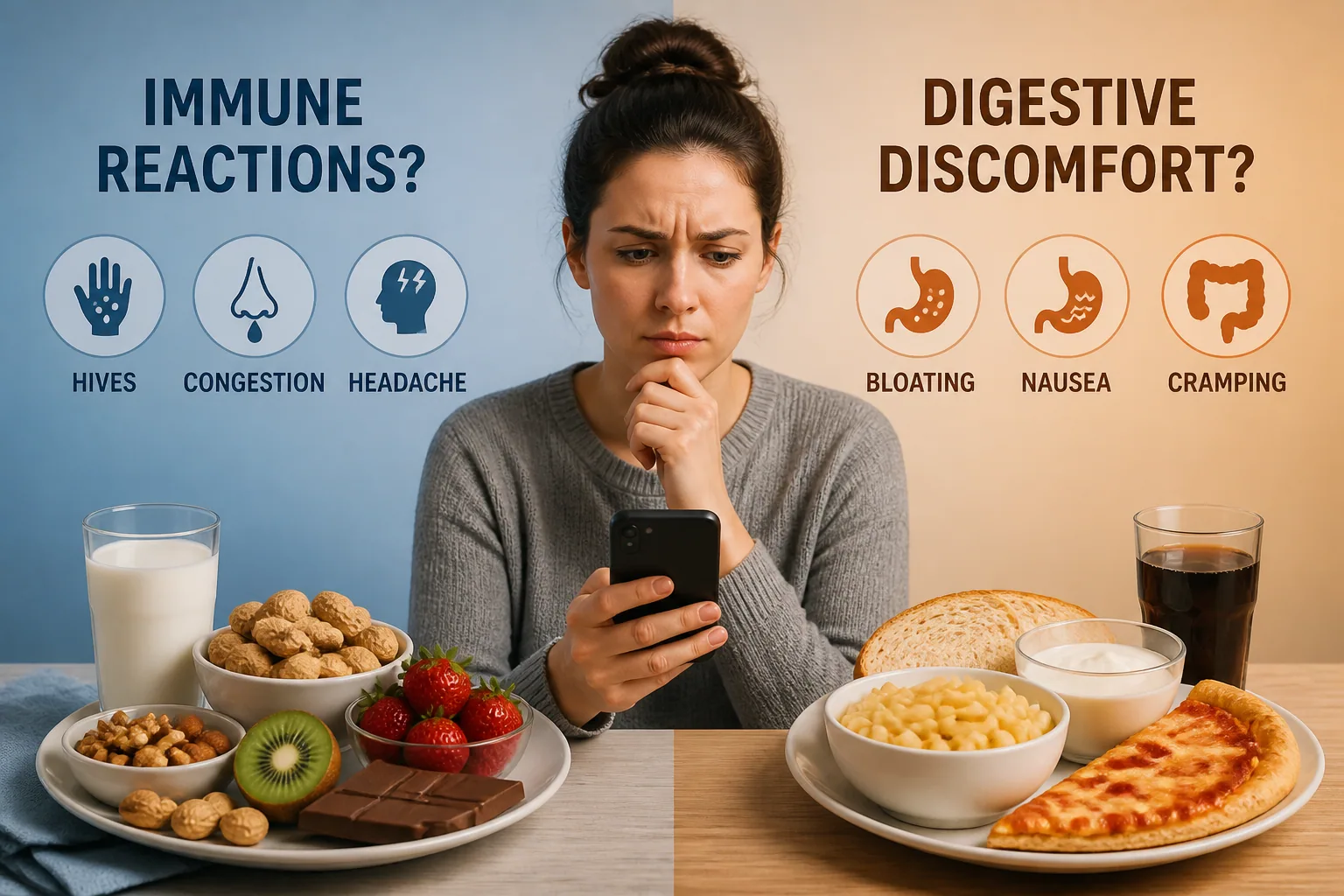
Food reactions can be confusing because the body does not always make the diagnosis obvious. One person may get stomach pain after milk and assume it is a food allergy, while another may get hives after a meal and think it is “just an intolerance.” The problem is that food allergies and food intolerances can both make you feel unwell, but they do not happen for the same reason, and they do not carry the same level of risk. A true food allergy involves the immune system reacting to a food protein as if it were dangerous, while food intolerance is usually linked to digestion, enzyme problems, or sensitivity to certain food components. Sources such as Healthline and WebMD highlight this core distinction clearly. https://www.healthline.com/health/allergies/food-allergy-sensitivity-difference https://www.webmd.com/allergies/food-allergy-intolerances
That difference matters more than many people realize. Allergy symptoms can escalate quickly and, in some cases, become life-threatening. Intolerance symptoms are often less dangerous, but they can still be disruptive, uncomfortable, and frustrating enough to affect your diet and quality of life. This is why it is so important to understand the pattern of your symptoms, the timing of your reaction, and the right way to get tested instead of guessing on your own.
Why Food Reactions Are So Easy to Misread
Food reactions often feel similar at first because the body only gives you a handful of warning signs: stomach upset, rash, nausea, bloating, fatigue, or a general sense that something is wrong after eating. The overlap can be especially tricky when symptoms are delayed. If you eat something at lunch and feel bad later that day, it is easy to connect the dots incorrectly, or to blame the wrong food entirely.
Another reason reactions get misread is that people often try to simplify their symptoms into one label. If a food causes repeated discomfort, it is tempting to call it an allergy because that sounds more serious. On the other hand, some people downplay a true allergy as “sensitivity” or “indigestion,” which can be dangerous if the reaction could worsen with future exposure. The first step is not to self-diagnose too fast. It is to understand what type of reaction you are actually dealing with.
What a True Food Allergy Actually Is
A true food allergy is an immune system response, often IgE-mediated, to a food protein. In simple terms, the immune system mistakenly treats a specific food as harmful and releases chemicals that trigger symptoms. This is why allergy symptoms can involve multiple body systems at once, not just the stomach. Healthline and WebMD both note that the immune system is central to this process. https://www.healthline.com/health/allergies/food-allergy-sensitivity-difference https://www.webmd.com/allergies/food-allergy-intolerances
Common allergy symptoms can include hives, itching, swelling of the lips or face, wheezing, shortness of breath, vomiting, diarrhea, dizziness, and even fainting. Drugs.com and WebMD note that these reactions often happen quickly, usually within minutes to up to 2 hours after exposure. That timing is one of the biggest clues that a reaction may be allergic rather than intolerant. https://www.drugs.com/health-guide/food-allergy.html https://www.webmd.com/allergies/food-allergy-intolerances
Because allergies can become severe, they are not something to monitor casually. A reaction that starts with hives and progresses to breathing difficulty or faintness may be anaphylaxis, which is a medical emergency. Even if one exposure was mild, future exposure can be unpredictable, which is why allergy evaluation is so important when the pattern suggests an immune reaction.
What Food Intolerance Means and Why It Happens
Food intolerance is different. It does not involve the immune system in the same way a true allergy does. Instead, it is usually linked to enzyme deficiencies, difficulty digesting certain foods, reactions to food chemicals, or other sensitivities. Lactose intolerance is a common example because the body does not make enough lactase to properly digest lactose. Other people react to compounds in food, such as certain additives or naturally occurring substances, without having an immune allergy.
The symptoms of intolerance are often centered in the digestive system. Healthline reports that common signs include gas, bloating, stomach pain, cramps, diarrhea, and sometimes nausea or fatigue, and these symptoms usually appear within hours of eating. That delay can make intolerance feel vague compared with an allergy, but the pattern is still important. https://www.healthline.com/health/allergies/food-allergy-sensitivity-difference
Up to about 20% of people may experience food intolerances, which makes them fairly common. By comparison, confirmed food allergies are less common, affecting about 8% of children and 11% of U.S. adults. That does not make intolerance less real. It just means that digestive and sensitivity-related issues are more widespread, and therefore more often mistaken for allergies.
The Key Symptom Differences to Watch For
The cleanest way to separate allergy from intolerance is to compare the pattern of symptoms, not just the symptom itself. Stomach pain can happen in both. Nausea can happen in both. But allergies are more likely to affect several systems at once, while intolerances are more likely to stay digestive.
A true allergy often causes rapid symptoms, commonly within minutes and usually within 2 hours. The reaction may include skin changes like hives or swelling, respiratory symptoms like wheezing, and systemic symptoms like dizziness. Intolerance usually develops more slowly, often within hours, and tends to cause bloating, cramps, gas, diarrhea, or nausea without the same immune-style pattern of swelling or breathing problems.
A helpful question is whether the reaction seems dose-related and reproducible. Intolerances often depend on how much of the trigger food you ate, while allergies can be triggered by even tiny amounts in sensitive people. If a trace amount causes hives or breathing symptoms, that raises concern for allergy. If larger portions consistently lead to bloating or loose stools, intolerance becomes more likely.
When Allergies and Intolerances Can Overlap
The overlap is real, and that is part of what makes food reactions so frustrating. Some people have both a true allergy and a separate intolerance. Others have symptoms that do not fit neatly into either category. For example, a person with a food allergy may also have digestive discomfort during a reaction, which can make it feel like the issue is “just the stomach.”
Another source of overlap is celiac disease. Celiac disease is not a food allergy and not a simple intolerance. Cleveland Clinic and Harvard Health describe it as an autoimmune disorder triggered by gluten, causing intestinal damage and broader health risks. That means it deserves its own diagnostic approach and should not be lumped into the allergy versus intolerance debate. https://health.clevelandclinic.org/allergy-or-intolerance-how-to-tell-the-difference https://www.health.harvard.edu/staying-healthy/is-it-a-food-intolerance-allergy-or-something-else
There are also situations where stress, gut disorders, or other medical conditions make symptoms feel food-related when the real cause is something else entirely. That is why patterns, medical history, and proper testing are so important before making big dietary changes.
Common Conditions People Mistake for Either One
Several conditions are frequently confused with food allergy or intolerance. Celiac disease is one of the most important, because gluten exposure can cause major intestinal symptoms and long-term damage, but the mechanism is autoimmune rather than allergic. Another common confusion is irritable bowel syndrome, which can make people blame a “trigger food” when the real issue is a broader digestive disorder.
Lactose intolerance is also often mislabeled as a dairy allergy. In reality, someone with lactose intolerance may be able to tolerate small amounts of dairy or lactose-free products, while someone with a milk allergy can react to milk proteins in much smaller and more dangerous amounts. That distinction changes how strict avoidance needs to be and what kind of label you should be reading at the store.
Sensitivities to food additives, preservatives, or naturally occurring food chemicals can also mimic intolerance or allergy. These reactions may be inconsistent, which adds another layer of confusion. If your symptoms are changing from one meal to the next, that is often a clue that the problem may be more complex than a single classic allergy.
How Doctors Diagnose Food Allergy
Doctors begin with a detailed medical history. This is often the most valuable tool because it helps identify which food was eaten, how soon symptoms started, what symptoms appeared, how severe they were, and whether the reaction has happened more than once. A clear history can also show whether the pattern suggests allergy, intolerance, or another condition altogether.
Skin prick testing is commonly used to look for IgE-mediated allergy. NCBI Bookshelf notes that skin prick tests are sensitive, which means they can help detect allergy when it is present, but they are less specific, so false positives can happen. Negative results are more helpful for ruling out allergy than positive results are for proving it. https://www.ncbi.nlm.nih.gov/books/NBK435944/
Blood testing for food-specific IgE can also help, especially when skin testing is not possible because of skin conditions or antihistamine use. However, StatPearls and Allergy Authority note that these tests can also produce false positives, and high IgE levels do not always mean a severe reaction. In other words, the test result has to be interpreted alongside your actual symptom history. https://pmc.ncbi.nlm.nih.gov/articles/PMC6188390/ https://www.allergyauthority.com/allergy-testing-methods.html
When testing and history do not line up clearly, specialists may recommend a supervised oral food challenge. This is considered the gold standard for diagnosing food allergy when other tests are inconclusive, but it should only be done under medical supervision because of the risk of anaphylaxis.
How Elimination Diets and Food Diaries Help Identify Intolerance
If intolerance is suspected, an elimination diet and food diary can be useful tools. The basic idea is to remove the suspected food or ingredient for a set period, track symptom changes carefully, and then reintroduce the food in a controlled way to see whether symptoms return. This method can help reveal whether a specific food is truly associated with your symptoms or whether the pattern is more random than it first seemed.
Food diaries are especially helpful because memory is unreliable when symptoms are delayed. Writing down the time you ate, the exact food, portion size, symptoms, and how long symptoms lasted can reveal patterns that are easy to miss. It can also help a clinician understand whether there is a threshold effect, meaning you can tolerate small amounts but not larger servings.
That said, elimination diets should be approached carefully. If you cut out too many foods for too long, you risk nutrient gaps and unnecessary stress around eating. This is one reason medical guidance matters, especially when symptoms are vague or multiple foods seem to be involved.
What an Oral Food Challenge Is and When It’s Used
An oral food challenge, or OFC, is a medically supervised test in which the suspected food is given in gradually increasing doses while the patient is closely monitored. FARE explains that this test is used when other information is not enough to confirm or rule out allergy. It is a powerful tool because it looks at real-world reaction, not just lab markers. https://www.foodallergy.org/resources/oral-food-challenge
The reason supervision matters is simple: a challenge can trigger a serious reaction, including anaphylaxis. The 2024 AAAAI-EAACI PRACTALL update notes that IgE-mediated food allergy challenges typically use semi-logarithmic incremental doses based on protein content, with 20 to 30 minute intervals between doses and careful stopping criteria. https://eaaci.org/guidelines-position-papers/aaaai-eaaci-practall-standardizing-oral-food-challenges-2024-update/
This is one of the best examples of why a food allergy diagnosis should not be made casually from a single positive test. A person can have a positive IgE test and still tolerate the food, which is why the combination of history, testing, and challenge is often necessary for clarity.
Why Getting the Label Wrong Can Affect Your Safety and Diet
Mislabeling a reaction can have real consequences. If you call an intolerance an allergy, you may end up avoiding many foods unnecessarily, which can make eating more stressful and increase the risk of nutrient deficiencies. Tufts Health & Nutrition Letter and Harvard Health both point out that mistaken labels can reduce quality of life and create avoidable anxiety around food. https://nutritionletter.tufts.edu/food-allergies-sensitivities/food-allergy-or-intolerance/ https://www.health.harvard.edu/staying-healthy/is-it-a-food-intolerance-allergy-or-something-else
The opposite mistake can be even more serious. If a true allergy is dismissed as mild intolerance, someone may continue eating the trigger food and unknowingly expose themselves to a severe reaction. That is why a clear diagnosis is not just about comfort. It is about safety, especially when symptoms involve swelling, breathing changes, faintness, or repeated rapid reactions.
Correct labeling also helps with day-to-day decisions. If you know a trigger is a lactose issue rather than a milk-protein allergy, you can look for lactose-free options. If you know you have a peanut allergy, you need much stricter avoidance and cross-contact awareness. The right label changes everything from grocery shopping to restaurant ordering to emergency planning.
When to Seek Urgent Medical Care
Seek urgent medical help right away if food symptoms include hives plus swelling, trouble breathing, wheezing, throat tightness, fainting, or a sudden severe reaction after eating. These can be signs of anaphylaxis, and they should never be monitored at home. A reaction that happens quickly after exposure and involves more than one body system is especially concerning.
You should also speak with a healthcare professional if symptoms happen reliably with the same food, if they are interfering with normal eating, if your GI symptoms are severe or chronic, or if you are losing weight or cutting out major food groups. Even when the issue turns out to be intolerance rather than allergy, ongoing symptoms deserve proper evaluation.
If symptoms are severe enough to affect breathing, circulation, hydration, or daily function, do not wait for the pattern to become clearer on its own. The sooner you are evaluated, the sooner you can reduce risk and get a more accurate plan.
What to Do Next if You Suspect a Food Issue
Start by tracking your symptoms carefully. Note what you ate, how much you ate, when symptoms started, and what the symptoms were. If possible, keep the list of suspected foods limited until you have been evaluated, rather than eliminating large categories without guidance. That makes diagnosis easier and reduces the chance of unnecessary dietary restriction.
Next, look at the symptom pattern. Rapid reactions with skin, breathing, or dizziness symptoms point more toward allergy. Delayed bloating, cramps, gas, and diarrhea point more toward intolerance. If gluten is involved, remember that celiac disease needs separate medical attention and testing.
If you need extra help avoiding unsafe foods while you sort things out, a tool like Bokha: Food Allergy Scanner App can make grocery shopping easier. It lets you scan barcodes and check allergens quickly, which can be especially useful while you are learning which ingredients and traces to avoid. You can find it here: https://findthe.app/bokha
Most importantly, do not assume that every food reaction means the same thing. The right diagnosis protects your health, preserves your nutrition, and lowers stress around eating. If you suspect a real allergy, get medical advice promptly. If you suspect intolerance, a structured approach with a clinician can help you identify triggers without over-restricting your diet.