What to Pack for a Food Allergy Road Trip: Essentials & Smart Tricks
Food allergy travel takes a little more planning than a typical road trip, but that planning pays off fast once you are on the road. A car trip can feel flexible and low-stress, yet it also comes with a unique set of risks: unfamiliar gas station food, long stretches without safe options, limited ingredient information, and fewer backup plans if something goes wrong. For the millions of adults living with food allergies, that matters. Recent research estimates that 10.8% of U.S. adults, more than 26 million people, have at least one current food allergy, and among food-allergic adults, 51.1% report at least one severe reaction. Only 24.0% had a current epinephrine auto-injector prescription, which is a reminder that preparation is not optional when you are traveling. (pmc.ncbi.nlm.nih.gov)
The good news is that a safer road trip is very possible. With the right packing list, a few smart tools, and a habit of checking ahead before each stop, you can reduce surprises and feel more confident whether you are heading out for a weekend or driving across several states. The key is simple: do not rely on finding safe food after you are already hungry.
Why Food Allergy Travel Prep Matters More on the Road
At home, you likely have routines, favorite brands, and familiar stores. On the road, everything becomes less predictable. You may be stopping at a convenience store with limited labels, eating from a shared cooler, or arriving at a hotel late at night when the only open option is a roadside chain with a busy kitchen. That unpredictability is exactly why road trips can raise the risk of accidental exposure.
Food allergy travel is also different because delays happen. Traffic, weather, detours, and long attractions can turn a simple food stop into an hours-long gap between meals. The CDC advises travelers with food allergies to pack allergy medicines such as inhalers and epinephrine, and enough supplies to last the entire trip plus extra in case of delays. That advice is especially important on the road, where the nearest pharmacy may be far away and you may not have time to search for replacements. (wwwnc.cdc.gov)
Another reason preparation matters is labeling. In the United States, the FDA’s major allergen rules cover the Big 9: milk, eggs, fish, crustacean shellfish, tree nuts, peanuts, wheat, soybeans, and sesame. Sesame is now the ninth major allergen under the FASTER Act, effective January 1, 2023, so packaged foods must list sesame in Contains statements where applicable. Because the Big 9 account for about 90% of food allergy reactions in the U.S., knowing how to read labels quickly is one of the best road trip skills you can have. (fda.gov)
The Essential Food Allergy Road Trip Packing List
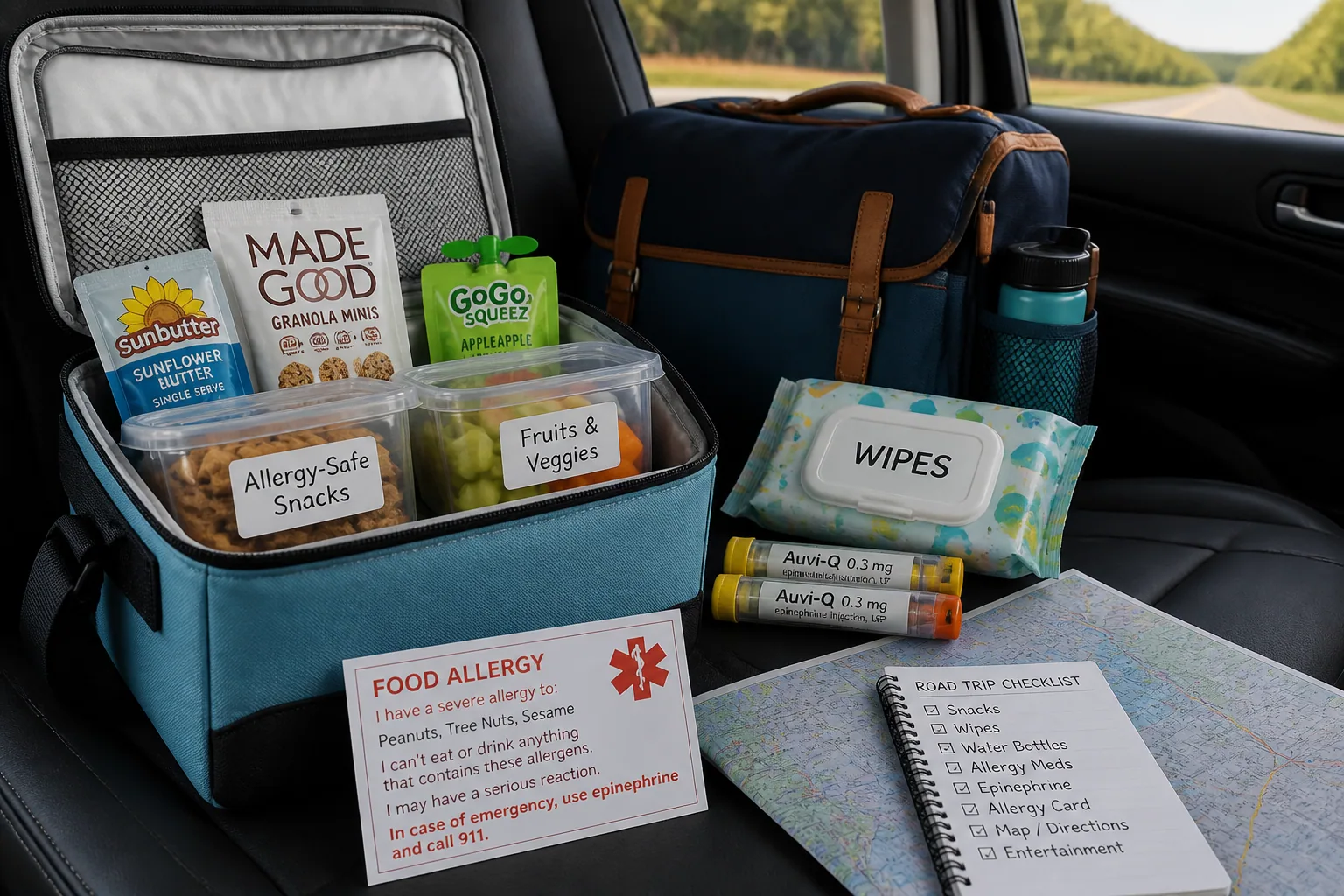
Think of your packing list in layers. The first layer is medical safety, the second is food you can control, and the third is backup information in case you need help fast. If you pack all three, you are much less likely to end up improvising at a gas station or relying on a menu you have not had time to verify.
Start with the basics you would never want to forget: all prescribed medications, rescue medication, auto-injectors if you use them, your doctor’s instructions, and any daily allergy medications you normally carry. Keep these items in a bag that stays with you, not buried in the trunk. If your car is parked in the sun or your trip includes temperature swings, do not assume the trunk is a safe storage place for medication or snacks that need stable conditions.
Next, build a small emergency kit. Include tissues, hand wipes, alcohol-free sanitizer if preferred, napkins, a clean spoon or utensil set, and a few disposable bags for wrappers or accidental contamination. If you are traveling with kids, consider a separate pouch for each person so you can grab what you need quickly without sorting through a larger bag at a rest stop.
It is also smart to pack backup chargers, a power bank, and a printed list of emergency contacts. On a road trip, phones die, maps disappear, and signal can drop. A small amount of redundancy helps more than you might expect.
Safe Snacks, Meals, and Cooler Staples to Bring
The easiest way to avoid surprise allergens is to bring food you already trust. Pack a mix of shelf-stable snacks and simple meals so nobody has to make a decision while hungry. Good options often include single-ingredient foods, familiar brands, and items you have personally checked before leaving.
For snacks, aim for variety. Bring something salty, something sweet, something filling, and something easy to eat without utensils. If your allergies allow it, examples might include plain crackers, allergy-safe granola, fruit cups, applesauce pouches, jerky from a trusted brand, roasted chickpeas, or seed-based snacks. If you are traveling with children, choose a few items that feel special so they are less tempted by unknown foods at stops.
If you are using a cooler, keep it simple. Pack clearly labeled safe sandwiches, pre-cut vegetables, fruit, hummus only if you know it is safe for you, yogurt if dairy is not an issue, and drinks you trust. Use separate containers so crumbs and spills do not mix. A good trick is to freeze a few water bottles and use them as ice packs early in the trip, then drink them once they thaw. That saves space and helps keep foods cold.
It can also help to think about the first meal of each day. Breakfast is often the hardest to manage on the road because hotel buffets and coffee shop pastries can be risky. Pack a reliable breakfast backup, such as oatmeal cups you have already checked, shelf-stable milk alternatives if safe, or simple bars with ingredient lists you know. That one step can remove a lot of stress from the morning.
Medical Must-Haves: What to Carry and Keep Within Reach
For food allergy travel, medical items should be treated like passports. They need to be easy to reach, protected from damage, and never left behind when you leave the car. The CDC specifically recommends bringing allergy medicines, inhalers, epinephrine, and enough supplies to last the whole trip plus extras for delays. (wwwnc.cdc.gov)
If you have been prescribed epinephrine, carry more than one auto-injector if your doctor recommends it. Make sure travel companions know where it is stored and how to use it. If you travel with a child, every adult in the car should know the allergy plan, not just the parent or caregiver who packed the bag. In an emergency, speed matters.
Keep any rescue medications in an easy-to-grab pouch, not in checked luggage, a locked glovebox, or the back of a packed trunk. Add a small card with instructions for when to use medication and who to call. This is especially useful if you become disoriented, someone else is driving, or a child is the one having symptoms.
If you have asthma, never treat it as separate from allergy planning. Food allergy reactions and breathing issues can overlap, so the same travel kit should include inhalers and any other doctor-recommended tools. The more self-contained your medical kit is, the less likely you are to be caught off guard when plans change.
Don’t Forget the Paperwork: Allergy Cards, Labels, and Emergency Plans
Paperwork may not sound exciting, but it is one of the best road trip safety tools you can bring. The CDC recommends cards listing all food allergies, translated into the local language when traveling abroad. Even on domestic trips, written allergy cards can be helpful at restaurants, hotels, campgrounds, and with new people who may not understand the seriousness of your allergies. (wwwnc.cdc.gov)
A good allergy card should be short and specific. List your allergens clearly, note whether cross-contact is dangerous, and include what to do in an emergency. If you have severe allergies, mention that you need ingredient verification and that even small traces may matter. If you travel with children, keep a child-friendly version on hand for teachers, hosts, or camp staff.
You should also carry a written emergency action plan. That plan can include symptoms to watch for, medication steps, emergency contacts, and your preferred hospital if the situation allows for choice. Keep a digital copy on your phone and a printed copy in your bag. Simple redundancy can save time when stress is high.
Labels matter too. Before you leave home, review the packaged foods you plan to bring, especially if you rely on convenience items you do not buy often. Since sesame is now included in U.S. labeling laws, it may appear in places you were not expecting. A quick label check before departure is always easier than trying to decode ingredients when you are already on the side of the road.
How to Find Allergy-Safe Restaurants Before You Stop
The best restaurant decision is the one you make before you are hungry. Before each planned stop, search ahead for places that seem genuinely allergy-aware, not just allergy-friendly in marketing terms. Look for restaurants that list ingredients clearly, train staff on allergen procedures, and allow substitutions without pressure.
Apps can help here. AllergyEats has a database of more than 850,000 U.S. restaurants rated by users on things like staff knowledge and ingredient transparency, while Picknic provides data for more than 58,000 restaurant locations nationwide with allergy and cross-contact filters. Those kinds of tools can help you compare options quickly instead of guessing from a highway exit sign. (top10.com, picknic.app)
If you are traveling internationally or want broader coverage, Spokin supports travel in over 160 countries and lets you filter by allergen to find restaurants, bakeries, hotels, grocery stores, and even flight reviews related to allergy safety. That can be especially useful if your road trip crosses borders or includes unfamiliar cities. (spokin.com)
When you choose a restaurant, call ahead if possible. Ask direct questions: Which menu items are safe? How do they handle cross-contact? Are fryers shared? Can the kitchen change gloves and use clean utensils? The more specific the question, the more useful the answer tends to be. If the response sounds uncertain or rushed, keep looking.
Best Apps and Tools for Allergy-Friendly Travel Planning
The right app can reduce a lot of mental load on a road trip. Instead of reading every review from scratch, you can use allergy-specific tools to narrow down choices before you leave the highway. That saves time and helps you avoid decisions made under pressure.
For restaurant planning, apps like AllergyEats, Picknic, and Spokin are useful because they focus on allergy safety rather than general popularity. For grocery shopping on the road, a barcode scanning app can be just as helpful. Bokha: Food Allergy Scanner App lets you scan product barcodes and discover allergens in less than a second. It detects 13 allergens, including lactose, gluten, peanut, egg, soy, fish, shellfish, tree nuts, wheat, mustard, celery, mint, and sulphites, along with traces and additives. That makes it a practical tool when you need a fast check in an unfamiliar store. You can find it here: https://findthe.app/bokha
A useful travel workflow is to combine tools. Use an app to shortlist restaurants, use maps to check distance and hours, then use a scanner app when you are buying backup snacks or breakfast items. That layered approach gives you more control and less guesswork.
Reading Labels and Handling Language Barriers in New Places
If you are buying packaged food while traveling, label reading becomes one of your most important habits. In the U.S., the Big 9 allergen statements make things easier, but the minute you cross into another language or another labeling system, you may need to slow down and look more carefully. Even familiar foods can have different recipes from one region to another.
Start by looking for a clear allergen statement, then scan the full ingredients list for hidden sources. Some allergens appear in unexpected forms, such as whey, casein, albumin, lecithin, or hydrolyzed proteins. If you are sensitive to cross-contact, look for precautionary statements too, but remember that wording is not standardized and does not always mean the same thing from brand to brand.
Language barriers can be managed with preparation. Before you travel, make translated allergy cards and keep a screenshot version on your phone. If you are buying groceries in another country or region, use your card instead of trying to explain a complex medical issue from memory. The CDC specifically recommends translated cards for food allergies, which is a strong sign that this small step is worth the effort. (wwwnc.cdc.gov)
A final practical tip: never assume that a familiar product is safe just because the packaging looks similar. Recipes change, ingredients vary by market, and seasonal products can be reformulated. On a road trip, a 10-second label check can prevent a much bigger problem later.
Staying Safely in Hotels, Rentals, Campgrounds, and Shared Kitchens
Where you sleep matters almost as much as where you eat. Hotels, vacation rentals, campgrounds, and shared kitchens all create opportunities for accidental exposure through shared cookware, residue on surfaces, and unclear housekeeping practices. A little setup when you arrive can reduce that risk.
In a hotel, ask whether the room has a mini-fridge, microwave, or kitchenette if you need them. Wipe down surfaces before unpacking food, and consider using your own sponge or disposable wipes if you are especially sensitive. If you are staying in a rental with a shared kitchen, check whether the cookware is truly separate or whether previous guests may have used common utensils and pans.
At campgrounds, the biggest risks are often communal preparation areas and informal food sharing. Do not assume a friend’s grill or a potluck table is safe just because everyone is being careful. Keep your own utensils, your own serving spoon, and your own food storage containers. If you are cooking outdoors, simple meals are safest because they reduce the number of ingredients and surfaces involved.
When you arrive, do a quick allergy audit of the space. Identify where food will be stored, how it will be labeled, and what items are strictly off-limits. If you are traveling with children or a larger group, assign one shelf or cooler section as allergy-safe and tell everyone not to touch it. That kind of boundary-setting prevents accidental mix-ups later.
Smart Tricks to Avoid Surprise Allergens at Gas Stations and Roadside Stops
Gas stations and roadside stops are where a lot of road trip plans go sideways. The options are often limited, and the most tempting items are usually the least predictable. That does not mean you cannot stop there safely, but it does mean you need a strategy.
First, do not arrive starving. If you are already at a 1 out of 10 energy level, your decision-making gets worse. Eat one of your packed snacks before you stop so you are not forced into a rushed purchase. Second, prioritize sealed items over open food bars, bakery cases, or self-serve dispensers. Third, choose brands and products you have already checked if possible.
If you need to buy food on the road, scan labels carefully and keep your allergy cards handy. Some gas stations have packaged protein snacks, chips, fruit, or drinks that are safe for certain allergies, but the selection changes constantly. Never assume that a familiar product from home has the same ingredient list in a different location or country.
It is also smart to avoid relying on shared equipment. Coffee machines, smoothie blenders, and scoop bins can all create cross-contact risks. If you are not sure how the food was handled, it is better to choose a sealed backup item from your bag than to gamble on convenience.
How to Research a Destination’s Food Safety and Allergy Awareness
Before the trip starts, take a few minutes to research the places you will actually visit, not just the general destination. Search restaurants near your hotel, grocery stores close to your route, and emergency care options near your final stop. If you are going somewhere rural, this step matters even more because safe options may be farther apart.
Look for destinations with visible allergy awareness: menus that name allergens, restaurants that respond clearly to questions, and local community reviews from allergy travelers. Apps and review platforms can help, but so can simple common sense. If a town has very few dining options, you may want to pack more food and rely less on spontaneous meals.
Consider the type of trip too. A weekend beach escape may need different planning than a long cross-country drive with multiple hotel nights. If you know your route includes remote stretches, plan safe food stops as seriously as you plan fuel stops. In allergy travel, food is part of the route logistics, not an afterthought.
The broader takeaway is reassuring: food allergies are common, but safe travel is very manageable with prep. Researching ahead, packing your own trusted food, carrying medication correctly, and using tools like restaurant apps and barcode scanners can turn a stressful trip into a much smoother one.
Final Pre-Departure Checklist for a Safer, Lower-Stress Trip
Before you turn the key, do one final check. Do you have enough medication for the full trip plus extra? Are your epinephrine and rescue meds within reach? Did you pack safe snacks, a cooler, backup breakfast items, and plenty of water? Do you have allergy cards, emergency contacts, and a written action plan? Have you researched the restaurants and grocery stores along your route? Did you save your trusted apps and download offline maps if needed?
A good road trip is not one where nothing can ever go wrong. It is one where you have already planned for the most likely problems and made them easier to handle. With a practical packing list and a few smart tricks, you can spend less time worrying about surprise allergens and more time enjoying the drive, the destination, and the people with you.