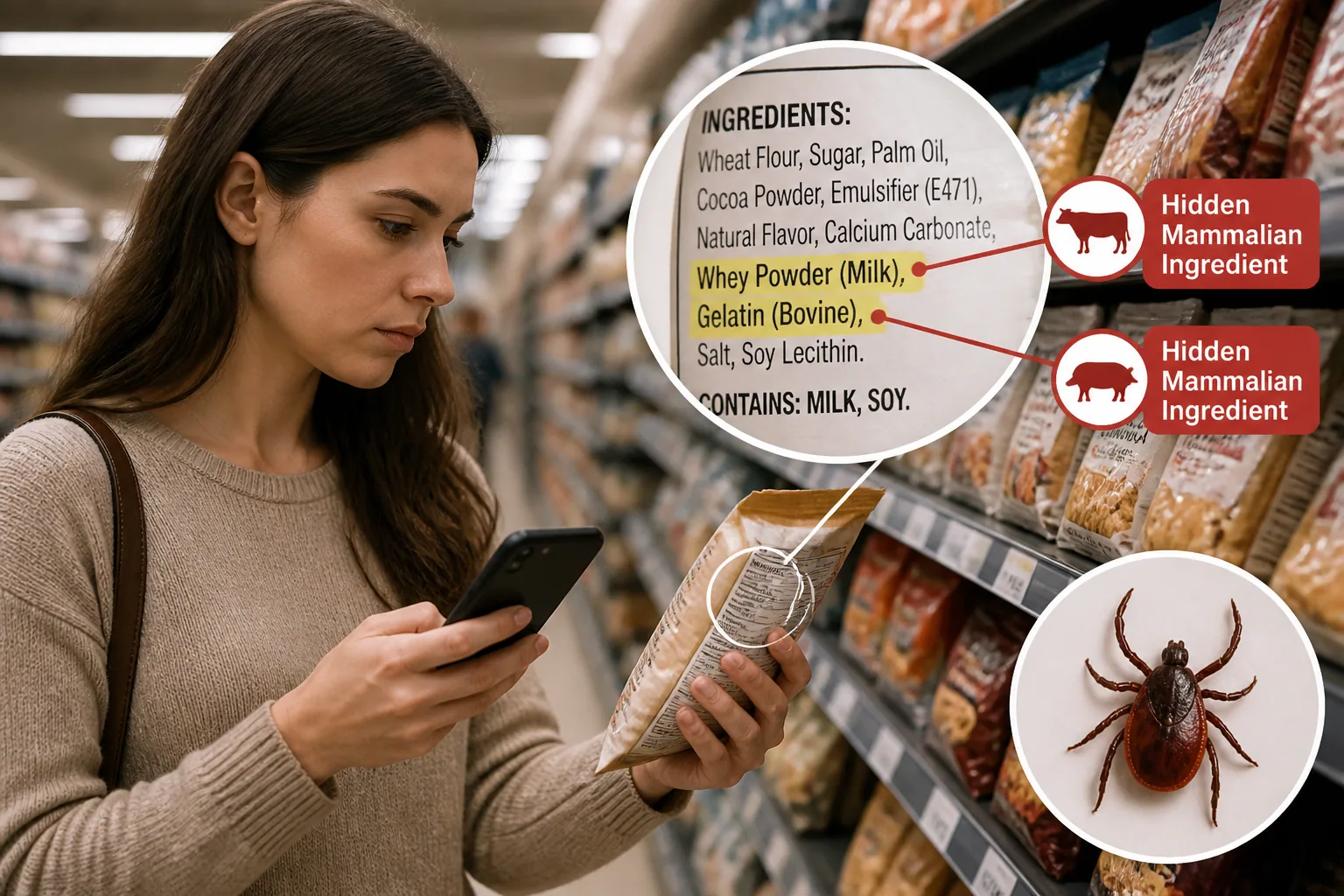
The Little-Known Allergen You Didn’t Expect: How Alpha-Gal Syndrome Changes Your Food Choices
Most food allergies are easy to recognize in theory, even if they are hard to live with in practice. A reaction comes soon after eating, the trigger is often obvious, and the label reading usually centers on a familiar ingredient like peanuts, milk, eggs, or shellfish. Alpha-gal syndrome is different. It is a tick-bite-triggered allergy that can make mammalian foods and ingredients unsafe, and its most confusing feature is that symptoms often arrive hours after the meal, not minutes. That delay is one reason alpha-gal syndrome is widely misunderstood, even as awareness grows.
If you already know the basics of food allergies, alpha-gal syndrome can still catch you off guard. It changes how you shop, how you eat out, how you read ingredient lists, and even how you think about everyday products outside the kitchen. The goal here is to break down what makes it unique, what to avoid, how it is diagnosed, and how to build a safer routine without feeling like you have to memorize every packaged item in the store.
Why Alpha-Gal Syndrome Is Different From Other Food Allergies
Alpha-gal syndrome, often shortened to AGS, is not a classic food allergy in the usual sense. It begins when a tick, most often the lone star tick in the United States, bites a person and introduces the sugar molecule galactose-α-1,3-galactose, or alpha-gal, into the bloodstream. The immune system may then develop IgE antibodies against alpha-gal, which means the body starts treating mammalian-derived alpha-gal as a threat. Mayo Clinic and Yale Medicine both note this tick-bite connection as the central trigger of the condition: https://www.mayoclinic.org/diseases-conditions/alpha-gal-syndrome/symptoms-causes/syc-20428608?p=1 and https://www.yalemedicine.org/conditions/alpha-gal-syndrome-ags
What makes it especially unusual is the timing. Common food allergies usually cause symptoms within minutes to an hour or two. With AGS, reactions typically show up 2 to 6 hours after eating mammalian meat or other mammalian-derived products. That delay can make it hard to connect the meal with the reaction, especially if symptoms begin in the middle of the night after dinner seemed perfectly fine. Research summarized by Mayo Clinic and a review in PMC describes this delayed pattern as one of the hallmarks of the syndrome: https://pmc.ncbi.nlm.nih.gov/articles/PMC8974695/
The result is a condition that can look mysterious at first. Someone may have eaten the same meal many times before, then suddenly start having nighttime hives, stomach pain, nausea, swelling, or worse. Because the trigger is a sugar found in mammals rather than a simple protein in one obvious food, the list of possible exposures can be broader than people expect.
How a Tick Bite Can Trigger a Meat Allergy
The story of AGS usually starts outdoors. Exposure risk is higher in areas where lone star ticks are established, especially in the South, East, and Central United States. The CDC notes that most U.S. cases cluster in those regions, and risk rises with time spent in tick-infested environments. In other words, this is not just a diet issue. It is also a vector-borne immune problem tied to where you live, travel, hike, garden, hunt, or spend time outside: https://www.cdc.gov/alpha-gal-syndrome/about/index.html
After the bite, the immune system may become sensitized over weeks or months, which is another reason the connection can be missed. A person can feel completely normal right after the bite and only later realize that certain meals are causing delayed reactions. In some patients, the immune response may also fade over time if they avoid additional tick bites, which means the condition can sometimes improve, although that should always be discussed with an allergist and never tested casually at home.
This tick-driven mechanism is why alpha-gal syndrome is different from a typical case of becoming intolerant to a food. It is not about a food preference or a digestive sensitivity. It is an immune reaction that may have started with an outdoor exposure, and that means prevention includes tick avoidance as much as meal planning.
Common Symptoms and Why Reactions Are Often Delayed
Because the reaction is delayed, symptoms often seem disconnected from the food that caused them. Some people experience hives, itching, flushing, swelling of the lips or face, stomach cramps, diarrhea, nausea, or vomiting. More severe reactions can include trouble breathing, dizziness, low blood pressure, or anaphylaxis. The delayed onset can be especially dangerous because the person may already be asleep or no longer paying attention to the meal that triggered the reaction.
The most important practical takeaway is that timing matters. If symptoms begin 2 to 6 hours after dinner, especially after eating beef, pork, lamb, venison, or foods that may contain mammalian ingredients, AGS should be on the list of possibilities. A study summarized in the literature found beef to be the most common culprit, followed by pork, with lamb and venison also reported as triggers. That pattern fits the fact that alpha-gal is found in mammalian meat rather than poultry or seafood: https://pmc.ncbi.nlm.nih.gov/articles/PMC6554561/
This delay can lead to false assumptions. Some people blame restaurant spices, food poisoning, stress, alcohol, or a random stomach bug. Others notice that reactions seem inconsistent, because the amount of alpha-gal exposure, how the food was prepared, and other factors can affect whether a reaction happens. For that reason, a symptom diary is often useful when you are first trying to identify the pattern.
Foods Most People Know to Avoid
The most obvious foods to avoid are mammalian meats. That means beef, pork, lamb, venison, and other meats from mammals. For many people, this is the first and most direct food change after diagnosis. It can also include organ meats, broths made from mammalian bones, and dishes where meat is mixed into sauces, fillings, or gravies.
Many people are also advised to be cautious with dairy and gelatin, although sensitivity varies from person to person. Yale Medicine and CDC patient guidance note that some patients react to cow’s milk, dairy products, gelatin, mammalian fats such as lard, tallow, and suet, and gelatin-based foods such as marshmallows and gummy candies. Not everyone with AGS reacts to every mammalian product, but the possibility is important because the safest approach is to identify your own trigger profile with medical guidance: https://www.yalemedicine.org/conditions/alpha-gal-syndrome-ags and https://www.cdc.gov/alpha-gal-syndrome/media/pdfs/2026/03/362395-A_SupportPatients-Alpha-Gal_ForHCPs_508.pdf
A practical way to think about AGS is that the obvious meat choices are only the beginning. If a food comes from a mammal, contains a mammalian byproduct, or was cooked with mammalian fat, it deserves a closer look. That is especially true with processed foods, shared fryers, soups, sauces, and ready-to-eat meals where the ingredient source is not visible.
The Hidden Sources of Alpha-Gal in Packaged Foods and Ingredients
Packaged foods can be tricky because alpha-gal exposures are not always listed in a way that jumps out at you. Gelatin is one of the best-known hidden sources. It can appear in candy, desserts, marshmallows, fruit snacks, capsules, and some supplements. Mammalian fats may also show up in prepared foods under names that are easy to overlook, such as lard, tallow, or suet.
Dairy can be another hidden issue. Some people with AGS tolerate dairy, while others do not. That means terms like milk solids, whey, casein, butter, or cream may matter depending on the individual. The same is true for processed products that use animal-derived flavorings, stabilizers, or additives. If a food is heavily processed and the ingredient origin is unclear, it is worth verifying with the manufacturer rather than assuming it is safe.
This is where label reading becomes a real skill, not just a habit. You are not only looking for obvious meat. You are checking for gelatin, lard, tallow, suet, dairy-derived ingredients, and any ingredient whose source may be mammalian. CDC guidance specifically recommends careful review of labels and awareness of hidden components from mammals, especially when people with AGS are trying to avoid accidental exposures: https://www.cdc.gov/alpha-gal-syndrome/media/pdfs/2026/03/362395-A_SupportPatients-Alpha-Gal_ForHCPs_508.pdf
Non-Food Products That May Also Be a Problem
One of the most surprising parts of alpha-gal syndrome is that the issue is not limited to food. Some people also react to non-food products that contain mammalian-derived ingredients. That can include gelatin in medical products, gelatin-based capsules in medications, certain vaccines that use gelatin, and hormone products derived from pigs or cows. Yale Medicine and CDC patient materials both point out that these exposures can matter for some patients: https://www.yalemedicine.org/conditions/alpha-gal-syndrome-ags and https://www.cdc.gov/alpha-gal-syndrome/media/pdfs/2026/03/362395-A_SupportPatients-Alpha-Gal_ForHCPs_508.pdf
This is why management often extends beyond grocery shopping. You may need to check prescription and over-the-counter medications, supplements, and even medical procedures. Not every patient will react to every product, but the possibility means that any new medication or treatment is worth discussing with a clinician if you have AGS. It also explains why people with this condition are often told to keep a close eye on capsule ingredients and excipients, not just the active drug itself.
The broader lesson is simple: alpha-gal syndrome can affect more than the dinner plate. If it comes from a mammal, or it may contain mammalian material, it belongs on your radar.
How Alpha-Gal Syndrome Is Diagnosed and Tested
Diagnosis usually starts with the story. An allergist will want to know whether you have delayed symptoms after eating mammalian meat or related products, whether you have a history of tick bites or outdoor exposure, and how consistent the reaction pattern is. Blood testing for IgE antibodies to alpha-gal can support the diagnosis, but the result only makes sense when it is matched with the clinical history. Yale Medicine notes that diagnosis often combines testing with the patient’s symptom pattern, and in some cases a medically supervised food challenge may be considered: https://www.yalemedicine.org/conditions/alpha-gal-syndrome-ags
That combination matters because a positive test alone is not the whole story. If you have the antibody but no symptoms, or symptoms that do not fit the delayed pattern, your doctor may look for other explanations. On the other hand, a classic history of nighttime reactions after mammalian meat, especially after a tick bite, can strongly suggest AGS even before confirmatory testing comes back.
If you suspect AGS, do not try to prove it by intentionally eating trigger foods. Work with an allergist instead. The diagnosis is part science, part pattern recognition, and part risk management.
How to Read Labels and Use Allergen Tools More Effectively
Label reading with alpha-gal syndrome takes a more investigative mindset than reading for common allergens. You are looking for mammalian ingredients that may be explicit, indirect, or hidden inside complex formulations. That includes gelatin, dairy derivatives, lard, tallow, suet, and any ingredient where the animal source is not immediately obvious.
A barcode or ingredient scanning app can help speed up the process, especially when you are shopping in a hurry. For example, Bokha: Food Allergy Scanner App lets you scan product barcodes and discover allergens in less than a second, which can be a practical shortcut when you are comparing packaged foods in the supermarket. You can learn more here: https://findthe.app/bokha
Still, no app should replace your own review of the ingredient list. Databases can help you filter out obvious risks, but manufacturers may change recipes, and some alpha-gal triggers are not part of standard major allergen disclosures. The safest approach is to use tools to save time, then double-check anything that contains gelatin, uncertain additives, or ingredients derived from mammals.
If a product is borderline, contact the manufacturer. Ask specifically about animal sources, gelatin, fats, and processing aids. For AGS, the source of an ingredient is often just as important as the ingredient name itself.
Tips for Grocery Shopping, Dining Out, and Asking the Right Questions
Grocery shopping becomes easier when you build a repeatable system. Start with a short list of safe staple foods, then add new products one at a time. Choose simple, less processed items when possible, because the fewer the ingredients, the fewer the hidden mammalian sources. Frozen plain vegetables, fresh produce, poultry, fish, grains, beans, and clearly labeled products are often easier to manage than highly processed convenience foods.
At the store, scan for more than just the obvious meat aisle. Watch out for baked goods, candy, desserts, soups, bouillon, sauces, meal kits, and snack products that may use gelatin or mammalian fats. When in doubt, use a scanning app for a quick first pass, then verify with the label and, if necessary, the manufacturer.
Dining out requires a different strategy. Ask whether meat stock, butter, lard, tallow, gelatin, or bacon fat is used in cooking. Ask about shared grills, fryers, and pans. Ask whether sauces and dressings are made in house or bought from suppliers. The more processed or composite the dish, the more important it is to get clear answers before ordering.
It also helps to keep questions short and specific. Instead of asking whether a dish is “allergy safe,” ask whether it contains any mammalian meat, broth, gelatin, dairy, lard, tallow, or suet. Specific questions are easier for restaurant staff to answer and reduce the chance of vague reassurance that misses a hidden ingredient.
When to See an Allergist and Build a Long-Term Management Plan
If you have delayed reactions after eating mammalian foods, especially with a history of tick bites or time spent in tick-prone areas, it is time to see an allergist. The condition can be serious, and because reactions may be delayed and variable, people sometimes underestimate the risk until they have a severe episode. The CDC estimates that suspected cases in the U.S. may already number in the hundreds of thousands, which makes recognition and proper management increasingly important: https://www.cdc.gov/alpha-gal-syndrome/about/index.html
A long-term plan often includes avoiding trigger foods, learning your personal tolerance level, carrying epinephrine if prescribed, and working through hidden sources in food, medications, and other products. It may also include tick prevention, since avoiding future bites can sometimes help IgE levels decline over time. That means long sleeves, repellents, tick checks, and prompt removal of ticks are not just outdoor habits. They are part of allergy management.
Alpha-gal syndrome is one of those conditions that changes the way you think about ordinary life. A grocery run, a dinner invitation, or a new prescription can all require more attention than before. The upside is that once you understand the pattern, the condition becomes much more manageable. With an allergist’s guidance, careful label reading, and tools that help you screen products faster, you can make informed choices without feeling like every meal is a gamble.