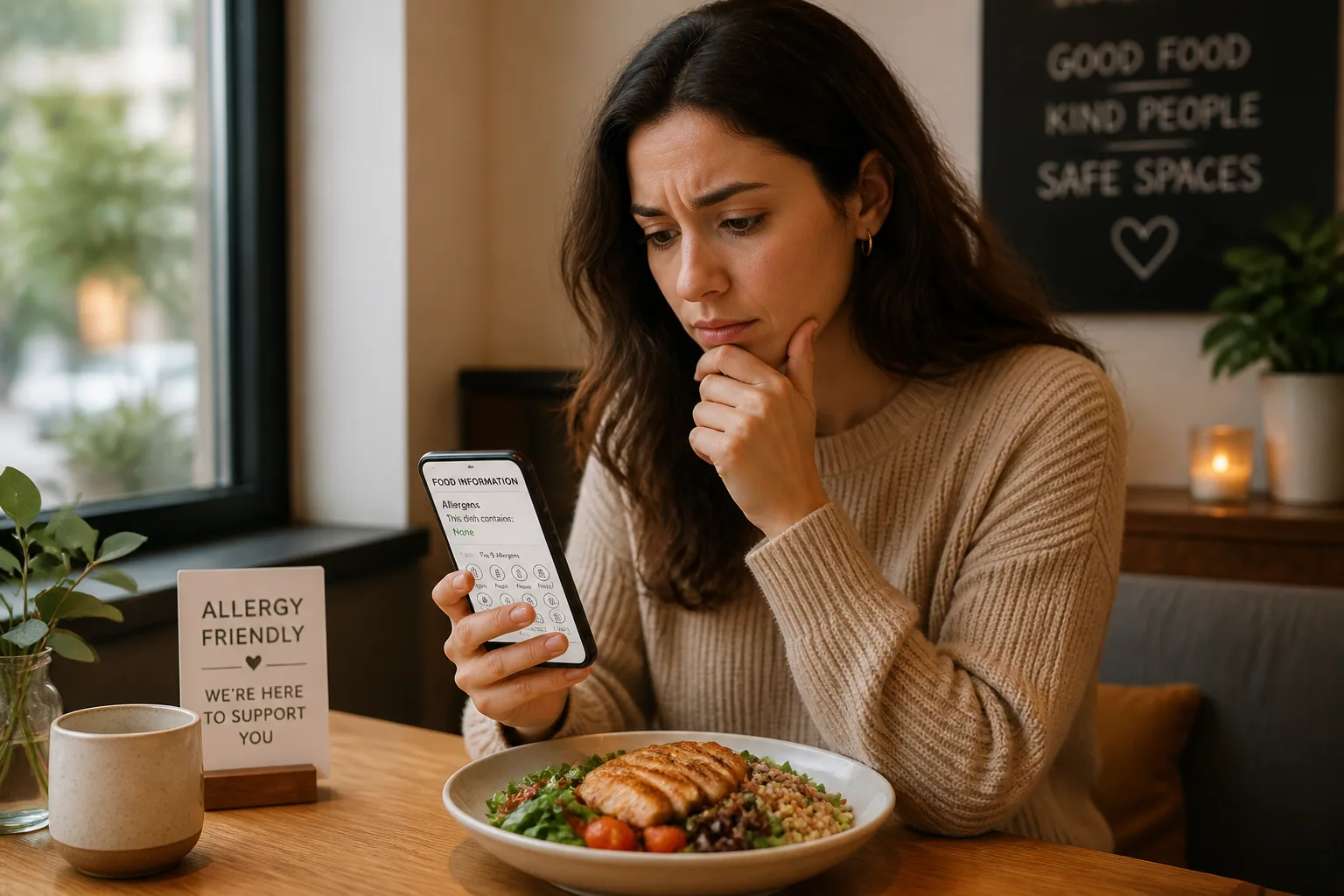
The Invisible Stress: How Food Allergies Affect Mental Health & What You Can Do About It
Living with food allergies is often explained as a physical health issue, but for many people, the hardest part is invisible. It is the constant scanning of labels, the mental rehearsal before every meal, the fear of accidental exposure, and the social pressure that comes with saying no, asking questions, or leaving the table early. Over time, that daily vigilance can become exhausting. It can also affect mental health in very real ways, contributing to anxiety, low mood, burnout, isolation, and even disordered eating patterns.
This emotional burden is not a sign of weakness. It is a natural response to living with a condition that requires ongoing attention and carries real consequences. Research increasingly shows that food allergies are linked to higher rates of anxiety and depression, and that the stress can affect children, teens, adults, and caregivers differently. The good news is that there are practical ways to ease the load, strengthen support, and make daily food decisions feel safer and less overwhelming.
Why Food Allergies Affect More Than Physical Health
Food allergies change the way people move through the world. A meal is no longer just a meal. It becomes a risk assessment, a conversation, and sometimes a source of fear. People often have to think about ingredients, cross-contact, restaurants, celebrations, travel, school events, and emergency planning all at once. That kind of ongoing vigilance can create a strong mental burden, especially because it never really switches off.
Unlike many health conditions that come and go, food allergies can shape nearly every daily decision. That means the stress is not limited to moments of exposure or reaction. It builds quietly over time. This is one reason food allergy management often affects self-confidence, social participation, and quality of life, not just physical safety.
The Daily Mental Load of Staying Safe
For many people with food allergies, the mental load begins before the day even starts. Breakfast requires checking packaging. Lunch requires planning ahead. A snack from a friend, a work event, or a restaurant meal may require questions, hesitation, or complete avoidance. Every food choice can involve second-guessing and extra work.
That repeated decision-making can lead to decision fatigue. When people must constantly analyze risk, there is less mental energy left for work, school, family, and rest. It is not just about being careful. It is about carrying a hidden second job in the background of everyday life.
Research reflects this burden. In a U.S. study, 31.4% of people with food allergies had a diagnosable anxiety disorder compared with 12.3% of those without food allergies, and major depressive or bipolar disorders were also more common, affecting 14.4% versus 5.4% in the comparison group. That suggests the emotional strain is not incidental. It is a meaningful part of the allergy experience. Source: https://www.sciencedirect.com/science/article/abs/pii/S1081120623008256
How Anxiety Shows Up in People With Food Allergies
Anxiety related to food allergies can look different from person to person. Some people feel it as a constant sense of dread before eating. Others feel panic when exposed to a new environment, a social invitation, or a food they did not prepare themselves. Some become hypervigilant, reading labels repeatedly, asking the same questions several times, or avoiding foods and places far beyond what is medically necessary.
In survey data from the FARE Patient Registry, about 62% of patients reported mental health concerns specifically related to their food allergy, and anxiety was one of the most common emotional responses, with panic also frequently reported after allergen exposure. That gives language to something many people already feel but may not have named. Source: https://pmc.ncbi.nlm.nih.gov/articles/PMC10973659/
Anxiety can also show up in the body. Racing heart, stomach upset, trouble sleeping, muscle tension, and irritability may become part of the routine. Children may cling to caregivers or refuse foods more broadly. Teens may try to manage anxiety by controlling food situations tightly. Adults may avoid restaurants, travel, or dating situations that feel unpredictable.
The Link Between Food Allergies, Depression, and Burnout
When a person has to stay alert all the time, burnout is a real risk. Burnout in food allergy management can look like emotional numbness, hopelessness, frustration, or a feeling of being trapped by the condition. It can also mean giving up on the effort to stay socially engaged because the planning feels too hard.
Depression may develop when the burden becomes chronic and unsupported. People can begin to feel isolated, misunderstood, or discouraged by the limits allergy management places on daily life. This can be especially true when their needs are dismissed by others or when they feel they must always be the one responsible for safety.
Recent research shows that mental health risks are elevated in children as well. Among children with food allergies, the risk of anxiety, depression, and eating disorders is higher than in healthy controls, with hazard ratios around 1.35 for anxiety, 1.24 for depression, and 1.85 for eating disorders. Source: https://pubmed.ncbi.nlm.nih.gov/40664887/
That does not mean food allergies cause depression in every case. It does mean that emotional health deserves attention as part of allergy care, not as an afterthought.
Social Isolation, School Stress, and Eating Out Fears
Food is deeply social. That is why food allergies can affect belonging so strongly. Birthday parties, school lunches, office celebrations, holidays, and restaurant meals can all become stressful. When a person cannot eat what everyone else is eating, it can create awkwardness, exclusion, or the feeling of being different.
Children may feel left out at school when they cannot share treats or participate in food-centered activities. Teens may worry that allergies make them seem inconvenient, “difficult,” or unromantic. Adults may avoid dating, work dinners, or travel because they do not want to explain their condition again and again.
This is not just social discomfort. It is a quality-of-life issue. Research suggests that adults whose allergies began in childhood report worse food allergy-related quality of life than those whose allergies began in adulthood, including greater emotional impact and more dietary and social restriction. Source: https://pmc.ncbi.nlm.nih.gov/articles/PMC8483056/
The emotional meaning of food can change too. When every meal feels risky, spontaneity disappears. Many people stop enjoying eating out and instead focus only on what is safe. Over time, that can make life feel narrower and less flexible.
Food Allergies and the Risk of Disordered Eating
For some people, food allergy management can overlap with disordered eating patterns. This is especially important in children and teens, but it can happen at any age. Avoiding allergens is medically necessary. The concern is when that avoidance expands into excessive restriction, fear of eating, or a loss of trust in one’s ability to choose food safely.
Some people start eliminating more and more foods than they need to, either because of anxiety or because they feel safer with a very narrow diet. Others may become preoccupied with ingredients, contamination, or “perfect” control. In children aged 3 to 12, internalizing problems such as anxiety and depression are linked with poorer quality of life, and a higher number of allergens or a history of anaphylaxis can make the burden heavier for both child and family. Source: https://www.mdpi.com/2227-9067/12/12/1657
The key distinction is that safety is necessary, but fear-driven restriction can become harmful. If food rules are shrinking life in a way that feels rigid, distressing, or hard to change, it may be time to involve a clinician who understands both allergy safety and mental health.
How Caregivers and Families Are Affected Emotionally
Food allergies rarely affect just one person. Caregivers often carry the emotional labor of protecting a child, coordinating meals, reading labels, educating schools, and staying prepared for emergencies. That responsibility can create chronic fear. Many caregivers worry about life-threatening reactions, sleep lightly, and feel responsible for preventing every mistake.
In a global sample of adults with food allergies and caregivers, anxiety about allergic reaction was the most common distress, reported by 62.5% of adults and 72.6% of caregivers. The study also found that distress was higher with more allergens, more severe symptoms, autoinjector prescription, female gender, and history of anaphylaxis. Source: https://pmc.ncbi.nlm.nih.gov/articles/PMC12143967/
Families may also absorb the stress in different ways. Parents might become overprotective. Siblings may feel the household revolves around one child’s safety. Partners may disagree about risk tolerance. Over time, even loving families can become tense when safety concerns dominate every shared decision.
What Recent Research Says About Allergy-Related Mental Health
The research is becoming clearer: food allergy is not only a medical issue, but also a psychosocial one. In addition to the elevated anxiety and depression rates already noted, surveys show that mental health concerns are common and that many people want support but do not receive it. In the FARE registry findings, only about one in six patients and one in seven caregivers had accessed mental health services for allergy-related emotional concerns, even though more than half wanted resources to manage anxiety and stress. Source: https://www.foodallergy.org/resources/psychosocial-impact-food-allergies
This gap matters. When support is missing, people often normalize distress and assume they just need to be tougher or more careful. But the data suggest that emotional strain is common enough to warrant routine attention. That means better screening, better education, and better access to counseling and coping tools should be part of allergy care.
Practical Coping Strategies for Everyday Life
There is no single strategy that removes the stress completely, but there are ways to make it more manageable. One of the most effective approaches is to reduce unnecessary uncertainty. Clear routines for label reading, meal prep, and communication can help conserve mental energy. When possible, plan ahead for restaurants, travel, school events, and social gatherings so you are not making every decision in a rush.
It also helps to separate what is medically necessary from what anxiety is adding on top. That distinction is not always easy, but it can be grounding. If a food is safe according to your allergist and product information, the goal is to trust that plan rather than repeatedly rechecking out of fear. A calm, repeatable system can reduce the cycle of reassurance-seeking.
Other coping tools include grounding exercises, journaling, realistic self-talk, and short breathing breaks before meals or outings. For children and teens, coping works best when adults model calm, speak honestly without catastrophizing, and avoid making food allergy the center of identity. For adults, permission to ask for help and to rest from hypervigilance can be a major step forward.
When to Seek Professional Mental Health Support
It may be time to seek professional help if fear is keeping you from eating normally, sleeping well, attending school or work, or participating in social life. Other warning signs include frequent panic, persistent sadness, compulsive checking, intrusive thoughts about contamination, withdrawal from friends, or a child whose distress is escalating rather than easing.
Therapy can help people cope with chronic uncertainty, build tolerance for manageable risk, and challenge catastrophic thinking. It can also help families communicate better and reduce the emotional pressure that builds around meals. In some cases, a psychiatrist or primary care clinician may also be needed if anxiety or depression is severe.
The important thing is not to wait until the problem becomes overwhelming. Since so many people with food allergies want support but do not access it, it can help to bring up mental health directly at allergy, pediatric, or primary care visits.
How Community, Education, and Communication Reduce Stress
Support matters. Food allergies feel lighter when other people understand them. Schools, workplaces, restaurants, and extended family members all play a role in reducing stress by taking allergy concerns seriously and making communication easy. People should not have to fight for basic accommodation every time they eat.
Education helps turn uncertainty into shared responsibility. When caregivers, teachers, friends, and partners know what cross-contact means, how to respond in an emergency, and how to ask respectful questions, the person with allergies does not have to carry the entire burden alone. Clear communication also lowers social tension, because it reduces misunderstandings and guilt.
Community can also normalize the emotional side of food allergies. Knowing that fear, frustration, and exhaustion are common can be deeply relieving. It reminds people that they are not overreacting. They are responding to a condition that requires constant attention.
How Bokha Can Help Build Confidence Around Food Choices
One practical way to reduce some of the day-to-day stress is to make product checking faster and less mentally draining. Bokha: Food Allergy Scanner App can help with that. Available on iOS and Android, it lets you scan product barcodes and discover allergens in less than a second, which can reduce time spent guessing in the supermarket and make food choices feel more confident and efficient. You can learn more here: https://findthe.app/bokha
By detecting 13 allergens, traces, and additives, Bokha may help people with allergies and intolerances narrow down safe options more quickly. That does not replace medical advice or careful judgment, but it can ease decision fatigue and support a calmer shopping routine.
A More Holistic Way to Support People With Food Allergies
The strongest message from both research and lived experience is simple: food allergies affect the whole person. They influence not only the body, but also mood, confidence, relationships, family dynamics, and everyday freedom. When care focuses only on emergency preparedness and ignores emotional strain, an important part of the problem is left out.
A more holistic approach means treating mental health as part of allergy care from the start. It means asking how a child is coping at school, how a teen feels at parties, how an adult handles restaurants and travel, and how caregivers are doing emotionally. It means screening for anxiety and depression, making support normal, and helping people build systems that reduce fear rather than feed it.
Food allergies may always require vigilance, but they do not have to dominate life. With the right mix of education, emotional support, practical tools, and professional help when needed, people can feel safer, less isolated, and more confident in everyday choices.