The Financial & Social Costs of Living with Food Allergies: What’s Unseen and How to Cope
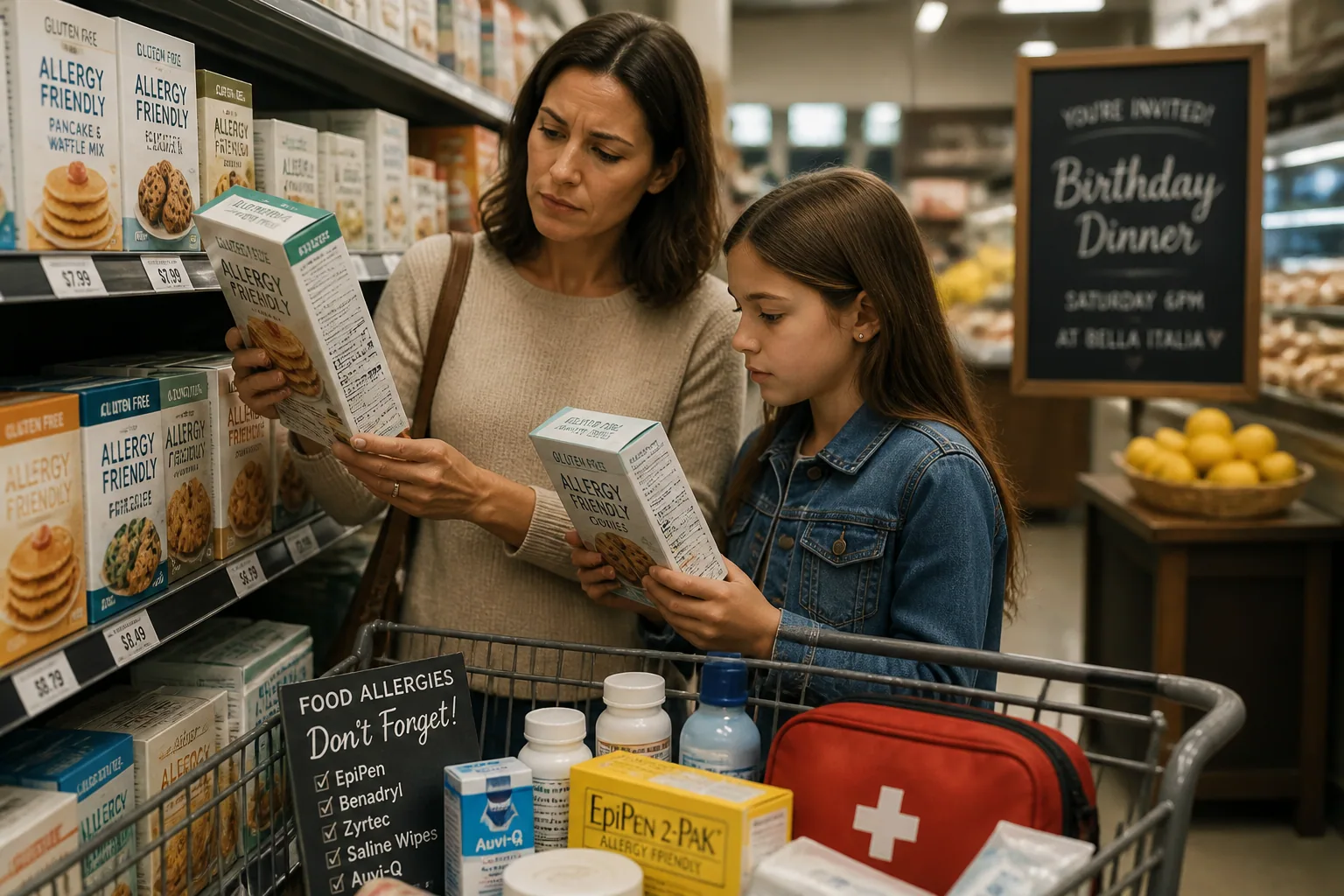
Living with food allergies is not just a matter of reading labels and carrying an epinephrine autoinjector. For many families in the U.S., it is a long-term financial, emotional, and social burden that shows up in small daily decisions and larger life choices. The obvious costs are easier to count, like groceries, prescriptions, and doctor visits. The less visible costs are often bigger than people expect: missed work, repeat shopping trips, special meal planning, skipped social events, anxiety, and the constant mental load of staying safe.
This matters for a lot of households. Recent CDC data estimates that about 7% of U.S. adults and 5.3% of children ages 0 to 17 have a diagnosed food allergy as of 2024, which means millions of people are managing these hidden costs every day. https://www.cdc.gov/nchs/pressroom/releases/20260108.html
Why the Real Cost of Food Allergies Is Easy to Miss
Food allergy expenses are easy to underestimate because they are spread across categories that do not always look related. A family may notice the higher grocery bill, but not immediately connect it to the cost of repeated store trips after missing an ingredient, extra gas, takeout when safe food runs out, or time spent researching brands and restaurants. Then there are the medical costs, which can include allergist visits, emergency care after reactions, follow-up appointments, and medication refills.
The biggest cost may be that families have to build their lives around risk. That means planning ahead for school, vacations, holidays, sleepovers, work lunches, and every meal outside the home. Even when no reaction happens, the burden is still there. The stress itself becomes part of the cost.
The Household Budget Hit: Food, Medications, and Medical Care
The direct financial strain is real. In the landmark JAMA Pediatrics analysis of childhood food allergy in the U.S., the total annual cost was estimated at $24.8 billion, averaging about $4,184 per child. That figure included $4.3 billion in direct medical costs. The same study estimated out-of-pocket costs for families at $5.5 billion annually, or about $931 per child. About 31% of those out-of-pocket costs came from special diets and allergen-free foods. https://jamanetwork.com/journals/jamapediatrics/fullarticle/1738764
Those numbers help show why food allergy is not a niche spending issue. Specialty foods often carry premium prices, and families may buy separate items to avoid cross-contact. On top of that, epinephrine is not a one-time purchase. The average list price of a brand-name epinephrine autoinjector has risen from around $99 in 2010 to roughly $609 in recent years, before discounts and rebates. For families who need multiple devices or have to replace them regularly, that is a major recurring expense. https://www.foodallergy.org/sites/default/files/2026-02/FARE_NIR_FINAL 1.pdf
Medical spending can also become unequal very quickly. A Pediatrics study found that families in the lowest income bracket spent 2.5 times more on emergency department visits and hospitalizations for food allergy than higher-income families, roughly $1,021 versus $416. At the same time, specialist visit costs and out-of-pocket medication costs were lower for those families, suggesting that cost barriers may delay preventive care and shift the burden toward emergency treatment instead. https://pubmed.ncbi.nlm.nih.gov/27244806/
What Recent U.S. Research Says About Out-of-Pocket Costs
The broader research picture shows that food allergy costs are not evenly distributed and are often linked to food insecurity. In a national community-based sample of U.S. households managing food allergy, about 70% screened at risk for food insecurity. These households also reported higher rates of anxiety, anger, loneliness, fear of eating, and bullying experiences. https://pubmed.ncbi.nlm.nih.gov/38288585/
Another nationally representative study found that the association between child food allergy and family food insecurity is stronger in households at or below 400% of the poverty threshold. In plain language, families with fewer financial resources are more likely to feel the strain of allergy-safe food choices. https://pmc.ncbi.nlm.nih.gov/articles/PMC11805619/
Research from FARE has also estimated that specialty or allergen-free food products cost U.S. consumers managing food allergies more than $19 billion per year, and that households with food allergies pay about 5% more per month on food than average consumers. Even a small monthly percentage difference becomes meaningful over the course of a year, especially when prices rise across the whole grocery basket. https://www.foodallergy.org/media-room/new-research-shows-one-four-american-consumers-do-not-purchase-products-containing-top-9
Time is one of the most overlooked costs. Managing food allergies often means reading ingredient labels, checking for formulation changes, calling manufacturers, comparing restaurants, and preparing backup meals. It can mean shopping at multiple stores because one store carries safe bread, another has a dependable allergy-friendly snack line, and a third offers a better selection of substitutes.
That time has a financial value, even if no one writes it into a household budget. Parents may take time off work to handle school paperwork, attend medical appointments, or respond to a reaction. Adults with food allergies may spend extra hours each week on meal planning and verifying safe options before a business lunch or trip. The work of staying safe is often invisible because it blends into ordinary life, but it still consumes energy, attention, and money.
For some families, the time burden is made worse by fear of making a mistake. Food allergy management is not only about finding safe food. It is about repeating the process enough times to feel confident that the food is actually safe, that the brand has not changed ingredients, and that the restaurant or school understands the request. That constant checking can be exhausting.
Food is social. That is why food allergies can affect so much more than eating. Dining out becomes a risk calculation. Travel requires extra planning. Parties and school events can turn into stressful moments of scanning the table for something safe or deciding whether it is worth going at all. Sometimes the answer is no, and that no comes with a social cost.
Exclusion is not always dramatic. Sometimes it is subtle, like bringing your own food to a birthday party while everyone else eats freely, or leaving early from a work gathering because the menu is unsafe. Over time, these repeated small moments can create a sense of being different in ordinary settings. That feeling is part of the burden too.
The social cost also includes disclosure fatigue. People with food allergies often have to explain their condition again and again to servers, hosts, teachers, coaches, employers, friends, and family members. Even when others mean well, the need to keep educating people can become tiring. Each new setting can require a new conversation about safety, ingredients, cross-contact, and emergency planning.
The emotional burden of food allergies is not abstract. In the FARE Patient Registry study, over two-thirds of U.S. patients with food allergies or their caregivers reported mental health concerns related to living with food allergies, including anxiety, panic, fear around reactions, and avoidance behaviors. https://pmc.ncbi.nlm.nih.gov/articles/PMC10973659/
Among youth ages 10 to 14 with food allergies, more than one-third scored above clinical cutoffs for overall anxiety, and at least 25% had clinically significant symptoms in subdomains such as generalized anxiety, panic disorder, and school avoidance. The study found that perceived risk and perceived burden drive anxiety more than medical history alone. https://pubmed.ncbi.nlm.nih.gov/38679905/
That finding is important because it shows why two families with similar allergy histories may experience the condition very differently. A history of anaphylaxis matters, of course, but so do day-to-day experiences, confidence in labels, support from schools, and how safe the surrounding environment feels. In other words, the emotional load often comes from living with uncertainty rather than from a reaction alone.
Hypervigilance can become a way of life. Some people constantly scan menus, ask follow-up questions, and avoid eating in unfamiliar places. That can reduce immediate risk, but it also keeps the nervous system on alert. Over time, that state can wear down sleep, focus, and peace of mind.
Food allergies can affect attendance, productivity, and long-term financial stability. In a 2024 study of U.S. children with food allergies who attended school in the past 12 months, 37% had at least one food allergy-related absence. That included 13% missing 1 to 2 days, 17% missing 3 to 7 days, and 4% missing 8 to 14 days. Children with multiple allergies, a history of anaphylaxis, or epinephrine use had higher odds of missing school. https://pmc.ncbi.nlm.nih.gov/articles/PMC11382768/
School absences matter because they can affect learning, social development, and family routines. A parent may also miss work to care for a child, manage appointments, or respond to an emergency. That creates a chain reaction where one health condition affects both educational and economic stability.
Adults face their own long-term trade-offs. Food allergy can shape career choices, commute decisions, travel habits, and willingness to take on jobs with frequent meals, events, or travel. Some people may avoid restaurant work, event-heavy roles, or positions that make it difficult to control meals. Others may decline promotions or assignments that require more time away from home. These are not always visible losses, but they can affect earnings and advancement over time.
In that sense, food allergy is not only a health issue. It can also function like a quiet constraint on opportunity, influencing who can work where, how much flexibility they need, and how much effort goes into simply getting through a typical week.
While food allergies are costly, there are practical ways to reduce the burden. A first step is to treat allergy management like a recurring household expense, not an occasional emergency. Families can build a monthly allergy budget that includes specialty foods, medication refills, replacement devices, school supplies, travel snacks, and an emergency cushion for unexpected care.
It also helps to track spending by category. When families know whether the biggest expense is specialty foods, restaurant meals, transportation, or medication, they can make better decisions about where to save. Some people find that buying pantry-safe staples in bulk, planning fewer store trips, and cooking larger batches lowers the cost per meal.
Patient assistance programs, manufacturer coupons, and pharmacy discount tools can help with medication costs, especially for epinephrine. It is also worth asking allergists, pharmacists, and insurers about preferred formulations, generic options, or reimbursement pathways. Even when savings are modest, they can matter over a year.
For shopping efficiency, tools that reduce label-reading time can save both money and stress. One useful option is Bokha: Food Allergy Scanner App, which lets you scan product barcodes and check allergens in less than a second. It can help families identify safe products faster and cut down on time spent in the supermarket. https://findthe.app/bokha
Because anxiety and social stress are so common, mental health support should be part of food allergy care, not an afterthought. Therapy can help children and adults manage hypervigilance, fear of reactions, avoidance behaviors, and the sense that every meal is a risk. For some people, cognitive behavioral strategies can reduce fear loops and help rebuild confidence in everyday situations.
Support groups and peer communities can also make a big difference. It is easier to cope when you are not the only one who brings safe snacks to every event, carries emergency medication everywhere, or worries about a school lunch table. Shared experience can reduce isolation and normalize the fact that this condition affects more than the immune system.
Families may also benefit from school counselors, social workers, and community advocates who understand both the practical and emotional side of food allergy care. When the problem is partly about feeling excluded or constantly on guard, being understood is not a small thing.
Individual coping matters, but so does making the environment safer and more inclusive. Schools can improve food allergy management through clear emergency plans, staff training, better communication with parents, and accommodations that reduce accidental exposure while still supporting participation in class events. Workplaces can do more by respecting disclosure without overreacting, providing safe meeting options, and avoiding the assumption that food-centered events are harmless for everyone.
Restaurants and food businesses can also make life easier through transparent ingredient information, clearer allergen protocols, and staff training on cross-contact. The goal is not to eliminate all risk, which may not be possible, but to reduce avoidable harm and make everyday participation less stressful.
Public policy matters too. Better access to affordable epinephrine, stronger labeling standards, and support for food-insecure households can all reduce the burden on families. The research is clear that food allergy does not affect only health outcomes. It affects finances, school attendance, emotional well-being, and equality of access to ordinary life.
Coping with food allergies does not mean pretending the burden is small. It means building a life that is safer, more predictable, and less isolating within the limits of the condition. For some people, that will mean detailed meal planning and a strict budget. For others, it will mean therapy, peer support, and a more careful approach to school or work accommodations. Often it means all of those at once.
The most helpful mindset is probably not optimism at all costs, but realism. Food allergies can be expensive, time-consuming, socially disruptive, and emotionally draining. Those costs are real, even when they do not show up on a receipt. Naming them makes it easier to plan for them, ask for support, and push for systems that do less harm.