Safe Snacks for Allergy Fighters: Packing the Perfect Lunch for School, Work, or Travel
Packing food when you or your child has allergies is not just about convenience. It is about reducing risk, saving time, and making sure every meal away from home feels manageable. For many families, that means planning lunches and snacks with the same care you would give to medication or school supplies. It also means understanding labels, spotting cross-contact risks, and having reliable backup options for the moments when plans change.
The need is bigger than many people realize. According to the CDC, about 1 in 13 children in the U.S., or roughly 8%, have food allergies, which is about 2 students in every classroom. The CDC also notes that approximately 40% of U.S. children with food allergies have needed emergency department treatment for an allergic reaction. That is why a well-packed lunch box or travel bag is more than a routine task. It is part of everyday safety planning. https://www.cdc.gov/school-health-conditions/food-allergies/index.html
Why Portable Allergy-Safe Food Planning Matters
When you are at school, at the office, in an airport, or on a road trip, you usually do not have full control over ingredients, prep surfaces, or the people handling your food. That uncertainty is exactly what makes portable allergy-safe planning so valuable. A lunch packed at home can be chosen, checked, sealed, and transported with far more confidence than a meal bought in a rush.
Travel makes this even more important. Families managing food allergies often face unfamiliar brands, different labeling practices, shared serving utensils, and limited safe options in transit. Healthline notes that travel can increase risk because of unfamiliar food sources, labeling differences, and cross-contact in airports, flights, or rest stops. It also points out that bringing your own safely packed meals and nonperishable snacks can help reduce risk, especially because in-flight meals cannot always guarantee allergen safety. https://www.healthline.com/health/allergies/travel-tips-from-parent-with-child-food-allergies
The Must-Know Rules of Reading Labels on the Go
Reading labels in a hurry is one of the most important skills for allergy fighters. The goal is not just to look for a familiar ingredient. It is to understand whether a product is truly safe for your specific allergens, including hidden sources and manufacturing notes. In the U.S., the major food allergens account for most allergic reactions from food. Under FALCPA, milk, eggs, fish, shellfish, tree nuts, peanuts, wheat, and soybeans make up around 90% of all allergic reactions from food. Sesame is now also a major allergen under federal law, bringing the total to nine major allergens that must be clearly identified. https://www.fda.gov/food/food-allergensgluten-free-guidance-documents-regulatory-information/food-allergen-labeling-and-consumer-protection-act-2004-falcpa
For packaged foods, look for the ingredient list first, then check the allergen statement, often labeled as “Contains.” Sesame must be identified by its common name in ingredient lists or in a nearby Contains statement, according to FDA guidance on the FASTER Act. Be extra careful with older products as well, because foods pre-packaged before January 1, 2023, may not have updated sesame declarations. That matters most for long shelf-life snacks, pantry goods, and convenience items that may sit in storage for a long time. https://www.fda.gov/food/food-allergies/faster-act-sesame-ninth-major-food-allergen
When you are buying single-serve or convenience products, do not assume a “small” item is automatically safer. Mini crackers, snack bars, instant meals, and flavored chips can still contain multiple allergens or hidden ingredients, and they may be made on shared lines. If your family uses a scanner app, this is where a tool like Bokha can save time by checking products in less than a second and identifying 13 allergens, traces, and additives before you add anything to your cart. https://findthe.app/bokha
What ‘May Contain’ and Shared Facility Warnings Really Mean
Many people see “may contain” and wonder whether it is a legal requirement, a marketing phrase, or a true warning. In practice, it is a signal that cross-contact may have occurred during production or packaging. Cross-contact is different from cross-contamination in common conversation, but the idea is the same: proteins from an allergen can be unintentionally transferred into a food that was intended to be allergen-free. Even invisible amounts can trigger reactions. FARE explains that this can happen through shared utensils, cooking surfaces, equipment, or production environments. https://www.foodallergy.org/resources/avoiding-cross-contact
A shared facility statement means the product was made in a place that also handles allergens. That does not automatically mean the item is unsafe for every allergic person, but it does mean the risk is higher and the decision should be made with your own allergy threshold and medical guidance in mind. For families with severe allergies, especially those with a history of anaphylaxis, it is often smart to treat shared-facility warnings as a reason to choose a different product when possible.
The same caution applies to bulk bins, salad bars, and self-serve snacks, where utensils are often reused and surfaces are shared. If you need food that can be trusted on a stressful day, prepackaged and clearly labeled items usually offer more predictability than loose or repackaged foods.
Nonperishable Snack Ideas Free From Bokha’s 13 Detectable Allergens
A strong travel snack kit should include foods that survive backpacks, lunch bags, cars, and carry-ons without needing refrigeration. The best options are simple, individually sealed, and easy to identify. Since Bokha detects 13 allergens, including lactose, gluten, peanut, egg, soy, fish, shellfish, tree nuts, wheat, mustard, celery, mint, and sulphites, it can help you screen products quickly before buying. That is useful when you are standing in a gas station aisle or airport store and need a decision fast. https://findthe.app/bokha
Good nonperishable ideas often include plain pretzels or crackers if they fit your allergen profile, fruit pouches, applesauce cups, shelf-stable roasted chickpeas, seed-based bars only if seeds are safe for you, dried fruit without added sulfites, shelf-stable jerky made from tolerated ingredients, rice cakes, and single-serve cups of safe hummus alternatives if refrigerated storage is available later. The safest choices tend to be the ones with short ingredient lists and obvious packaging.
You can also build snack kits around texture and energy needs. A child may need a crunchy item, a sweet item, and a protein-rich item to stay satisfied through the school day. An adult may want a mix of portable carbohydrates and a more filling option for commuting or long meetings. The key is not variety for its own sake. The key is predictability, shelf stability, and ingredients you have already checked and trusted.
Packable Lunch and Mini-Meal Ideas for School, Work, and Travel
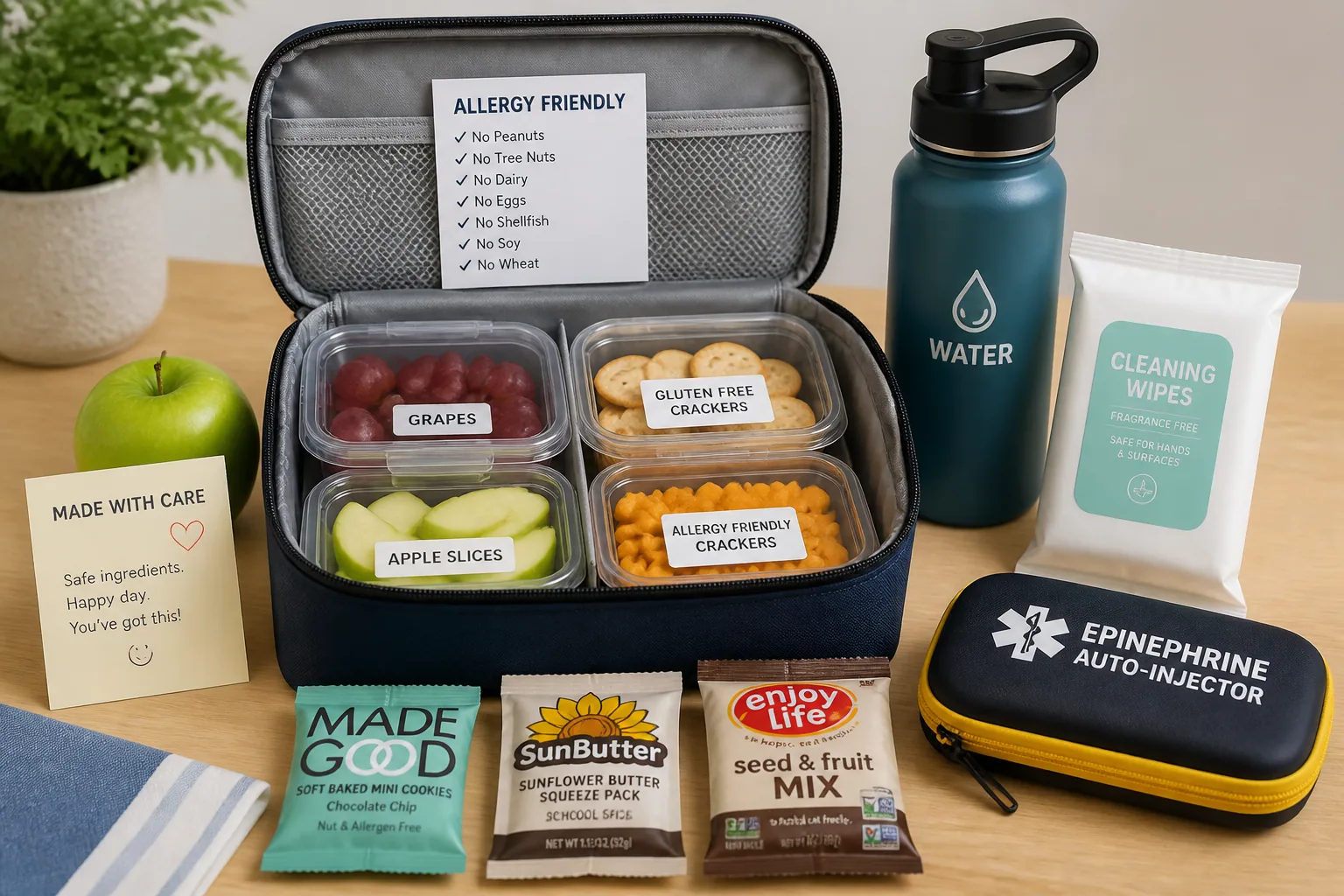
A safe packed lunch does not need to be complicated. In fact, simplicity is often the best strategy. Think in building blocks: one main item, one or two sides, and a snack or treat that you know is safe. For school, that might mean a sandwich on tolerated bread, fruit, and a packaged snack. For work, it might be a grain bowl, leftovers in a thermos, or a chilled salad with a tested dressing. For travel, a compact wrap, a hard-boiled egg only if egg is safe, or a shelf-stable meal pouch can work well if refrigeration is limited.
Mini-meals are especially helpful for long days. A bento-style lunch box can separate ingredients and reduce mixing, which is useful when a child dislikes foods touching or when you want to avoid crumbs from one item getting into another. Pack a main protein, a carbohydrate, and a vegetable or fruit. If you rely on reusable containers, wash and dry them thoroughly before each use so old residue does not linger.
For flights and road trips, pack more than you think you will need. Delays happen, connections get missed, and the food you expected to buy may not be available. A good rule is to carry one extra snack and one extra meal component for every long stretch of travel. That way, hunger does not force a risky purchase.
How to Prevent Cross-Contact While Prepping and Packing
Cross-contact prevention starts at home. Use clean hands, clean counters, and clean utensils before assembling food. If you are preparing meals for someone with a severe allergy, it can help to dedicate a specific cutting board, knife, sponge, or toaster slot to allergy-safe food. The point is to avoid tiny transfers of residue that may not be visible but can still matter.
Storage also matters. Keep safe foods sealed until the moment they are used, and do not place them next to questionable products in the fridge or pantry if leakage is possible. In lunch bags, separate items that could crush or leak. Use rigid containers for wet foods, and keep wipes or napkins nearby so hands, tables, and trays can be cleaned quickly before eating.
If your child packs lunch for school, teach a simple routine: wash hands, check the label, use the safe container, and close the bag fully. If you are packing for yourself, create the same habit so there is less chance of grabbing the wrong item in a hurry. Small routines reduce mistakes, especially when mornings are busy.
Smart Strategies for Eating Safely at Airports, Gas Stations, and Road Stops
When you are away from home, the safest choice is often to rely on your own food first. Still, it helps to know how to buy a backup item when necessary. At airports, look for sealed, clearly labeled foods instead of open deli items or self-serve snacks. At gas stations and rest stops, choose packaged foods with full ingredient labels rather than loose bakery items or hot counter foods. If you need to eat in transit, keep in mind that shared prep areas and tools can create risk even when ingredients appear simple.
Before buying anything, scan the label carefully for your known allergens and for any may contain or shared facility statements. If a product is in a travel cooler or convenience case and you cannot inspect it properly, skip it. The few minutes you save are not worth the uncertainty if you are dealing with a serious allergy.
It also helps to plan by location. Airport food courts may have more packaged snacks in newsstands or gift shops than in restaurants. Gas stations may have safe shelf-stable fruit cups, chips, or crackers if labels are clear. Road stops may have grocery sections where you can buy fruit, sealed nut-free or allergen-free snacks, and drinks. The best backup strategy is to identify safe brands before you leave home, then stick to those known products when possible.
What to Keep in Your Allergy Emergency Kit at All Times
A packed lunch is only one part of staying safe. Your emergency kit should be easy to reach, not buried under extra clothes or random travel items. At a minimum, many families keep epinephrine prescribed by a doctor, any other emergency medication recommended for the allergy plan, disinfecting or cleaning wipes, tissues, hand sanitizer if tolerated, and a written action plan. If a caregiver, teacher, or travel companion may need to help, make sure they can find these items quickly.
The kit should be ready to move with you from the backpack to the car to the carry-on. If your child is old enough, teach them what the kit looks like and where it lives. Adults should do the same for themselves. In an emergency, clarity matters. A bag that is easy to identify is a bag that is more likely to be used on time.
Check expiration dates regularly and replace anything outdated before it becomes a problem. It is also a good idea to keep a second set of supplies at school, in the office, or in a travel bag if your clinician recommends it. The purpose is to reduce the chance that a forgotten bag or a rushed morning leaves you unprotected.
How to Build a Reliable Go-Bag for Busy Mornings and Last-Minute Trips
A go-bag is your backup plan for the mornings when everything is moving too fast. It can hold shelf-stable snacks, a water bottle, a spare utensil set, wipes, and emergency medication. For children, it can also include a note for caregivers or school staff with key instructions. For adults, it can include a printed list of safe foods or trusted stores near a frequent route.
The most reliable go-bags are built around repetition. Use the same style of bag, the same types of containers, and the same snack categories each time so you can restock quickly. If an item gets used, replace it that day or as soon as you get home. That way, the bag stays ready instead of becoming an empty shell that only looks prepared.
You can even create separate versions for different routines: one for school days, one for office commutes, and one for travel. A school bag might prioritize quick snacks and emergency forms. A work bag might focus on lunches, coffee add-ins you trust, and desk-safe snacks. A travel bag might add longer-lasting foods, extra wipes, and enough supplies for delayed flights or traffic.
Final Allergy-Safe Packing Checklist
Before leaving home, run through a simple checklist: safe meal packed, backup snacks included, labels checked, allergen statements reviewed, cross-contact risks considered, emergency medication accessible, and wipes or cleaning supplies easy to reach. If you are traveling, add water, extra food, and a plan for where the next safe meal will come from.
The overall goal is not perfection. It is consistency. The more often you pack food the same way, check the same details, and keep the same emergency items ready, the easier it becomes to travel with confidence. With a little planning, school days, office hours, road trips, and flights can feel much less unpredictable, even when food allergies are part of daily life.