Safe Scents, Safe Skin: How to Spot Hidden Food Allergens in Beauty, Skincare, and Scented Spaces
Food allergies do not stop at the dinner table. For many people, especially parents managing allergies for children, the bigger challenge is spotting ingredients in places that are not obviously “food” at all: moisturizers, lip balms, shampoos, body washes, soaps, perfumes, laundry products, salon treatments, and even shared tools or bathroom counters. A product can look gentle, smell clean, and still contain a food-derived ingredient that is risky for sensitive skin or, in some cases, risky through incidental exposure. That is why it helps to approach personal care with the same careful eye you use for groceries.
This matters even more now that cosmetics rules are changing. Under the Modernization of Cosmetics Regulation Act, or MoCRA, U.S. cosmetics companies are now required to register facilities, list every product they sell, clearly label allergens, and report adverse events, according to Axios: https://www.axios.com/2024/07/01/makeover-of-cosmetics-regulation-takes-next-step But there is still a major gap: food allergen labeling rules that apply to foods do not currently apply to cosmetics in the same way, except for certain color additives. That means the burden of caution often still falls on the shopper, parent, or allergy-conscious user.
Why Food Allergies Matter Beyond the Kitchen
It is easy to assume that if you are not eating something, you are safe from it. Unfortunately, that is not always true. In beauty and skincare, food-derived ingredients can be absorbed through the skin, touch the lips, get near the eyes, or transfer from hands and surfaces. For people with very sensitive skin, eczema, or a history of contact reactions, even a topical ingredient can cause itching, redness, swelling, or a delayed flare-up. In some cases, an ingredient may not trigger a classic food-allergy response, but it can still irritate the skin or worsen an existing condition.
Another issue is that these products are often used repeatedly and in small doses, which makes the exposure feel harmless. A little lotion here, a lip gloss there, a bit of shampoo in the shower, a scented hand soap at school or work. Over time, those small exposures can add up, and they can be harder to track than one obvious snack ingredient. That is why building allergy awareness outside the kitchen is part of good day-to-day safety.
Where Food-Derived Allergens Hide in Skincare and Beauty Products
Food allergens show up in more places than many people expect. You may find them in moisturizers, cleansers, soaps, shampoos, conditioners, exfoliants, masks, lipsticks, lip oils, balms, nail products, sunscreen, shaving cream, bath products, beard oils, and even makeup removers. They can also appear in household cleaners, scented candles, diffusers, and room sprays that are used in shared living spaces.
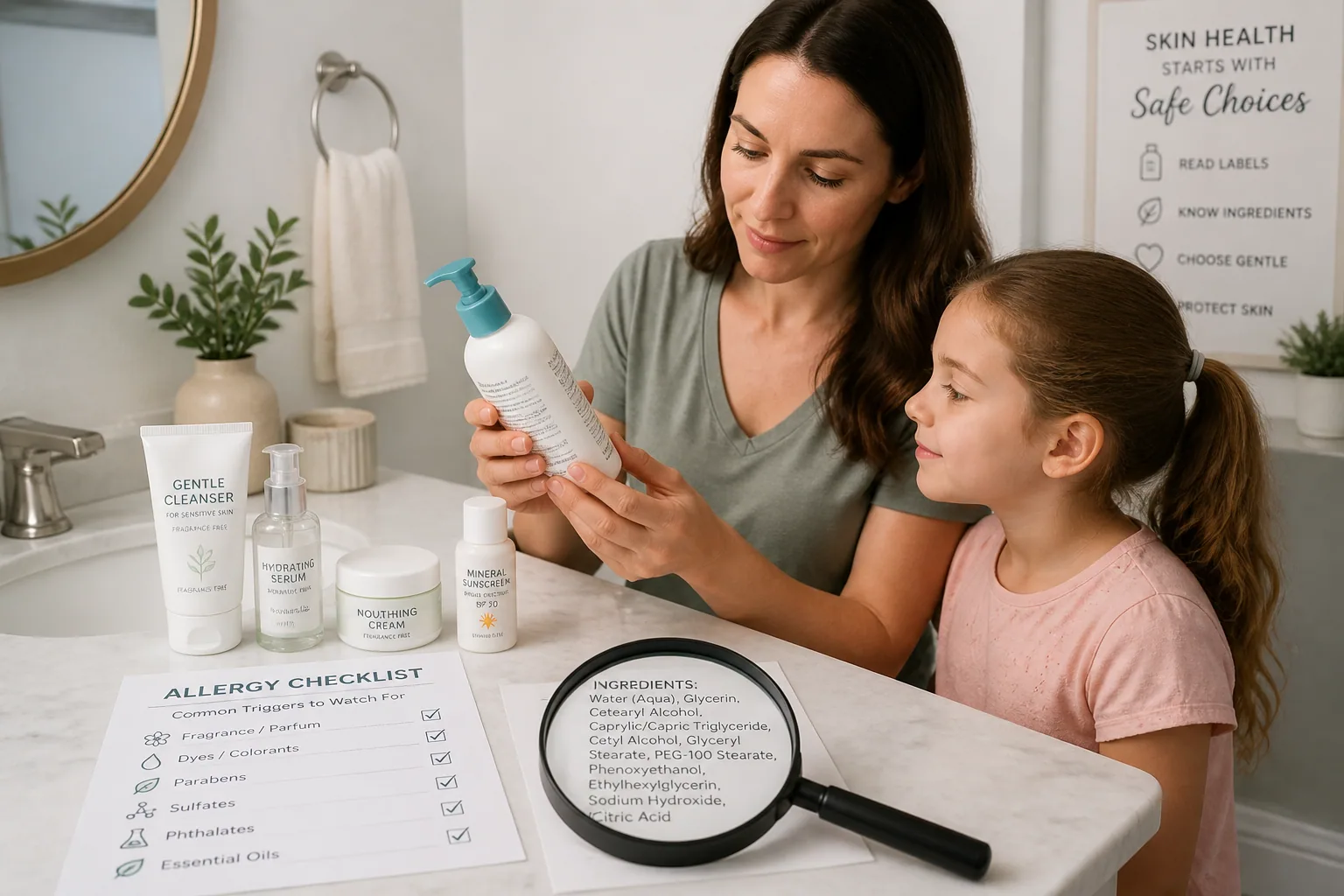
Sometimes the ingredient is obvious, like coconut oil or oat extract. Other times, it appears under a Latin or technical name, which can make it harder to recognize. This is where ingredient literacy becomes essential. Cosmetic labels often use INCI, or International Nomenclature of Cosmetic Ingredients, names rather than plain-language common names. That can be useful for standardization, but it also means an ingredient list may not read like something you would recognize from the pantry.
A practical example is coconut, which can appear as cocos nucifera oil and in many other derivatives. Peanut may appear as arachis hypogaea oil. Soy can appear as glycine soja oil. Dairy-related ingredients may show up as lactose or casein. Wheat may appear as gluten or hydrolyzed wheat protein. Sesame can appear as sesamum indicum seed or sesamum indicum seed oil. These hidden names are one reason why skincare shopping can feel more complicated than food shopping.
Ingredient Names to Watch for: Nuts, Soy, Dairy, Wheat, Sesame, Coconut, Oat, and Citrus
A good first step is to build a mental list of common food-derived ingredient families. For nuts, that can include almond oil, walnut extract, hazelnut oil, macadamia oil, and peanut-derived ingredients such as arachis hypogaea oil. For soy, watch for glycine soja oil, soy protein, or lecithin when it is derived from soy. For dairy, look for casein, lactose, whey, milk protein, and related derivatives. For wheat, gluten and hydrolyzed wheat protein are two of the best-known names to flag. Sesame may appear as sesamum indicum seed or seed oil. Coconut has many possible derivative names, and skin-allergy resources note that there are 30+ Latin derivative names used in cosmetics, which is one reason it can be overlooked.
Oat is another ingredient families often consider “soothing,” but oat can be an issue for some people with food allergies or highly reactive skin. It may appear as avena sativa kernel flour, avena sativa extract, colloidal oatmeal, or oat beta-glucan. Citrus ingredients are common in cleansers, lip care, body lotions, and “fresh” scented products. Orange peel oil, lemon peel oil, lime oil, bergamot oil, and grapefruit peel oil can all show up in formulas. Depending on the product and your sensitivity profile, these can be more than just a fragrance choice.
If you are trying to reduce risk, it helps to treat the ingredient list as a clue, not a guarantee. A product can still be unsafe even if the label does not mention the exact food name you are looking for. That is why it is smart to cross-check common derivative names and not rely only on the front-of-package claim.
When “Fragrance-Free,” “Unscented,” and “Natural” Don’t Mean Low Risk
Marketing language can be comforting, but it is not the same thing as safety. Terms like fragrance-free, unscented, natural, and clean are often treated as lifestyle claims rather than strict safety standards. In the U.S., these labels are largely marketing terms and are not federally regulated or required to meet specific criteria. That means a product can still contain allergenic components while sounding gentle and trustworthy on the front of the package.
“Fragrance” and “perfume” are especially important terms to understand. Under current U.S. law, manufacturers can use them as umbrella terms instead of listing every component ingredient. That creates a major blind spot for consumers with allergies, because fragrance blends may contain hidden compounds derived from food sources or sensitizing botanical materials. If you have reacted to scented products before, a fragrance-free claim is helpful but not enough by itself. Always check the full ingredient list and, when needed, contact the brand for clarification.
The same caution applies to “clean beauty.” Clean can mean different things to different brands, and it does not automatically mean allergen-safe. A botanical-heavy formula can still contain nut oils, oat extracts, citrus components, or hidden fragrance allergens. If your goal is risk reduction, the most reliable signal is not the marketing language. It is the actual ingredient list, the brand’s transparency, and whether the company can answer direct questions about allergen handling.
How Essential Oils, Extracts, and Botanical Blends Can Complicate Allergy Safety
Essential oils often feel like a safer or more natural choice, but they are not automatically gentler. They are highly concentrated plant extracts, and some can be irritating or sensitizing, especially when used on lips, broken skin, or in products left on the skin for long periods. Botanical blends can be even trickier, because one product may contain several plant ingredients, each with its own allergen profile.
Citrus essential oils deserve special attention. Cold-pressed citrus oils such as bergamot, lemon, lime, bitter orange, and grapefruit can contain phototoxic furanocoumarins, which may cause severe skin reactions when the skin is exposed to UV light afterward. According to AromaWeb, steam-distilled or furanocoumarin-free, often called FCF, versions are typically much safer: https://www.aromaweb.com/articles/phototoxicity-essential-oils.php This matters for products used before going outside, like body oils, perfumes, aftershaves, and even some lip products.
If you are trying to keep a routine low risk, the safest approach is usually to keep botanical complexity low. Fewer ingredients mean fewer unknowns. This is especially important when products are used on children, on eczema-prone skin, or in homes where multiple family members have different allergy concerns.
Patch Testing and Introducing New Products the Safer Way
Patch testing is one of the most practical ways to reduce surprises. Medical News Today explains that patch testing for skincare involves applying a small amount of product to skin, often the inner arm, and observing it over 7 to 10 days for delayed reactions: https://www.medicalnewstoday.com/articles/patch-test-skincare That slower timeline matters because some reactions do not appear right away. They can develop after repeated contact or after the product has had time to sit on the skin.
For a home patch test, start with a tiny amount on clean, dry skin and avoid using the area for anything else that could confuse the result. Watch for redness, itching, bumps, burning, swelling, or any worsening dryness. If you are testing a lip product, be extra cautious because lips and surrounding skin can react differently from the arm. If a person has a history of severe allergies, or if a child is involved, it is best to ask a clinician for guidance before trying a new product.
Patch testing is not a perfect safety guarantee, but it is a useful filter. It can help you identify obvious irritants before they become a bigger problem and can be especially helpful when trying new deodorants, body lotions, face creams, hair products, or sunscreens.
Beauty Tools, Shared Brushes, and Bathroom Surfaces: Hidden Cross-Contact Risks
Cross-contact is not only a food problem. Shared beauty tools can move residue from one product to another, and one person’s safe product can become another person’s risk if brushes, sponges, applicators, rollers, or facial tools are not cleaned properly. This is especially relevant in makeup bags, shared bathrooms, salons, and school or dance dressing areas.
Bathroom surfaces can also matter more than people realize. Lotion pumps, sink counters, towel hooks, razor handles, and shared mirrors can all pick up residue from fragranced or food-derived products. A lip balm touched by multiple hands, a mascara wand used after a scented hand cream, or a makeup sponge stored on a shared counter can create low-level but repeated exposure. For highly sensitive people, the details matter.
The best habit is to keep personal items truly personal. That means individual applicators, sealed storage, regular cleaning, and clear separation between products used by different family members. If your household has a child with allergies, it can help to make one shelf, one pouch, or one bin the dedicated safe zone.
How to Prepare for Salons, Spas, Facials, and Makeup Counters
Public self-care spaces need special planning because you often have less control over the ingredients, the tools, and the cleaning process. Before visiting a salon or spa, ask what products they use and whether they can provide ingredient lists in advance. If a service involves facials, waxing, massages, scalp treatments, or makeup application, mention your food allergies before booking rather than at the last minute. That gives the staff a chance to check products and, if needed, offer alternatives.
At makeup counters, do not assume samples are safe just because they are free or open to the public. Shared testers can be contaminated, and staff may use products containing fragrance blends, nut oils, or citrus ingredients. It is often safer to bring your own trusted products when possible, especially for lips and eye areas. If you are unsure, ask for sealed samples or ingredient disclosures, and keep the conversation specific. Instead of asking if something is “allergy-friendly,” ask whether it contains the ingredient family you avoid.
For children and teens in group settings like dance, theater, or school performance makeup, it is worth planning ahead. Send safe products from home, label them clearly, and teach your child not to share brushes, balms, or face products. In many cases, a simple backup kit can prevent a rushed, risky decision.
What to Ask Brands Before You Buy
When a label is not enough, a few direct questions can help. Ask whether the product contains any of your specific allergens or any ingredients derived from them. Ask whether fragrance blends are used and whether the brand can disclose the fragrance components. Ask whether the product is made on shared equipment with nut, dairy, soy, wheat, or sesame ingredients. Ask whether there is a formal allergen control or cross-contact policy.
It is also worth asking about ingredient sourcing and consistency. A brand may say a formula is “the same,” but a supplier change can alter the exact makeup of an extract or oil. If a company is serious about transparency, it should be able to answer clearly and consistently. Keep in mind that under MoCRA, companies have stronger obligations around registration, product listing, allergen labeling, and adverse event reporting, but that does not replace your own screening process.
If a company cannot answer basic questions, that is useful information too. Silence, vague language, or a refusal to clarify fragrance and botanical ingredients can be a reason to choose another brand.
Trustworthy Labels, Certifications, and Transparency Signals to Look For
Third-party certifications can add another layer of confidence, especially when you are trying to simplify a complicated category. According to Kosmatology, certifications such as MADE SAFE®, CertClean, and AllergyCertified review ingredients, exclude certain chemicals of concern, and evaluate allergen risks among certified products: https://www.kosmatology.com/made-safe These seals are not magic shields, but they can help you narrow the field more quickly.
Still, a certification should be one signal among several. Look for full ingredient disclosure, a responsive customer service team, plain-language allergen information, and signs that the brand understands cross-contact concerns. Companies that talk openly about sourcing, batch control, and reformulation are usually easier to trust than brands that rely only on vague wellness language.
Transparency also means staying alert to updated regulations. MoCRA is moving the cosmetics market toward better accountability, but families with allergies often need to go beyond the minimum. The strongest products are usually the ones that are both compliant and communicative.
Safer Product Habits for Kids, Teens, and Allergy-Conscious Families
Children and teenagers need routines that are simple enough to follow consistently. The goal is not to create fear around every lotion or shampoo. The goal is to make safe choices automatic. Start with a small set of trusted products, keep them in a dedicated place, and teach kids not to swap items with friends. Lip products deserve special caution because they are used near the mouth and are often shared socially without much thought.
For school-aged kids, it helps to send fragrance-free, clearly labeled items from home when possible. If a child participates in sports, theater, or sleepovers, pack a travel kit with their safe shampoo, soap, moisturizer, and any lip or face products they use regularly. If they are old enough, teach them to scan ingredient lists for the allergen names you care about most, and to ask adults before trying new body sprays, lotions, or hand creams.
Families also benefit from a shared household standard. Choose one or two product lines that everyone can use safely, limit the number of scented products in common areas, and keep individual items separated. The less mixing and borrowing that happens, the lower the chance of accidental exposure.
A Simple Routine for Building a Low-Risk Personal Care Kit
The easiest way to manage beauty and skincare safety is to create a routine that you can repeat without overthinking. Start by identifying your top allergens and their common cosmetic names. Then choose products with short ingredient lists, avoid vague fragrance blends when possible, and favor brands with strong transparency. Before introducing anything new, patch test it and wait long enough to see a delayed reaction. Keep personal tools separate, clean shared surfaces regularly, and be extra careful in salons or public beauty spaces.
For grocery items and ingredient-heavy packaged products, an app like Bokha: Food Allergy Scanner App can also help you make faster decisions by scanning barcodes and identifying allergens in less than a second: https://findthe.app/bokha. While it is designed for food and packaged product checks, that kind of quick screening mindset is useful whenever you are trying to reduce risk and save time.
Ultimately, safe self-care is about consistency, not perfection. You do not need to memorize every possible ingredient overnight. You just need a system that helps you spot hidden risks, ask better questions, and choose products that fit your allergy profile with more confidence.