Safe Eating on a Budget: How to Manage Food Allergies Without Overspending
Food allergies and intolerances can turn a normal grocery trip into a careful balancing act. You are not just choosing what looks good or tastes good. You are checking labels, watching for cross-contact, comparing ingredient lists, and trying to avoid foods that could make someone sick. That extra work often comes with an extra price tag. In fact, the CDC reports that food allergies affect about 6.7% of U.S. adults and 5% of children, so this is not a niche budgeting problem. It affects millions of households. The broader financial burden is also huge, with the societal cost of food allergy in the U.S. estimated at about $370.8 billion each year, including healthcare expenses, lost productivity, caregiver time, and out-of-pocket spending.
The good news is that safe eating does not have to mean endlessly paying premium prices. With the right planning, you can build meals around naturally allergy-safe staples, spend selectively on specialty products, and use simple shopping strategies to keep your food budget under control. The goal is not to buy the cheapest thing every time. It is to buy the safest food at the best value, without wasting money on expensive products you do not actually need.
Why Allergy-Safe Eating Can Get Expensive Fast
The biggest cost driver is usually not the occasional specialty item. It is the repeated premium you pay for foods marketed as free-from versions of common staples. Bread, snacks, pasta, sauces, baking mixes, and frozen convenience foods can all cost substantially more when they are labeled gluten-free, dairy-free, nut-free, or allergen-friendly. For households managing a child with food allergies, research suggests specialty allergen-free foods can make up around 31% of direct out-of-pocket family costs related to food allergy management. That is a major share of the budget, and it adds up quickly when you buy those products every week.
Some of the price differences are dramatic. One cited comparison found gluten-free bread in Australia costing more than three times conventional bread, with a regular white sandwich loaf at A$2.40 versus A$5.70 for the cheapest gluten-free alternative, a 208% premium. While prices vary by country and store, the pattern is familiar almost everywhere: the more processed and specialized the replacement, the more expensive it tends to be.
That is why it helps to think in two categories. First are the foods that are naturally safe for your household. Second are the products that are more convenient, but not always worth the markup. Once you separate those two groups, it becomes much easier to cut costs without taking risks.
Set Your Budget Before You Shop
If you want to save money, start before you enter the store. Decide how much you can spend on groceries for the week or month, then split that amount into categories. You might set aside money for basics, produce, protein, school lunches, and a small line for specialty products. That way, you are not guessing at checkout and you are less likely to overspend on convenience foods when you are tired or hungry.
A useful approach is to make your budget match your actual allergy needs. If you know your household truly needs certain specialty foods, put them in the budget on purpose instead of treating them as impulse purchases. If a product is only a nice-to-have, give yourself permission to skip it. Budgeting works better when it is specific, because food allergy shopping is often driven by urgency and caution, and both can push people toward overpriced items.
It also helps to track what you spend for a few weeks. Many families find that the same few products show up again and again on the receipt. Once you identify those repeat purchases, you can look for cheaper alternatives, bigger packages, store brands, or homemade replacements. Meal planning strategies that reuse ingredients and rely on pantry staples have been shown to reduce grocery spending by 15% to 25% while keeping meals nutritious, so even small changes can have a real effect.
The Cheapest Naturally Allergy-Safe Staples to Keep on Hand
The most budget-friendly allergy-safe meals usually start with simple ingredients that are naturally free from your trigger foods. The Center for Celiac Disease recommends relying on staples like beans, eggs, potatoes, and canned tuna to keep protein affordable. These are useful because they work in many meals, they are easy to store, and they cost less than many packaged alternatives.
Other low-cost staples often include rice, plain oats if tolerated, corn tortillas, dried lentils, frozen vegetables, canned vegetables, fruit, olive oil, and basic spices. These foods are versatile, and they make it easier to build meals without depending on expensive replacement products. Frozen and canned vegetables are especially helpful because they reduce waste and allow you to use what you need without rushing to eat fresh produce before it spoils.
The most valuable pantry items are usually the ones that can become multiple different meals. For example, rice can be a side dish, a soup base, a stir-fry base, or a breakfast porridge if your allergy profile allows it. Beans can be turned into tacos, salads, soups, or grain bowls. Potatoes can become roasted sides, breakfast hash, or a filling soup. When your ingredients do double or triple duty, your grocery bill goes further.
When to Buy Specialty Free-From Products and When to Skip Them
Specialty products are worth buying when they solve a real safety problem or save so much time that they help you stay consistent. If a product is a true dietary staple in your home and you cannot easily make it safely yourself, paying more may be reasonable. This may include a trusted bread, pasta, snack, or breakfast item that reduces stress and prevents unsafe substitutions.
But many free-from products are not essential. Some are just expensive versions of things you can make from scratch or replace with naturally safe foods. Homemade allergen-free substitutes can be cheaper, but only if you already have the ingredients, the tools, and the time to make them. Research on cost comparisons notes that homemade substitutes are not automatically cheaper once you factor in expensive specialty ingredients, spoilage, and labor. That matters because a homemade loaf of bread or baked snack can look inexpensive on paper while actually costing more in time and wasted ingredients.
A simple rule helps here: buy specialty products when they are protecting safety, consistency, or sanity. Skip them when they are mainly a convenience or branding upgrade. For example, if a packaged cookie is convenient but you can make a safe batch of muffins from basic pantry ingredients for less, the homemade option may be the better value. On the other hand, if a specific bread is the only one your child reliably eats at school, the store-bought version may be worth the extra cost.
How Bulk Buying Can Save Money Without Increasing Risk
Bulk buying can be a smart way to save, but only when the food is shelf-stable, actually used regularly, and safe for your household. Buying a larger bag of rice, lentils, oats, or beans often lowers the unit price and reduces the number of shopping trips. That matters when the difference between a cheap and expensive allergen-safe product is mostly packaging and convenience.
The key is to compare unit prices, not just sticker prices. A slightly larger package may look more expensive at checkout but cost less per ounce or pound. The Center for Celiac Disease specifically recommends comparing unit prices, choosing store brands, and using affordable staples to manage a gluten-free budget. That advice applies well beyond gluten-free shopping. It is a good habit for any allergy-safe pantry.
Bulk buying works best for foods you know you will finish. It is less useful for delicate products that spoil quickly, specialty baked goods that go stale, or items your family only eats occasionally. If you are managing multiple allergies, a bulk purchase also needs careful label checking. A low price is not worth it if the product is not safe every time you open it.
Using Apps Like Bokha to Compare Safe Products by Price
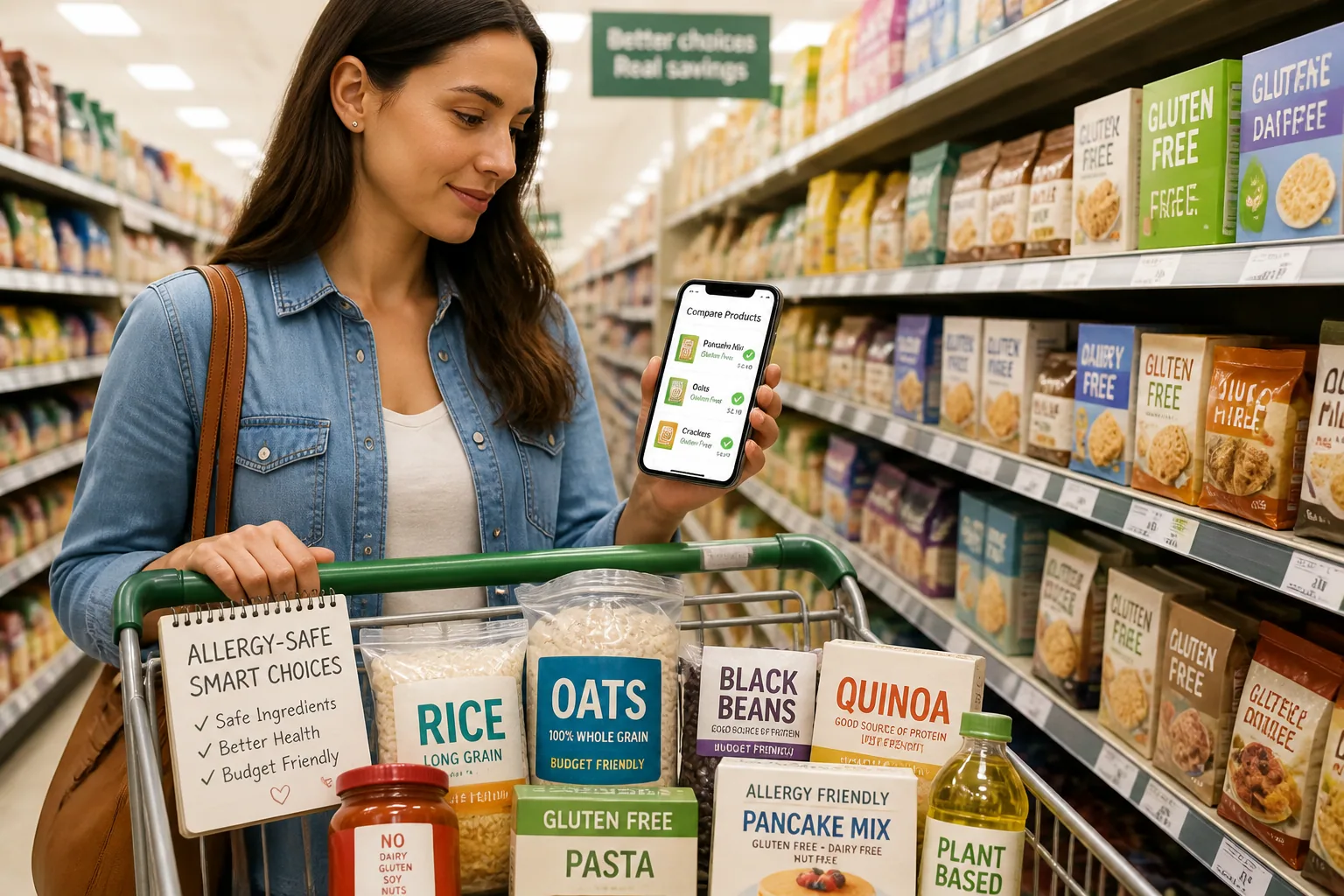
One of the easiest ways to save time and money is to compare products while you are standing in the aisle. That is where Bokha can help. Bokha is a food allergy scanner app that lets you scan product barcodes and discover allergens in less than a second, including 13 allergens, traces, and additives. That makes it easier to quickly sort safe options from unsafe ones without manually reading every label from top to bottom.
The value here is not just speed. It is price control. When you can identify several safe products instantly, you are less likely to grab the first expensive option that looks safe enough. Instead, you can compare choices by ingredient and price and choose the one that fits your budget. If you often shop under time pressure, this can prevent a lot of unplanned spending on overpriced allergy-friendly brands. You can learn more here: https://findthe.app/bokha
For budget shoppers, the app can also make store-brand switching easier. Many people assume only one premium brand is safe, when in reality several products may work. A scanner can help you verify that a cheaper product is a valid substitute before you buy it.
How to Find Coupons, Sales, and Deals on Allergen-Inclusive Brands
Coupons and sales are especially valuable when you do need specialty items. The trick is to shop like a strategist, not a rescue mission. Start by identifying the allergen-inclusive brands your household already trusts, then watch for recurring sale cycles. Many stores discount the same categories on a predictable pattern, so if you notice a safe cereal, bread, or snack dropping in price every few weeks, that is the time to stock up a little.
Store brands can be a major source of savings as well. In many cases, the generic version of a safe product is significantly cheaper than the name brand, and the ingredients are similar or even identical. This is one reason unit price comparison matters so much. A small price difference on one box may not seem meaningful, but over a month of repeat purchases it becomes noticeable.
You can also save by combining deals with flexible planning. If a safe pasta sauce goes on sale, build meals around it that week. If a trusted bread is discounted, buy an extra loaf and freeze it if the product handles freezing well. If a coupon applies to a shelf-stable snack your child already eats safely, use the offer without changing the rest of the meal plan just to chase the discount.
Mixing Homemade and Store-Bought for the Best Value
The smartest budget often comes from a mix of homemade and store-bought foods. Homemade meals stretch your staples and reduce the cost of repeated convenience items. Store-bought products fill the gaps when safety, time, or consistency matters most. This balance keeps you from burning out while still giving you control over your spending.
For example, you might make dinner from scratch on busy weeks using rice, vegetables, and beans, then rely on one or two store-bought safe items for breakfasts or lunches. Or you might bake your own snacks while buying a trusted bread for school days. This approach recognizes a reality of allergy management: not every meal has to be fully homemade to be cost-effective.
Batch cooking also helps. Preparing a large pot of soup, chili, or stew can create several meals from the same ingredients, which lowers the cost per serving and reduces waste. The same is true for cooking grains, roasting vegetables, or portioning proteins in advance. When you do this around safe ingredients, you create a system that supports both budget and safety.
Easy Ways to Repurpose Safe Staples Into Multiple Meals
Repurposing is one of the simplest ways to make a budget stretch further. A single ingredient can become several different meals if you plan for it. Cooked rice can be turned into a rice bowl, soup, fried rice, or a quick side dish. Beans can become burrito filling, dip, chili, or salad topping. Potatoes can become mashed potatoes, soup, breakfast hash, or roasted wedges.
The same idea works for proteins and vegetables. Canned tuna can become a sandwich filling, a pasta mix-in, or a tuna salad bowl. Frozen vegetables can go into stir-fries, casseroles, soups, and omelets. If you buy ingredients with this kind of flexibility, you reduce the chance of waste and make it less tempting to buy expensive last-minute takeout or packaged alternatives.
Meal prep strategies that include seasonal produce, frozen vegetables, and batch cooking have been shown to reduce waste and help stretch allergy-safe meals. That matters because wasted food is wasted money, and with allergy-safe foods the cost of waste can be even higher.
Budget Meal Planning Tips for Families, Students, and Busy Households
Families often save the most by planning around a few anchor meals each week. Pick simple dinners that use overlapping ingredients, then build lunches and breakfasts from what is already in the house. That reduces decision fatigue and helps prevent emergency grocery trips, which are often where budgets get blown.
Students and busy adults usually need a smaller version of the same system. Keep a short list of reliable safe meals that take little time, cost little money, and can be made from pantry staples. Think rice bowls, pasta with sauce, eggs and potatoes, soups, or bean-based meals. The best budget meals are not the most exciting ones. They are the ones you can repeat without getting bored or spending too much.
For all households, it helps to plan around leftovers on purpose. Cook enough of one meal to create the next day’s lunch or a second dinner. That strategy saves money, reduces waste, and makes safe eating less stressful when schedules get chaotic.
Common Overspending Mistakes to Avoid
One of the most common mistakes is assuming every allergy-friendly version of a food is necessary. That leads to a cart full of expensive replacements when a basic naturally safe ingredient would do the job. Another mistake is shopping without checking unit prices, which makes it easy to overpay for smaller packages or convenience sizes.
A third mistake is buying specialty foods that do not match your habits. If a product is expensive and only gets eaten once a month, it probably should not be a staple. Similarly, buying in bulk without a plan can backfire if the food expires before you finish it. The same goes for homemade substitutes that look economical but require rare ingredients, time you do not have, or tools you will only use once.
Finally, many people overspend by not making room for flexibility. If you insist on one exact product, you may miss cheaper safe alternatives. A little flexibility, paired with careful label checking, can open the door to store brands, sale items, and naturally safe foods that protect your health and your wallet.
Building a Safer, Cheaper Grocery Routine That Lasts
The best long-term strategy is not a single hack. It is a repeatable routine. Start with a budget. Build meals around naturally safe staples. Buy specialty products only when they are truly worth it. Use sales, store brands, and unit pricing to lower the cost of trusted items. Batch cook when you can, repurpose leftovers, and keep a few flexible meals on standby for busy weeks.
Over time, this routine becomes easier. You learn which products are worth the premium, which brands go on sale regularly, and which ingredients can form the base of many safe meals. That knowledge is powerful because it reduces guesswork, and guesswork is expensive.
Food allergy management will probably never be as cheap as shopping with no restrictions. But it does not have to drain your budget either. With a little planning, smart substitutions, and tools that help you compare safe choices quickly, you can protect both your health and your finances.