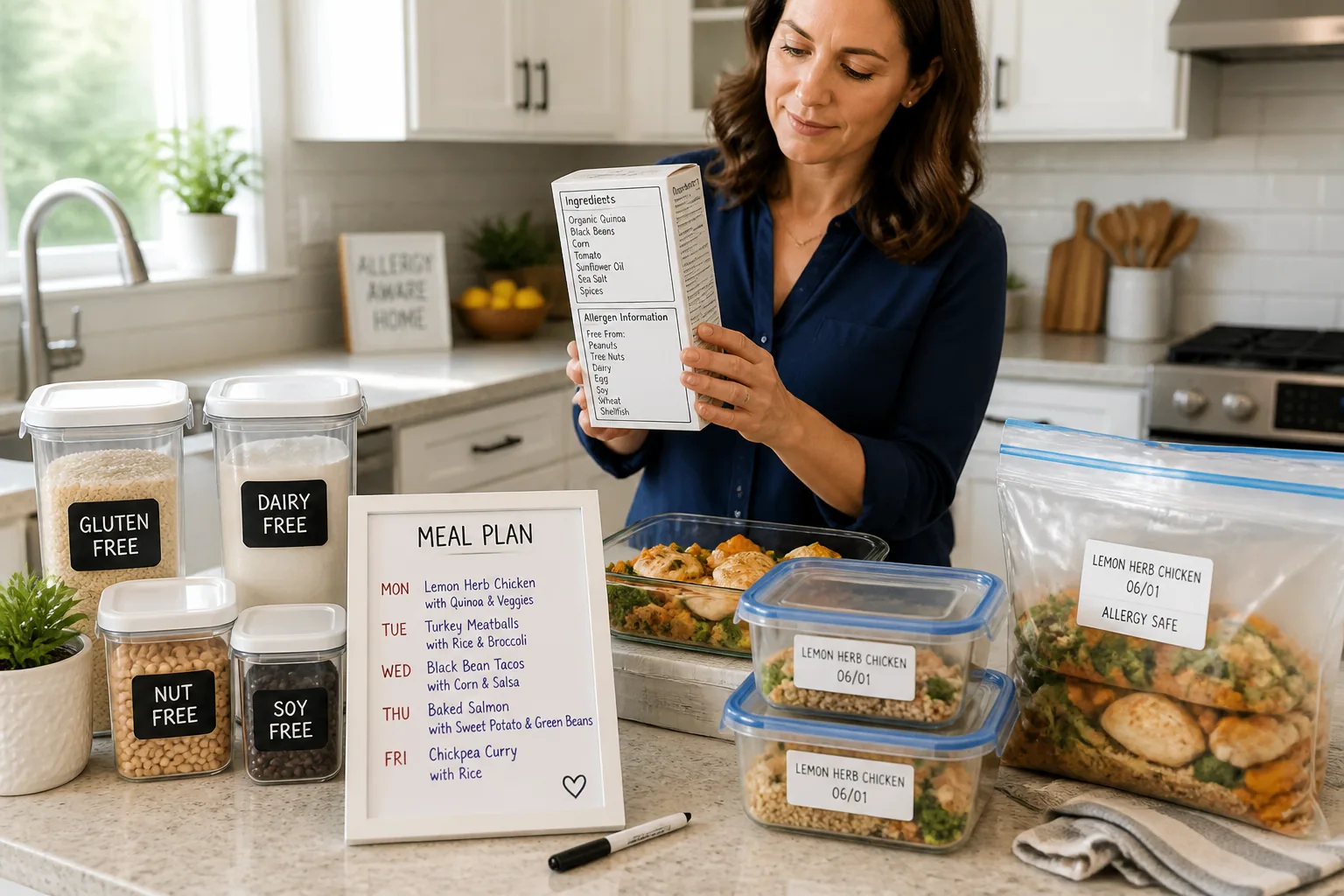
Rethinking Food Waste When You Have Allergies: Smart Ways to Save Money, Reduce Stress, and Stay Safe
For many families, food waste is frustrating. For allergy households, it can feel like a constant background expense and a constant safety concern at the same time. You are not just trying to use up what you bought. You are also trying to avoid cross-contact, reject risky substitutions, and make sure every meal stays safe for everyone at the table.
That tension helps explain why allergy-friendly kitchens often waste more than they would like. Specialty ingredients are more expensive, meal plans change after a label check, and leftovers may sit in the fridge because no one wants to take chances. At a national level, food waste is already a huge problem. The EPA estimates the average family of four wastes almost $3,000 per year on food that is bought but not eaten, and the ReFED U.S. Food Waste Report 2026 estimates consumers waste about $762 per person on food that goes to waste. At home, that adds up fast.
The good news is that reducing waste does not mean compromising safety. With a few practical habits, you can build an allergy-safe kitchen routine that protects your budget, reduces stress, and makes food feel easier to manage.
Why Food Allergies Often Lead to More Waste
Food allergies create waste in ways that are easy to miss. The first is overbuying for safety. When a product is hard to trust, many people buy backup options, duplicate ingredients, or larger packages than they can realistically finish before they lose quality. The second is meal-plan disruption. A recipe that looked safe online may no longer work after checking labels, so ingredients sit unused. The third is fear of leftovers. If a container has been opened in a shared kitchen, or if you are unsure about storage timing, it is often easier to throw it away than risk a reaction.
This is not overcaution. More than 33 million people in the U.S., roughly 1 in 10 adults and 1 in 13 children, live with a diagnosed food allergy. That reality comes with extra spending, extra label reading, and extra attention to safety. Research has estimated the societal economic burden of food allergy in the U.S. at $370.8 billion annually, with a cost per patient around $22,000. In other words, waste is not just a grocery problem. It is part of the larger cost of living safely with allergies.
The first step is to stop treating waste as a personal failure. In allergy households, some waste happens because caution is necessary. The real goal is to make sure your caution is working for you, not creating unnecessary extra spending or stress.
The High Cost of Specialty Foods and Missed Meal Plans
Specialty allergy-friendly products usually cost more than standard versions. Dairy-free cheese, gluten-free bread, egg-free baking staples, and safe snack bars can all be pricey, and many of them have shorter shelf lives once opened. If a meal plan falls apart midweek, the financial hit is bigger than it would be for a typical pantry item.
Missed meal plans are especially wasteful because allergy-safe cooking often relies on a small number of dependable ingredients. If you buy a niche item for one recipe and never use the rest, you are paying a premium for a one-time meal. This is why allergy kitchens benefit from planning around repeatable ingredients instead of one-off recipes. A flexible meal plan can lower the number of specialty products you need to buy and make it easier to use what you already have.
It also helps to shop with a clear purpose. If you know that one carton of plant-based milk will be used in oatmeal, coffee, a sauce, and baking, it is much more likely to earn its keep. The same is true for a reliable gluten-free grain, a safe oil, or a trusted protein you can use in multiple meals.
How to Plan Meals Around Ingredients You Will Actually Use
One of the best ways to reduce waste is to plan from ingredients outward instead of from recipes inward. Start with the foods you know you can buy safely and regularly use, then build meals around them. This approach lowers the chance that you will end up with half-used specialty items sitting in the fridge.
A simple method is to create a short list of your core allergy-safe ingredients. Think in categories: one or two grains, a few proteins, several vegetables, a couple of fruits, a safe cooking fat, and a few flavor boosters. Then ask a practical question before shopping: can this ingredient be used in at least two or three different meals this week? If the answer is no, it may be a nice idea but not a good buy.
It also helps to plan for overlapping ingredients. If you buy cilantro for tacos, can it also go into a salad dressing or grain bowl? If you need cooked rice, can it become fried rice or soup later in the week? That kind of planning makes it easier to finish what you buy while keeping meals varied enough that people still want to eat them.
For allergy households, meal planning should also include a label-check buffer. Recipes are great starting points, but they are not final until the ingredient labels are confirmed. A grocery list that includes a little flexibility can prevent the common problem of buying a backup item you do not need or abandoning a recipe halfway through because one ingredient failed the allergy check.
Choosing Flexible Allergy-Safe Staples That Work in Multiple Recipes
The most useful allergy-safe staples are the ones that can move easily between meals. The more flexible the ingredient, the less likely it is to be wasted. Think about pantry, fridge, and freezer staples that can be used in breakfast, lunch, dinner, and snacks.
Good candidates often include plain grains, canned beans, frozen vegetables, fruit, safe broths, shelf-stable plant milks, and proteins you already trust. The key is not just that they are safe. It is that they are versatile. A safe bean can become a salad topping, a soup base, or a quick mash for wraps. Frozen spinach can go into pasta, eggs, smoothies, or casseroles. Plain rice can stretch multiple dinners instead of becoming a forgotten side dish.
When possible, choose ingredients that are easy to portion. Large packages can be economical, but only if you can freeze or divide them safely. Otherwise, they may increase waste. A smaller bag that gets used completely is often a better value than a bulk purchase that loses quality before you need it again.
This is also where trusted shopping tools can help. If you spend a lot of time reading labels to confirm whether a product contains one of your allergens, a scanner like Bokha: Food Allergy Scanner App can save time in the supermarket by letting you scan barcodes and check allergens quickly at https://findthe.app/bokha. For busy households, that speed can make it easier to choose products you will actually use, instead of leaving uncertain items in the cart or buying duplicates just to feel safe.
Simple Ways to Repurpose Allergy-Safe Leftovers
Leftovers are one of the easiest ways to save money, but they need a clear plan in allergy homes. The goal is to repurpose them before they become a question mark in the fridge. That means thinking ahead about what can be remade into a second meal without introducing new cross-contact risks.
Cooked vegetables can become soup, grain bowls, pasta fillings, or omelets if eggs are safe in your household. Roasted chicken can become tacos, sandwiches, salad toppings, or a rice bowl. Rice itself can be turned into fried rice, congee, stuffing, or soup thickener. A little extra seasoning on day one can be the difference between a leftover that gets eaten and one that gets ignored.
One helpful habit is to label leftovers by intended use, not just by name. Instead of writing only “rice,” write “rice for fried rice” or “chicken for soup.” That makes the next meal feel easier and reduces the chance that a container gets forgotten. It also helps every family member know whether the food is reserved for a specific recipe or available to eat as is.
Another strategy is to repurpose within the same safety routine. If a leftover is allergy-safe but you are worried about cross-contact from serving spoons or shared hands, portion it into clean containers right after cooking. That way, you are not repeatedly exposing the food to the same risks each time someone opens the fridge.
Batch Cooking and Freezer Prep Without Cross-Contact Risks
Batch cooking can be a major money saver for allergy households, but it works best when it is organized. The USDA says cooked leftovers should be refrigerated for no more than 3 to 4 days, or frozen for 2 to 6 months for best quality. Foods stored at 0 °F remain safe indefinitely in terms of foodborne illness risk, though quality declines over time. That means the freezer can be your best anti-waste tool if you use it intentionally.
The safest approach is to batch cook in clean conditions and portion food immediately. Use clean utensils, clean containers, and if possible, separate work zones for allergen-free foods. Cross-contact prevention matters during both prep and storage. FDA and FARE guidance emphasize separate utensils, well-cleaned surfaces, and separate storage for allergen-free ingredients.
Portioning food before freezing is especially helpful. Small containers thaw faster, reduce the temptation to refreeze repeatedly, and make it easier to take out only what you need. This lowers waste because you are less likely to thaw a large batch and then throw away the remainder after a few days in the fridge.
A freezer inventory list can also help. Keep a simple note on the fridge or phone with what you froze and when. That way, the food that was meant to save you money does not disappear into the back of the freezer and become another form of waste.
How to Read Use-By and Best-By Dates Without Panic
Date labels can be confusing, and in allergy households that confusion often leads to unnecessary waste. A lot of food gets thrown out because people assume any date means the food is unsafe. In reality, many date labels are about quality, not safety.
A best-by date usually suggests when the product is likely to taste its best. It does not always mean it is unsafe after that date. Use-by dates can matter more for safety, especially on highly perishable foods, but they still need to be interpreted alongside storage conditions, smell, appearance, and the product type. The goal is to avoid panic while staying cautious where it truly matters.
This is especially important for allergy-safe products that are expensive or hard to replace. If a sealed shelf-stable item is a few days past its best-by date, it may still be perfectly usable. On the other hand, a opened perishable food that has been sitting too long in the refrigerator should be treated differently, regardless of the label date.
The most practical habit is to pair the date with a clear storage rule. Ask: was this refrigerated properly, was it opened, and how long has it been in the fridge? That simple framework prevents both reckless use and unnecessary disposal.
Safe Storage, Labeling, and Portioning Strategies for Allergy Households
Storage is where food safety and food waste overlap the most. If foods are stored well, they last longer. If they are labeled clearly, people are more likely to eat them. If they are portioned thoughtfully, they are less likely to be contaminated or forgotten.
Start with separation. Allergy-safe ingredients should be stored apart from items that could cross-contact them. That may mean dedicated shelves, clear bins, or sealed containers. In a shared kitchen, this simple step can save food from being thrown away later because no one is sure whether it is still safe.
Labeling should be specific. Write the food name, the date it was cooked or opened, and, if useful, the intended use or number of servings. This makes it easier to track leftovers within the USDA 3 to 4 day fridge window and to move anything that will not be eaten in time to the freezer.
Portioning is equally important. If a family is unlikely to eat a full pan of casserole in three days, freeze half immediately instead of waiting for the fridge deadline to arrive. The same goes for sauces, soups, and cooked grains. Small portions reduce the mental load of deciding whether to save or toss something later.
It can also help to create a home rule for new groceries. If an item is opened, it gets a label right away. That tiny habit prevents the “What is this and how long has it been here?” problem that leads to waste.
When to Toss It: Red Flags You Should Never Ignore
Saving food is important, but safety always comes first. In allergy households, the cost of a mistake can be much higher than the cost of replacing one item. Some foods should be discarded immediately, no matter how expensive they were.
The USDA’s time and temperature guidance is a good starting point. Perishable foods left in the danger zone between 40 °F and 140 °F for more than 2 hours should be discarded, or 1 hour if the temperature is above 90 °F. That rule matters for all households, but it is especially important when the food in question is intended to be safe for someone with allergies or when the item may have been handled in a shared kitchen.
Other red flags include visible mold where it should not be present, a broken seal on a product that should be sealed, off smells, unusual texture, or any suspicion of cross-contact from a shared spoon, shared cutting board, or other unsafe handling. If you are unsure whether a food has been exposed to a major allergen, do not try to stretch the decision. In allergy care, uncertainty is often a reason to toss.
That said, the goal is not to discard foods out of fear. It is to discard foods only when there is a real safety reason. Clear rules make that easier, because they take emotion out of the decision and replace it with a simple checklist.
A Low-Waste, Allergy-Safe Kitchen Routine That Saves Money and Stress
The most sustainable allergy kitchen is not the one with the most complicated meal prep plan. It is the one with a routine you can repeat when life gets busy. A simple weekly system can make a big difference.
Try this rhythm: check the fridge before shopping, plan meals around what needs to be used first, choose a few flexible staples, and buy only the specialty ingredients you know you can finish. When you get home, label anything opened right away. After cooking, portion leftovers into meal-sized containers. At the end of the week, move anything still good but not likely to be eaten into the freezer if it needs more time.
This kind of routine reduces decision fatigue. It also protects you from the common allergy-household trap of buying safe foods and then losing them to indecision. Over time, you will get better at spotting which ingredients really earn their place in your kitchen and which ones are too specific to buy often.
Most importantly, a low-waste routine should make life feel calmer, not stricter. You are not trying to achieve perfection. You are trying to make safe food more usable, more predictable, and less expensive. That is a realistic goal, and for allergy households, it is a meaningful one.