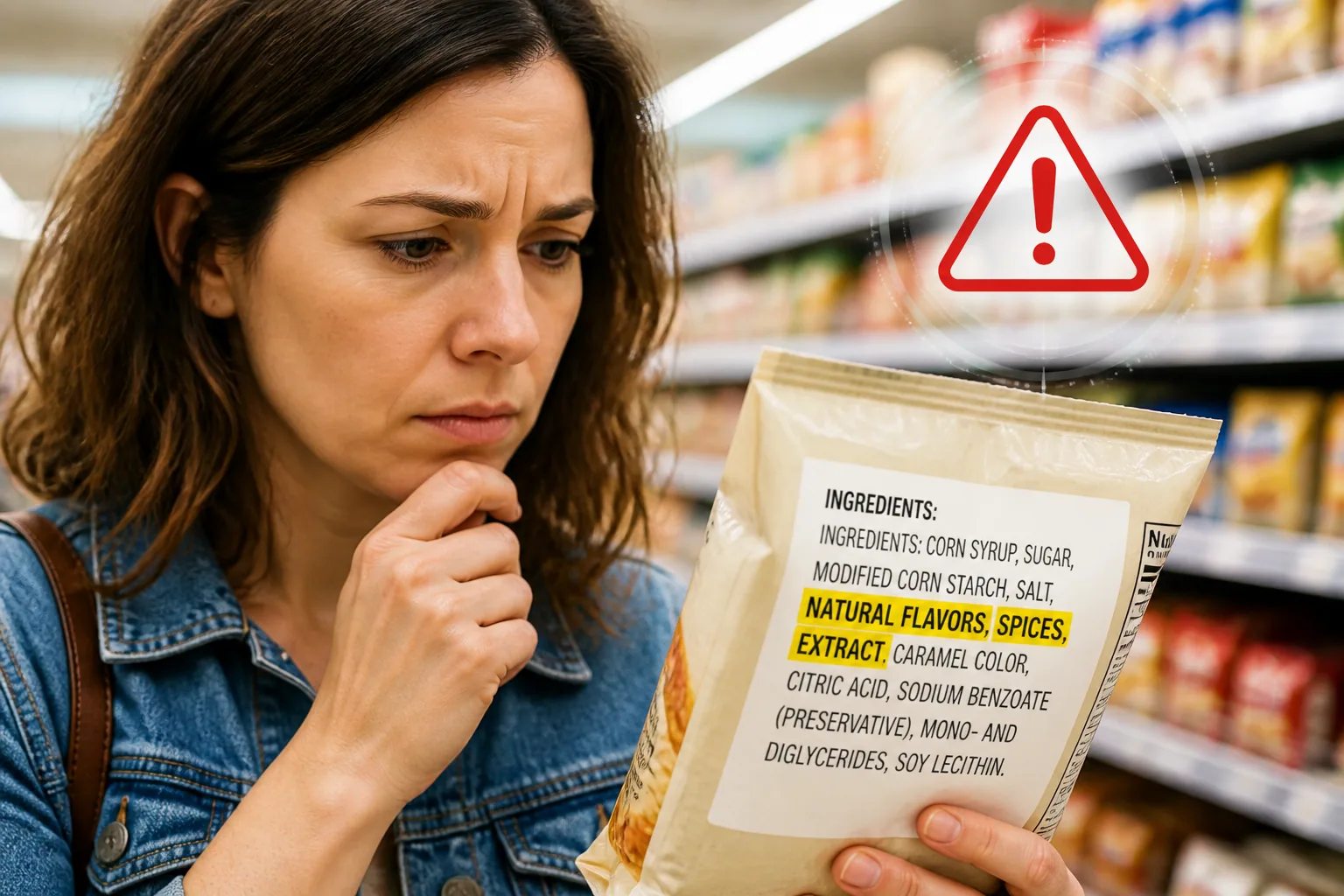
Reading Food Labels for Allergies: Tiny Terms That Cause Big Trouble
If you live with food allergies or intolerances, grocery shopping can feel like decoding a secret language. The problem is not always the obvious allergens. It is often the small, vague terms tucked into ingredient lists that look harmless at first glance but can hide a real risk. Words like “natural flavors,” “spices,” “extract,” “benzoate,” and “color added” may be perfectly legal on a label, yet they can still make a product unsafe depending on what is inside, how it was processed, and where it was sold.
The tricky part is that label laws do protect consumers in important ways, but they also leave room for ambiguity. That means safe shopping is not just about spotting a familiar allergen name. It is about learning how to read around the gaps, notice red flags, and avoid assuming that an unfamiliar term is automatically safe.
Why Tiny Label Terms Matter So Much
For people with allergies, a tiny word on a package can have outsized consequences. A product may look simple, but a single ingredient class can cover a wide range of substances. That is where the risk comes in. When a label says “spices” or “natural flavors,” you are not always getting a full ingredient breakdown, and that can make it harder to know whether the product contains a trigger or was exposed to one during manufacturing.
This is especially important because allergic reactions do not depend on whether something sounds natural, healthy, or familiar. A product can be marketed as wholesome and still contain milk-derived flavoring, soy-based processing aids, egg ingredients, or cross-contact from a shared facility. In other words, the front of the package may be reassuring while the fine print tells a different story.
That is why careful label reading is less about paranoia and more about pattern recognition. The more you understand the language manufacturers are allowed to use, the easier it becomes to spot uncertainty before it becomes a problem.
What Allergy Labeling Laws Do and Do Not Require
In the U.S., the Food Allergen Labeling and Consumer Protection Act requires that major allergens be identified clearly on the label. If a major food allergen is used in something like a flavoring, it must appear either in parentheses after the ingredient, such as “natural flavor (milk),” or in a separate “Contains:” statement near the ingredient list. The FDA explains this consumer protection on its food allergy guidance page: https://www.fda.gov/food/food-labeling-nutrition/food-allergies
That sounds straightforward, but it does not mean every ingredient will be spelled out in full. Under U.S. rules, terms like “natural flavor” can legally bundle many substances together, as long as they meet the regulatory definition. According to the FDA-based definition summarized in LegalClarity, natural flavors must come from plant or animal sources such as spices, fruits, vegetables, edible yeast, meat, seafood, eggs, dairy, or fermentation products, and they must primarily serve a flavoring function: https://legalclarity.org/fda-natural-flavors-list-definitions-and-regulations/
The same broad logic applies to other grouped terms. Manufacturers are often not required to name every substance inside categories like spices, extracts, flavors, or colorings, provided the labeling rules are followed. That is where shoppers can get caught off guard. A label can be legally compliant and still leave important questions unanswered.
The rules also vary by region. In the European Union, there are 14 allergens that must be clearly emphasized in pre-packed foods, and ingredients derived from those allergens must be identifiable even when they appear through flavorings, spices, or processing aids. The EU guidance on labelling explains this more clearly here: https://food.ec.europa.eu/food-safety/campaign-2026/labelling_en
In Canada, allergen and cross-contamination statements are permitted when there is unintended presence despite reasonable measures, but those statements must be truthful and cannot replace mandatory declarations for intentionally added allergens. More on that is available from the Canadian Food Inspection Agency: https://inspection.canada.ca/en/food-labels/labelling/industry/allergens-and-gluten
The Most Confusing Ingredient Terms to Watch
Some ingredient terms deserve extra attention because they are intentionally broad. “Natural flavors” is one of the biggest examples. It may refer to a compound derived from a wide variety of sources, and in practice those sources can include common allergens. Even if the flavor itself is not the allergen you fear, the carrier, solvent, or processing method may still raise concerns for highly sensitive shoppers.
“Spices” and “spice extracts” can be equally tricky. A label may not list the exact contents of a spice blend, which is fine for general consumers but frustrating if you need to avoid a specific ingredient. This is why products that look plain and simple sometimes turn out to be the least transparent. A soup, sauce, seasoning, or snack can carry hidden complexity inside what seems like a single word.
“Extract” is another term that often sounds more precise than it is. Vanilla extract, for example, is familiar, but other extracts may be made from ingredients that matter to your allergy profile. The key takeaway is that the word itself does not guarantee safety. It only tells you a method of preparation or concentration, not necessarily the full source story.
Then there are terms like “color added” or “artificial color added.” These can be especially important for people who react to specific colorants. In the U.S., the FDA requires carmine and cochineal extract to be named specifically rather than hidden under generic color language. The agency’s rule explains that these insect-derived color additives must be declared by name, which helps consumers avoid them more reliably: https://www.fda.gov/regulatory-information/search-fda-guidance-documents/small-entity-compliance-guide-declaration-name-label-all-foods-and-cosmetic-products-contain
The FDA also notes that certification-exempt color additives may be labeled in broader ways, but known allergenic colorants like carmine and cochineal extract are not allowed to hide behind a vague color term. That makes it worth scanning color declarations carefully, especially in candies, yogurts, frostings, beverages, and processed snacks.
What “Natural Flavors,” “Spices,” and “Extracts” Could Include
A lot of shoppers assume that “natural” means safe, simple, or allergen-free. Unfortunately, those ideas are not the same. Natural flavors can come from many sources and may be created through processes like extraction, heating, roasting, or enzymolysis. The substance might be natural in a regulatory sense without being simple in an allergy sense.
That matters because a natural flavor may contain or be derived from milk, soy, egg, seafood, or another allergen, and the label may only reveal that fact if the allergen is required to be disclosed. Even then, the disclosure might appear in a parenthetical note or a Contains statement rather than inside the ingredient itself. If you tend to skim, that is easy to miss.
Spices can create another kind of confusion. A spice mix may be made from multiple ingredients, some of which can be allergenic or can be processed on shared lines. The word itself tells you almost nothing about the exact composition. That is why people with severe allergies often treat spice-heavy foods, seasoning packets, marinades, and prepared sauces with extra caution.
Extracts may also be used in surprisingly small amounts, which can make them seem harmless at a glance. But small does not always mean safe. If an extract is derived from something you must avoid, or if it shares equipment with major allergens, the risk is still real. For highly sensitive individuals, the lack of specificity is often the issue, not the quantity.
Additives, Preservatives, and Colorings That Deserve a Second Look
Beyond flavors and spices, additives can be another source of uncertainty. Terms like “benzoate” may not always signal an allergen by themselves, but they can matter because they appear in processed foods with many other ingredients and may indicate a product that has been formulated with preservatives, flavor systems, or industrial processing aids. If you have a complex intolerance profile, that kind of product deserves a closer look.
Preservatives and colors can also vary by region and product category. Some items use broad labeling language that is allowed under national rules, while others must name specific substances. The gap between what is legal and what is easy to understand is where mistakes happen. A shopper may focus on the obvious allergens while missing a less familiar additive that still causes problems.
Carmine and cochineal extract are the clearest examples of why this matters. These colorants were once easier to hide under generic terms, but U.S. rules now require them to be named specifically. If you have ever reacted to a brightly colored food and could not figure out why, the color additive list is worth your full attention.
The practical lesson is simple: do not stop reading once you have ruled out the top allergen names. Colorings, preservatives, and processing ingredients can all influence whether a product is safe for your body, even if they are not listed as the main event.
Cross-Contact Warnings, Trace Risks, and Hidden Exposure
Cross-contact is one of the hardest label issues because it is messy by nature. It refers to unintended allergen presence from shared equipment, shared facilities, or other points in the production process. In the U.S., warning statements like “May contain” or “Manufactured in a facility that also uses…” are voluntary, not standardized, and different phrases do not reliably match a specific risk level. The FDA discusses this broader issue in its food allergen landscape overview: https://www.fda.gov/food/conversations-experts-food-topics/current-food-allergen-landscape
That means advisory warnings are important, but they are not all equivalent and they are not always a precise measure of danger. One brand might use a warning out of caution while another omits it even though some risk exists. So the absence of a warning does not guarantee safety, and the presence of a warning does not always tell you how likely contamination is. That uncertainty is why many allergy-aware shoppers use manufacturer follow-up questions instead of relying on advisory statements alone.
In Canada, the language is a little different but the challenge is similar. Cross-contamination statements are allowed when unintended allergen presence remains despite reasonable measures, but they must not be misleading and cannot replace mandatory allergen declarations. In the EU, required emphasis on allergens helps, but it still does not eliminate all trace-risk concerns. For highly sensitive people, especially those with a history of severe reactions, the question is not just whether an allergen is intentionally listed, but whether the food could have picked up something along the way.
This is why trace warnings should be read as a prompt for further evaluation, not as a simple yes or no answer. The safest approach is to treat them as one piece of evidence, not the whole story.
Common Label-Reading Mistakes That Can Lead to Trouble
One of the most common mistakes is assuming that “natural” automatically means safe. It does not. Natural flavors can still be allergen-derived, and natural-looking products can still contain preservatives, colorants, or hidden processing aids that matter to you.
Another mistake is ignoring the allergen statement because the ingredient list looks clean. The “Contains:” line exists for a reason, and it can capture major allergens that may not be obvious from the rest of the ingredient list. Skipping it is one of the fastest ways to miss a risk.
People also often trust the product name or the packaging image too much. A label that says “butter-style,” “vegetable,” “fruit,” or “simple” may still contain ingredients that are incompatible with an allergy profile. Illustrations are marketing, not safety documentation.
A fourth mistake is treating advisory statements as optional noise. While these warnings are voluntary and imperfect, they are still worth reading. If a company is telling you the product may contain your allergen, that is information you should not dismiss casually.
Finally, many consumers forget to re-check products they have bought before. Recipes change. Suppliers change. Label wording changes. A product that was safe last month might not be safe today, especially in categories with frequent reformulations like snacks, desserts, seasonings, and sauces.
How to Use Apps Like Bokha and Other Smart Tools
When label reading gets exhausting, technology can help reduce the burden. One practical option is Bokha, a food allergy scanner app for iOS and Android that lets you scan product barcodes and discover allergens in less than a second. It detects 13 allergens, traces, and additives such as colorants and preservatives, which can make supermarket decisions much faster. You can learn more here: https://findthe.app/bokha
Apps like this are useful because they can support the part of shopping that is hardest to do manually: rapid screening. They are not a replacement for reading labels, but they can be a strong first pass when you are tired, rushed, or comparing multiple products. If an app flags an ingredient or additive you might have missed, that gives you a reason to slow down and inspect the package more carefully.
Other smart habits still matter too. Keep a short list of your key allergens, learn the common synonyms for ingredients you avoid, and re-scan items after package redesigns. For people with multiple allergies or intolerances, using a scanner plus a personal checklist is often more reliable than memory alone.
The best approach is to combine digital tools with human judgment. Apps can speed up the process, but you are still the final decision-maker for your own safety.
Questions to Ask Manufacturers When a Label Isn’t Clear
If a label leaves you unsure, asking the manufacturer is often the next best move. The goal is not to demand a perfect answer every time, but to get clearer information than the package provides. Useful questions include: What is the source of the natural flavor or extract? Are any allergens processed on the same line? Does the product contain shared-equipment cross-contact risk? Have there been recipe changes since the last package run?
You can also ask whether the company uses dedicated equipment for allergen-free products, and whether any cleaning validation is in place between production runs. If you are concerned about additives or colors, ask whether the product contains carmine, cochineal extract, or any other colorant that may matter to your specific reaction history.
When possible, ask for written confirmation rather than relying on a phone conversation alone. That creates a record, and it can help you compare answers from one product or brand to another. Just remember that even a helpful customer service reply does not replace your own judgment, especially if you have a history of severe reactions.
The most important thing is to be specific. Broad questions get broad answers. Narrow questions about ingredients, sourcing, and manufacturing usually produce more useful information.
A Safer Grocery Checklist for Allergy-Aware Shopping
A reliable grocery routine can reduce stress and improve safety. Start by checking the allergen statement before anything else. Then read the full ingredient list slowly, paying extra attention to broad terms like natural flavors, spices, extracts, colors, and preservatives. If a product uses a vague term and you are not sure what it means, treat that uncertainty as a signal to investigate further.
Next, look for trace warnings and think about them as risk indicators rather than absolute rules. If a product warns that it may contain your allergen, decide whether that level of risk is acceptable for your situation. If no warning is present but the product is still highly processed or reformulated often, remain cautious.
Build a habit of checking the same products every time, because packaging and recipes change more often than many people realize. If you use a scanner app, confirm the result against the package when possible. If you are unsure, contact the manufacturer before making the product part of your regular routine.
And finally, keep your personal needs at the center of the process. Some people can tolerate trace amounts. Others cannot. Some need to avoid only one or two allergens. Others have a long list of triggers. There is no single label-reading rule that works for everyone, which is exactly why learning to interpret vague terms matters so much. Once you know where labels are clear and where they are not, you can shop with more confidence and far less guesswork.