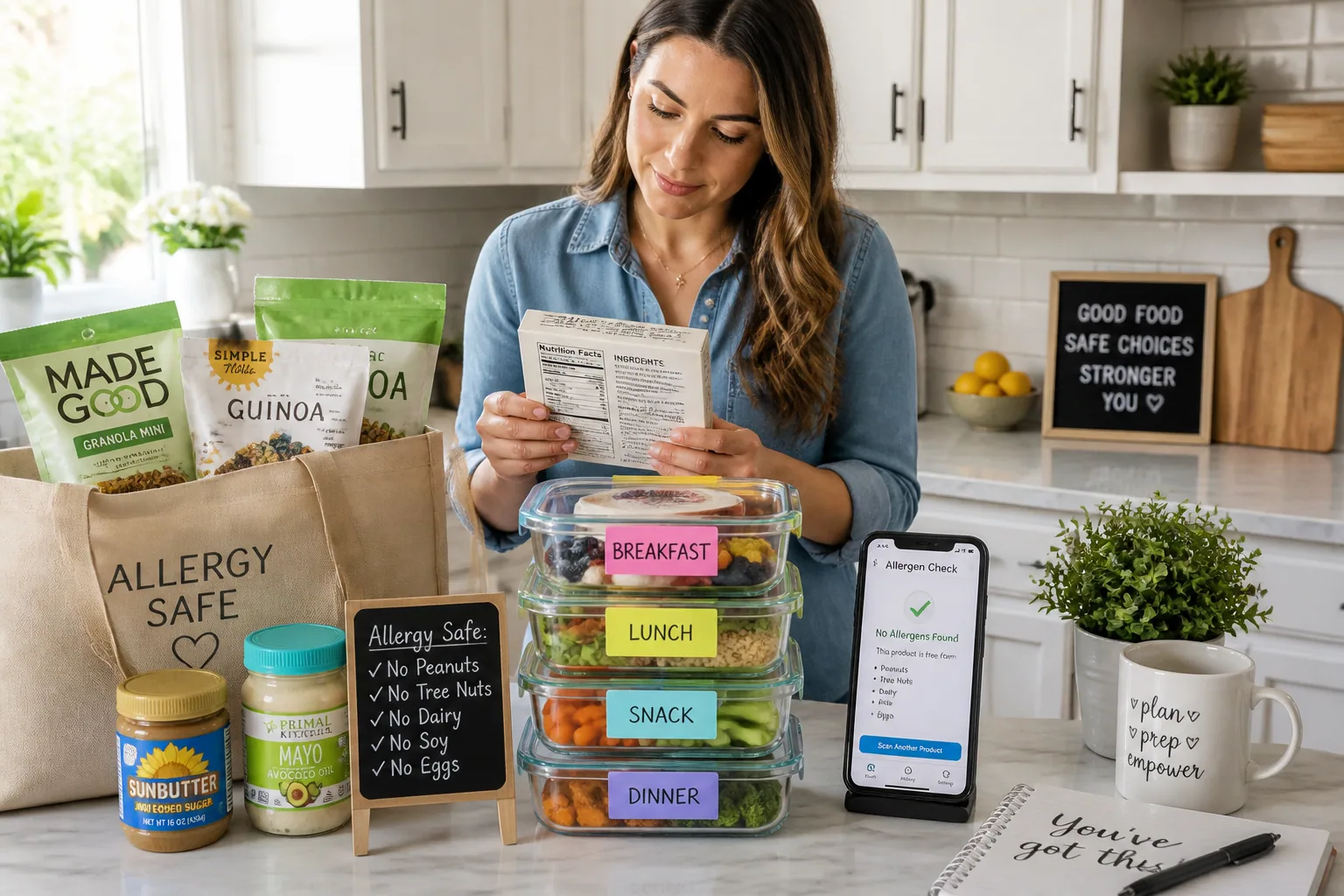
Juggling Many Allergens: A Survival Guide for People With Multiple Food Sensitivities
Managing one food allergy or intolerance can already reshape the way you shop, cook, and eat. Managing two or more can feel like a full-time logistics job. You are not just avoiding a single trigger, you are checking for overlap, watching for cross-contamination, reading labels with extra care, and trying to keep meals nutritious enough to support your health. That is a lot to hold in your head every day.
It is also more common than many people realize. Research suggests that about 45.3% of U.S. adults with food allergies report being allergic to more than one food, and food sensitivities or intolerances affect an even larger group. At the same time, food allergy data show that the burden is serious, with over half of adults with food allergies reporting at least one severe reaction and 38.3% having had an allergy-related emergency department visit at some point in their lives. In other words, this is not just inconvenient. It is something people have to manage carefully and consistently.
This guide is meant to make that daily reality a little easier. We will look at practical ways to reduce risk, simplify planning, avoid nutritional gaps, and lower stress around eating outside the home. The goal is not perfection. It is a safer, more sustainable routine that gives you more confidence and less mental fatigue.
Why Managing Multiple Allergens Is So Much Harder
When you only have one food to avoid, routines can be relatively straightforward. When you have several, the challenge multiplies. A product may be free from one allergen but contain another. A restaurant dish may be safe in theory, but unsafe because of a sauce, garnish, fryer, or prep surface. A meal plan that works well nutritionally may fall apart if two ingredients have to be removed at the last minute.
That complexity affects more than food choices. It affects planning time, shopping time, travel decisions, social invitations, and even how relaxed you feel around meals. Qualitative interviews with people managing multiple food allergies show that avoidance often leads to loss of spontaneity, social stress, heightened anxiety, and sometimes a sense of isolation. Caregivers report the same pattern, along with time costs, financial strain, and difficulty participating socially.
A multi-allergen routine has to do two things at once. It must reduce exposure risk, and it must be realistic enough that you can actually follow it day after day. If a system is too complicated, it usually breaks down under stress. That is why the most useful strategies are the ones that reduce decisions, not just the ones that reduce exposure.
The Biggest Risks: Cross-Contamination, Hidden Ingredients, and Label Confusion
When several triggers are in play, the biggest dangers are often not the obvious ingredients. They are the hidden ones. A snack may seem safe until you notice an allergen alias in the ingredient list. A packaged food may list a major allergen clearly but still be risky because of manufacturing cross-contact. A food that is naturally safe may become unsafe after it is handled, shared, or prepared on the same equipment as an allergen.
Cross-contamination is especially important because it can happen at multiple stages, from the factory to the kitchen to the table. Shared utensils, cutting boards, toaster crumbs, condiment jars, and bulk bins can all introduce risk. In restaurants, fryers, grills, tongs, and prep surfaces are common problem points. Even if a menu item looks safe, shared cooking methods can make it unsafe for someone with a severe allergy.
Label confusion is another major problem. In the U.S., FALCPA requires manufacturers to clearly list the eight major allergens, and sesame has also been required on labels since January 1, 2023 through the FASTER Act. That is helpful, but it does not solve everything. Precautionary statements such as “may contain” or “processed in a facility with” are voluntary, not regulated in how or when they are used, which means they can be inconsistent and hard to interpret. For people with multiple sensitivities, that uncertainty can make shopping especially stressful.
The safest approach is to assume that an ingredient list is only the first layer of screening, not the last. You still need to check for aliases, understand manufacturing statements, and evaluate whether the product fits your specific risk level.
How to Build a Safe Meal Planning System That Actually Works
A good meal-planning system for multiple allergies should reduce daily guesswork. The easiest way to do that is to build meals around a small set of safe, repeatable components. Start with a core list of proteins, starches, vegetables, fruits, fats, and flavorings you know are safe. Then create mix-and-match combinations from those items instead of reinventing every meal from scratch.
For example, if you have a few trusted proteins, two or three safe grains or starches, and several vegetables you can tolerate, you can rotate them through breakfast, lunch, and dinner in different forms. This lowers the number of new decisions you need to make each week. It also makes grocery shopping simpler because you are buying from a known-safe list instead of relying on memory alone.
Batch cooking can help too. Preparing safe staples in larger amounts gives you backup meals for busy days, reducing the temptation to take risks when you are tired or hungry. Label leftovers clearly with ingredients and date them right away. If your household includes other people who use allergens, consider separate shelves, sealed containers, and color-coded storage so nothing gets mixed by accident.
A useful trick is to create three lists: “always safe,” “safe if verified,” and “avoid.” The first list contains foods you can usually buy with little hesitation. The second list includes items you must check every time, such as packaged foods with changing ingredients. The third list should include all known triggers and common aliases. This structure speeds up decisions and reduces mental load.
Smart Grocery Shopping Strategies for Multiple Food Sensitivities
Shopping is often where confidence starts to rise or fall. If the process feels chaotic, it becomes harder to stay consistent at home. The best strategy is to shop with a plan and avoid making too many decisions in the aisle. A written list based on your safe-meal framework is far more reliable than trying to remember everything on the spot.
Buy familiar products first, then test new items one at a time when you have the energy to evaluate them carefully. That way, if a new food does not work for you, you know exactly what caused the issue. This is especially useful for people using elimination diets, which are common among those with food intolerance or sensitivity. Research estimates that about 20% of the global population experiences some form of food intolerance or sensitivity, and elimination diets can help identify triggers when they are done carefully.
When possible, shop the perimeter and rely on whole foods that are naturally free from many common allergens. Fresh produce, plain meats, and simple grains are often easier to assess than heavily processed products. That said, packaged foods can still be useful if they are thoroughly vetted and fit your allergy profile. The key is consistency, not perfection.
If shopping is especially overwhelming, use tools that speed up the process. Bokha: Food Allergy Scanner App can help here by scanning product barcodes and showing allergen information in less than a second. Because it detects 13 allergens, traces, and additives, it can reduce time spent decoding packages and help you make faster decisions in the supermarket: https://findthe.app/bokha
How to Read Food Labels Quickly and Catch Hidden Allergen Names
Reading labels becomes much easier once you know what to look for. The first step is scanning the bold or clearly listed allergen declaration, especially for the major allergens covered in U.S. labeling rules. Then move into the full ingredient list and watch for less obvious names. Manufacturers do not always use the plain word you expect.
For example, milk can appear as casein, whey, lactose, curds, or milk solids. Egg may appear as albumin or globulin. Wheat can show up through flour, semolina, durum, farina, or malted ingredients. Soy can appear as lecithin, tofu, miso, or soy protein. Tree nuts may be listed by specific nut type rather than the broad category. With multiple allergens, you need a personal alias list for every trigger you avoid.
The fastest label readers are not necessarily the most experienced shoppers. They are the people who have built a repeatable method. One good approach is to read from top to bottom in the same order every time: allergen statement, ingredient list, precautionary statement, then manufacturer notes or contact details if needed. A consistent sequence prevents you from skipping a step when you are rushed.
It also helps to keep a note on your phone with your specific allergens and common aliases. That way, you can compare the label to your list rather than relying on memory in a busy store aisle. Over time, this becomes less about reacting to every package and more about recognizing patterns quickly.
Understanding ‘May Contain’ Warnings and Precautionary Labels
Precautionary allergen labeling is one of the most confusing parts of shopping for people with multiple sensitivities. Phrases like “may contain,” “processed in a facility with,” or “manufactured on shared equipment” are not standardized in the U.S. They are voluntary statements, which means two products with similar risk can use very different wording, and two products with the same wording may have different actual exposure risks.
Because these warnings are inconsistent, they should be treated as a risk signal, not a guarantee. For people with severe allergies, some precautionary statements may be enough reason to avoid a product entirely. For others with milder sensitivities, the decision may depend on the specific allergen, the manufacturing setup, and prior experience. If you are unsure, especially with a history of severe reaction, it is safer to avoid or confirm with the manufacturer.
The important thing is to make a rule for yourself in advance. Decide what wording you will not accept, what wording requires more investigation, and what wording you can tolerate based on your own medical guidance. Having a personal threshold removes pressure in the moment and helps keep decisions consistent.
How to Avoid Nutrient Gaps on a Multi-Restriction Diet
Removing several foods can create real nutritional challenges. Research on elimination diets shows that when multiple foods or food groups are removed, the risk of deficiencies increases, especially for calcium, vitamin D, B vitamins, protein, and essential minerals unless the diet is carefully planned with substitutes and, ideally, support from a dietitian. That matters because food avoidance should protect your health, not weaken it.
The most common problem is not simply eating less. It is losing a major source of a nutrient you used to get regularly. For example, dairy avoidance can affect calcium and vitamin D intake. Grain restrictions can reduce B vitamins and fiber. Multiple protein restrictions can make it harder to meet energy and amino acid needs. Over time, these gaps can affect mood, energy, bone health, and overall resilience.
A practical defense is to replace, not just remove. Every time you take a food out, identify what it was contributing and where else that nutrient can come from. If you avoid one protein source, find another. If you avoid fortified foods, check whether you need a supplement or a different fortified alternative. If you have a long list of restrictions, a registered dietitian can help you build a safer nutrient map for the week.
Also remember that intolerance and allergy are not the same thing. Some people use elimination diets to identify what is causing symptoms, and that process can be useful when done carefully and temporarily. But long-term elimination without a plan is where problems start. The aim should always be targeted avoidance with enough variety to keep the diet balanced.
Balanced Meal Ideas When Several Common Foods Are Off-Limits
Meals do not have to be elaborate to be balanced. In fact, simplicity is often better when you are managing multiple allergens. A balanced plate usually includes a protein, a carbohydrate or starch, vegetables or fruit, and a source of healthy fat if tolerated. The challenge is finding versions of those categories that fit your personal restrictions.
A few examples can help. If dairy and egg are off-limits, a breakfast might be oatmeal made with a tolerated milk alternative, topped with fruit and seeds if safe. If wheat and soy are excluded, lunch might be rice with chicken or beans, vegetables, and olive oil. If nuts and sesame are also problematic, snacks might be fruit, plain yogurt if tolerated, or homemade muffins made from verified safe ingredients.
The more restricted your diet is, the more helpful templates become. Think in terms of “grain plus protein plus color” or “starch plus vegetable plus sauce.” Then rotate ingredients within those templates based on what you can safely eat. This reduces boredom without forcing you into risky experimentation every day.
Having a few emergency meals in the freezer can also save you from unsafe choices when plans change. A backup meal should be something you trust completely, is easy to heat, and contains enough nutrition to hold you over. That kind of planning is especially useful on tired evenings when it is tempting to “just eat something” without checking carefully.
Dining Out, Travel, and Social Events Without Constant Anxiety
Social life can become one of the hardest parts of living with multiple food sensitivities. People with multiple allergies often report feeling less spontaneous and more isolated, and caregivers frequently experience the same emotional pressure. Eating is social, so when food becomes risky, it can feel like every invitation requires negotiation.
The most helpful shift is to plan social eating like any other safety task. For restaurants, review menus in advance, call ahead if needed, and ask specific questions about ingredients, preparation, and shared equipment. Avoid relying on broad phrases like “we can probably make that work.” You want concrete answers about sauces, marinades, fryer oil, garnish, and kitchen procedures.
Travel requires a similar mindset. Bring safe snacks, carry a written list of your allergens and emergency contacts if appropriate, and identify nearby grocery stores or restaurants before you arrive. In airports, train stations, and hotels, convenience food is often limited, so prepacking familiar items can prevent a lot of stress. For longer trips, keeping a small reserve of shelf-stable food can be a lifesaver.
Social events are easier when you set expectations early. Offer to bring a dish you know is safe, or eat beforehand so the event is about company rather than survival. You do not need to explain your entire medical history to everyone, but clear communication helps others understand that your precautions are not preferences. They are necessary.
How Caregivers Can Reduce Stress and Create Safer Routines
For caregivers, the challenge is not only avoiding mistakes. It is building systems that other people can follow too. That may mean creating separate shelves, using labeled containers, repeating the same kitchen rules, and teaching everyone in the household what cross-contact looks like in practice. Simplicity helps compliance.
Caregivers also carry an emotional burden that is easy to underestimate. In qualitative research, caregivers describe the time, cost, and social limitations of managing multiple food allergies as major sources of stress. That means caregiver support matters, not just patient education. If one person is carrying all the checking, planning, and worrying, burnout becomes more likely.
A good shared routine includes written meal plans, approved brands, clear snack rules, and a plan for emergencies. If children are involved, teach them age-appropriate steps like not sharing food, washing hands, and asking before accepting treats. If adults are involved, keep the system collaborative rather than controlling. The goal is safer habits, not constant policing.
Caregivers should also track their own limits. If you are exhausted, you are more likely to miss details. Shared checklists and routine-based planning reduce that risk. And when possible, delegate some of the food work so the burden does not fall on one person alone.
Helpful Tools and Apps Like Bokha for Everyday Allergen Management
Digital tools are especially useful when you are managing more than one allergen because they help offload memory and speed up repetitive checks. Instead of relying on every label read being done from scratch, an app can help you screen products faster and keep your decisions consistent across shopping trips.
Bokha: Food Allergy Scanner App is a good example. It is available on iOS and Android and lets you scan product barcodes to discover allergens in less than a second. It detects 13 allergens, traces, and additives, which can be especially useful when you are comparing several products quickly or trying to avoid ingredients that do not always stand out on a label.
The real value of tools like this is not just speed. It is reduced cognitive load. When you have multiple sensitivities, every shopping trip can involve dozens of tiny decisions. The less time you spend decoding packaging, the more energy you have for meal planning, family life, and everything else that food allergy management affects.
Creating a Sustainable Long-Term Routine for Safety and Peace of Mind
The best multi-allergen routine is the one you can keep using six months from now. That means building habits that are strict where they need to be, but flexible where they can be. You do not need to be perfect every day. You need a system that helps you make safe choices even when you are busy, stressed, or away from home.
Long-term sustainability usually comes from repetition. Use the same grocery list structure, the same label-reading order, the same trusted meal templates, and the same rules for restaurants and travel. The fewer decisions you have to reinvent, the less room there is for fatigue-related mistakes.
It also helps to acknowledge the emotional side of this work. Food allergy management is not only about ingredients. It is about fear, frustration, planning, and sometimes grief for the ease that other people seem to enjoy. Research on food allergy communities shows that anxiety and panic are common responses, especially after reactions or when worrying about foods. Those feelings are understandable, and they deserve practical support, not dismissal.
If you are caring for yourself or someone else, aim for progress that lowers stress rather than chasing impossible control. A safer kitchen, a shorter label check, a more reliable backup meal, or a better restaurant question can all make a real difference. Over time, those small improvements create something valuable: more confidence, more consistency, and a little more peace of mind.