How to Build a Safe Pantry: Practical Strategies for Allergy-Friendly Food Storage and Organization
A safe pantry is not just about being neat. In a home where food allergies or intolerances are part of daily life, pantry organization can be one of the simplest ways to reduce accidental exposure. The problem is that cross-contact does not usually look dramatic. It can happen through a spoon dipped into the wrong jar, crumbs on a shelf, a shared scoop in a bulk container, or a package that was opened, closed, and stored next to something unsafe. When even tiny residues can matter, the way food is stored becomes part of the safety plan.
The good news is that you do not need a complicated system to make a pantry much safer. With a few clear habits, some thoughtful labeling, and a setup that makes safe choices obvious, you can turn a crowded shelf into a more reliable part of everyday allergy management. And because this routine has to work in real life, not just on paper, the best systems are the ones that are simple enough for everyone in the household to follow.
Why a Safe Pantry Matters More Than You Think
When people think about food allergy safety, they often focus on cooking, eating out, or ingredient labels. Those are important, but the pantry is where risk often starts quietly. A contaminated jar is still contaminated before dinner begins. A container of flour that has been opened with a shared scoop can spread residue across a whole shelf. A snack stored in the wrong zone can be mistaken for a safe one during a rushed morning.
This matters because allergic reactions can happen from very small amounts. Research has documented severe reactions from doses under 5 mg of protein from foods such as milk, egg, and nuts in some individuals, and thresholds vary widely from person to person. For peanut allergy, one estimate places the eliciting dose for 5% of allergic individuals at around 1.5 mg peanut protein, which shows how little exposure can be enough to trigger symptoms for some people. Source: https://pmc.ncbi.nlm.nih.gov/articles/PMC11382767/ and https://onlinelibrary.wiley.com/doi/10.1111/all.15167
That is why pantry organization is not just about convenience. It is part of exposure prevention. When safe food is easy to identify, harder to contaminate, and stored in a predictable place, you lower the odds of a mistake when you are tired, busy, or helping children grab a snack.
What Cross-Contact Looks Like in Everyday Food Storage
Cross-contact is the transfer of allergen residue from one food, surface, or tool to another. In the pantry, it often happens long before food reaches the stove. It can come from airborne crumbs during pouring, from hands that touched an unsafe package and then a safe one, or from tools that were used in more than one container.
Some of the most common examples are easy to overlook. A knife used for peanut butter and then placed back into the drawer. A cup of flour that was scooped from a bulk bag and then left inside the pantry without cleaning. A jar of spread with crumbs on the rim. A bag of cereal stored open after breakfast so crumbs fall onto the shelf below. None of these seem major on their own, but for a highly sensitive person, small residues can add up.
This is also why the cleanup method matters. The FDA notes that a full wash-rinse-sanitize-air-dry procedure is effective at removing peanut, milk, and egg allergens from food-contact surfaces and significantly reduces transfer. The same research also found that dry wiping alone is not enough, while wet cloths, wipes, or commercial detergent-based products, especially alcohol or quaternary ammonium compounds, are much more effective. Source: https://www.fda.gov/media/139757/download?attachment=
The Hidden Risk Spots: Jars, Bulk Bins, Shared Tools, and Open Packages
Some pantry items create more risk than others, especially when households share food storage. Jars are a common problem because people naturally dip in with whatever spoon is nearby. If the utensil touches toast, crumbs, or another food, the entire jar can become a cross-contact source. The same goes for spreads, condiments, and nut butters.
Bulk bins and large bags are another risk point. Shared scoops can move residue from one item to another. Even if the food itself is safe, the handling can make it unsafe. Open packages also need attention. Once a bag has been unsealed, it can pick up residue from surrounding foods, shelf dust, or hands that have just handled something else.
This is why allergy-aware pantry systems often separate not just foods, but also the tools that touch them. Dedicated utensils, sealed containers, and clear storage boundaries reduce the chance of accidental transfer. For households managing multiple allergens, a visual system can help everyone remember which items belong where.
Food allergy safety experts often recommend dedicated zones or shelves for allergen-safe foods, sealed containers with dedicated utensils like scoops or spoons, and durable labels or stickers with color-coding, especially green for safe and red for unsafe. Source: https://www.foodallergiesliving.com/tips-to-keeping-an-allergy-friendly-kitchen/
How to Create Allergy-Safe Zones in Your Pantry and Kitchen
The easiest way to make a pantry safer is to give safe foods their own place. A dedicated shelf, bin, or cabinet area reduces the chance that safe items get mixed into risky storage. In a shared kitchen, this can be as simple as assigning the top shelf to allergen-safe foods and keeping allergenic items lower or in a separate zone, depending on the needs of the household.
The main goal is consistency. Everyone should know where safe snacks, breakfast foods, baking ingredients, and lunch items are stored. If a child, caregiver, or partner can find them without asking, the system is more likely to hold up on busy days. It also helps to keep allergen-safe foods together by type, so all safe pasta, all safe cereal, or all safe baking supplies live in the same place.
In kitchens where allergens cannot be fully removed, zones create a buffer. The point is not to make the whole pantry sterile. The point is to create a clean, predictable area where the chances of contamination are lower and the rules are clearer.
Smart Storage Solutions: Containers, Labels, and Shelf Placement
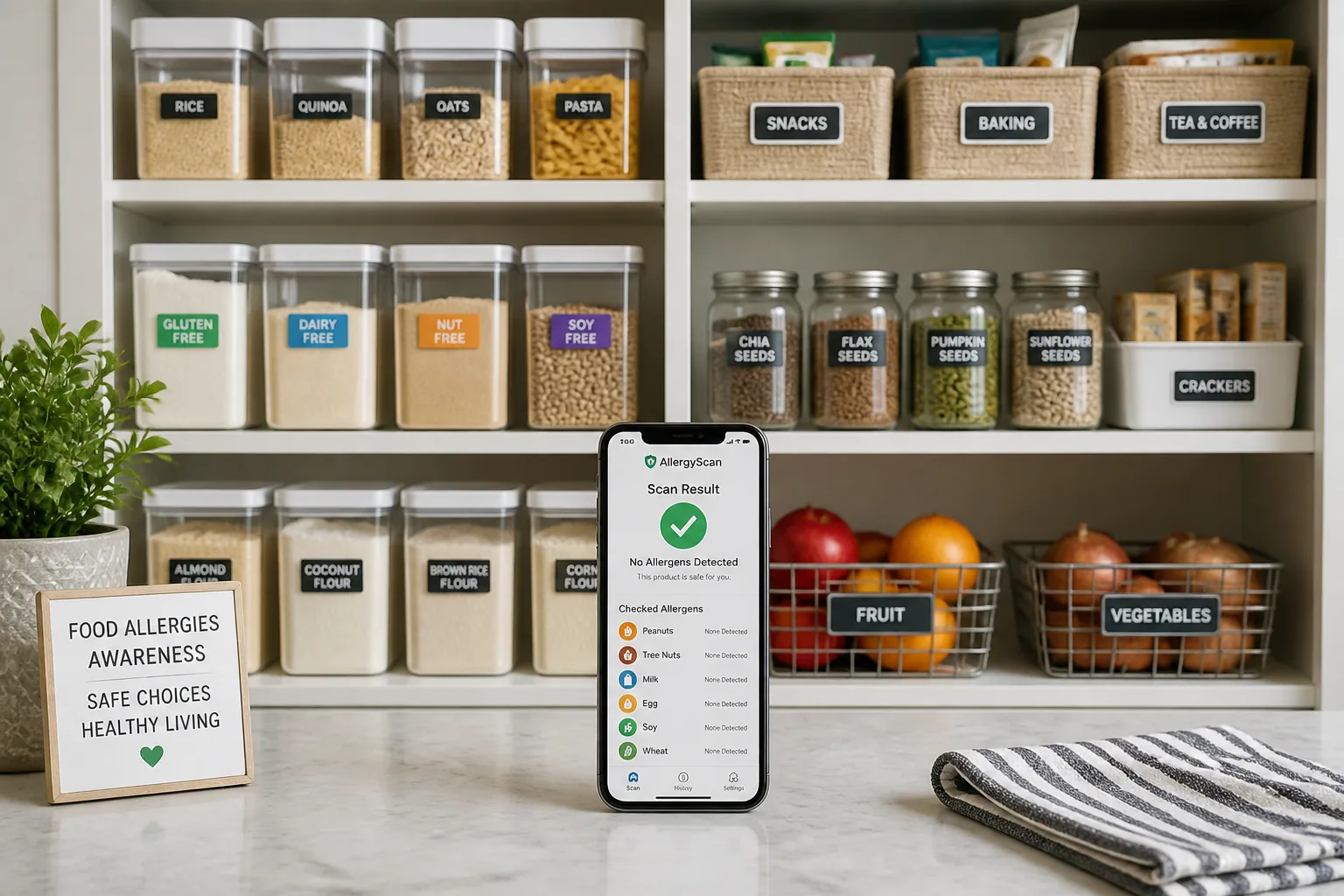
Good containers do a lot of the work for you. Clear, airtight containers help preserve freshness, keep crumbs contained, and make it easier to see what you have before you buy duplicates or forget something at the back of the shelf. Transparency also helps with inventory tracking, which is useful when you are trying to protect safe foods from being lost, mixed up, or expired. Source: https://www.sortedout.com/tips-for-decluttering-organizing-your-pantry-for-special-diets/
Labels matter just as much. Durable stickers or waterproof labels can mark foods as safe, unsafe, or family-specific. Color-coding is especially helpful because people see it at a glance. Green for safe and red for unsafe is a common pattern because it is intuitive, even for children or guests. For mixed-allergy households, you can add more than one color or symbol if needed, as long as the system stays simple enough to remember.
Shelf placement should support the labeling. Put the safest items in the easiest-to-reach zone for the person who uses them most often. Keep open or high-risk products in a separate area. If you use containers for flour, grains, cereal, or snacks, give each one a dedicated scoop so there is no temptation to reuse utensils across containers. That one step can prevent a lot of accidental transfer.
A small design change can also help: store allergy-safe items in bins or on shelves that are visually distinct from the rest of the pantry. The less the eye has to search, the less likely someone is to grab the wrong package in a hurry.
Cleaning for Safety: What Removes Allergen Residue and What Is Overkill
Cleaning is where many people overcomplicate things, or underdo them. The most important principle is to remove residue effectively, not to use a dozen special products. For food-contact surfaces, the FDA-supported sequence of wash, rinse, sanitize, and air-dry is a strong standard because it has been shown to remove peanut, milk, and egg allergens and reduce transfer. Source: https://www.fda.gov/media/139757/download?attachment=
For shelves, drawers, and pantry walls, a practical routine usually means removing crumbs, washing with detergent and water, rinsing, and drying fully. Dry wiping alone is not enough if you are trying to remove allergen residue. Wet cloths or wipes do a much better job, and commercial detergent-based products can be useful when used correctly. The important part is that the residue is actually lifted away, not just moved around.
Hands matter too. Plain water or hand sanitizer gels do not reliably remove allergenic proteins from hands. Soap and water or commercial wipes are needed when someone has handled a risky food and then needs to touch a safe item. Source: https://www.foodallergyawareness.org/food-allergy-and-anaphylaxis/cross-contact/
A realistic routine can be simple. Wipe countertops, shelf bottoms, cabinet interiors, and food storage containers weekly. Clean knives, boards, and utensils after using an allergenic food and immediately before they are used with allergen-safe foods. Every few months, do a deeper clean of less accessible areas like the backs of shelves or the tops of cabinets. Source: https://nalent.com/steps-for-a-safe-allergy-free-kitchen/
Using Bokha to Scan, Log, and Manage Safe Pantry Items
Technology can make pantry management less stressful, especially when you are restocking quickly or trying to remember which products are safe for which person. Bokha, available at https://findthe.app/bokha, lets you scan product barcodes and identify allergens in less than a second. It detects 13 allergens, including gluten, peanut, egg, soy, fish, shellfish, tree nuts, wheat, mustard, celery, mint, sulphites, and lactose, along with traces and additives.
That kind of quick check is useful in the pantry because it helps you keep your safe-item list current. You can save favorite products, review your scan history, and reduce the chance of buying something that does not fit the household’s needs. When the pantry is organized but the shopping routine is messy, the whole system breaks down. A scanning tool can help close that gap.
The best use of an app like Bokha is as part of a broader routine. Scan before items enter the pantry, log what has been approved, and keep a record of products that are safe for repeated purchase. That way the pantry does not rely only on memory, which is where many mistakes begin.
How to Keep the System Working During Busy Real Life
The hardest part of any allergy-safe pantry is not building it. It is keeping it working when life gets busy. Groceries arrive all at once. Kids put things away in the wrong place. Someone borrows a safe ingredient and forgets to label it. This is why the system needs rules that are easy to repeat, not just pretty containers.
A good household rule is that new groceries are checked before they enter the pantry. Another is that any food removed from its original package gets relabeled immediately. If a product is opened, it goes into a sealed container or stays in a clearly marked zone. That reduces confusion later, especially in shared kitchens where people are making meals at different times.
It also helps to teach every caregiver and family member the same basics. If one person knows the safe shelf but another does not, the pantry is still vulnerable. Children can often learn the system quickly if the labels are visual and the rules are consistent. Simple habits are easier to keep than detailed instructions that only one person understands.
Tips for Small Kitchens and Households with Multiple Allergies
Small spaces do not automatically make allergy safety harder, but they do require more discipline. If you do not have room for a whole separate cabinet, use vertical space. Stack clear bins, add shelf risers, and reserve one hard-to-miss area for allergen-safe foods. Even a single drawer can become a protected zone if it is consistently used for the same items.
For households managing multiple allergies, the system needs to be even more visible. Color-coded labels or stickers that resist washing and dishwasher cycles can prevent confusion. Assign zones for specific allergens if needed, and make sure dedicated tools stay with the foods they belong to. If one shelf is for peanut-containing items and another is for safe snacks, the rules should be obvious enough that no one has to guess.
Because the people in the home matter as much as the containers, the system should be taught, not assumed. Caregivers, babysitters, grandparents, and older siblings all need to know which items are safe and which are not. When everyone follows the same setup, it becomes much easier to protect the person with allergies without turning every meal into a negotiation.
Simple Habits That Make an Allergy-Safe Pantry Easier to Maintain
The most reliable allergy-safe pantries are usually the simplest ones. Put the safest foods in the same place every time. Use sealed containers. Keep dedicated tools with the foods they serve. Label things clearly. Clean food-contact surfaces thoroughly. Recheck products when they come home from the store. These steps are not glamorous, but they work because they reduce decisions and leave less room for error.
It also helps to think of the pantry as a living system rather than a one-time project. As products change, family needs shift, and new allergies appear, your storage setup should adapt. A system that is easy to update is much more useful than one that looks perfect but falls apart after a single grocery run.
In the end, a safe pantry is about making the healthy choice the easy choice. When safe products are clearly labeled, stored separately, cleaned properly, and tracked consistently, the whole household benefits. There is less stress, fewer mistakes, and more confidence that the foods reaching the table are the ones meant to be there.