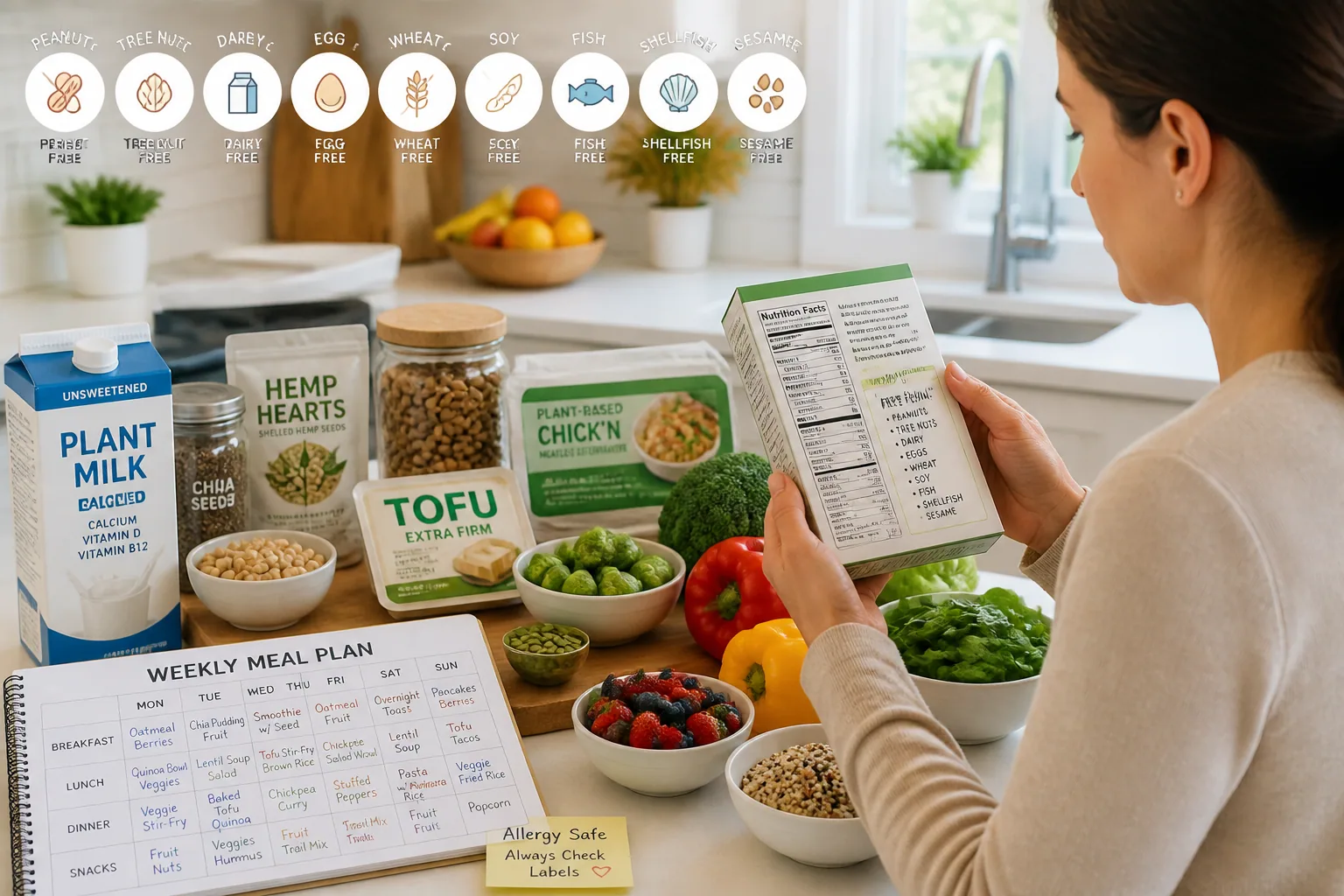
How to Build a Balanced Diet When Major Food Allergens Restrict So Much
Starting a new allergy-friendly diet can feel like losing your food safety net all at once. When dairy, eggs, soy, nuts, or other major allergens are removed, meals can suddenly seem repetitive, nutrient-poor, or harder to trust. The good news is that a balanced diet is still absolutely possible. It just takes a little more intention, a smarter shopping strategy, and a better understanding of which nutrients commonly need extra attention.
The goal is not perfection. It is to build a diet that feels safe, nourishing, and realistic enough to stick with. That means replacing what the allergen used to provide, widening the range of foods you can tolerate, and using fortified foods, supplements, and tools when they make sense. If you are newly navigating this, think of this as a practical roadmap rather than a list of restrictions.
Why food allergies can make balanced eating feel so hard
Food allergies do more than remove a few ingredients. They can remove entire food groups that often carry key nutrients. Dairy is a major source of calcium, vitamin D, protein, riboflavin, phosphorus, vitamin A, and vitamin B12. CHKD notes that eliminating milk can reduce access to many of these nutrients at once, which is one reason dairy-free eating can feel nutritionally tricky early on. Source: https://www.chkd.org/patient-family-resources/health-library/milk-allergy-diet/
Eggs, soy, and nuts can also play important roles in a normal diet. Healthline notes that common shortfalls when avoiding eggs, dairy, soy, and nuts can include iron, calcium, zinc, vitamin D, vitamin B12, and omega-3 fats. Source: https://www.healthline.com/nutrition/ovo-vegetarian-diet
Another reason this feels overwhelming is that allergens often hide in packaged foods, restaurant dishes, and processed staples. So the challenge is not only replacing nutrients, but also finding foods that are both safe and satisfying. That is why a balanced allergy-friendly diet should be built on both nutrition and label confidence.
The top nutrient gaps to watch when major allergens are removed
The exact nutrient gaps depend on which foods you avoid, but a few stand out again and again. Calcium and vitamin D are common concerns when dairy is out. Protein can become harder to reach when eggs, soy, nuts, and dairy are all restricted. Iron may drop if the diet becomes more limited in beans, meats, fortified grains, or eggs. Vitamin B12 deserves special attention if animal foods are reduced. Healthy fats can also become lower if nuts and certain oils are off the table.
It helps to think in clusters. If dairy is removed, calcium, protein, and vitamin D often need replacing together. If eggs are removed, you may need to be more deliberate about B12, protein, and iron. If soy is also excluded, one of the easiest plant-based protein sources disappears, so legumes, seeds, grains, and carefully chosen protein products matter more.
The point is not to panic about every nutrient. It is to identify the nutrients most likely to fall through the cracks so you can plan around them from the beginning.
How to replace dairy nutrients like calcium, vitamin D, and protein
If dairy is one of your allergens, it is helpful to replace it with foods that do more than mimic milk at the surface level. Fortified plant milks are one of the easiest swaps. According to Cleveland Clinic, many non-dairy milks are fortified not only with calcium, but also vitamin D, vitamin A, and riboflavin. Choosing unsweetened versions can help you avoid unnecessary added sugar. Source: https://health.clevelandclinic.org/what-you-need-to-know-when-choosing-milk-and-milk-alternatives/
Mayo Clinic also highlights several non-dairy calcium sources, including fortified plant milks, fortified orange juice, tofu set with calcium, beans such as navy beans, white beans, and chickpeas, and leafy greens like kale, collards, and turnip greens. Canned fish with bones, such as salmon and sardines, can also contribute meaningful calcium if fish is tolerated. Source: https://mcpress.mayoclinic.org/nutrition-fitness/how-to-get-enough-calcium-if-youre-dairy-free/
For vitamin D, food alone is often not enough, especially when fortified dairy and eggs are removed. Mayo Clinic notes that fortified plant milks and juices, UV-exposed mushrooms, safe sun exposure, and supplements can all play a role. Source: https://mcpress.mayoclinic.org/nutrition-fitness/how-to-get-enough-calcium-if-youre-dairy-free/
Protein replacement should be practical, not complicated. If you are avoiding dairy, eggs, nuts, and soy, look toward beans, lentils, peas, seeds, whole grains, and seed-based spreads. Mayo Clinic notes that legumes, seeds like pumpkin, hemp, and sunflower, whole grains such as quinoa, oats, and buckwheat, and some protein powders like pea-based or rice-based options can help meet protein needs. Blending complementary sources across the day can improve amino acid coverage. Source: https://dev-mcpress.mayoclinic.org/nutrition-fitness/can-you-consume-enough-protein-on-a-plant-based-diet/
How to get enough protein without eggs, nuts, or soy
Protein becomes much easier when you stop looking for one perfect food and start building meals from a few dependable pieces. Beans and lentils are often the backbone of an allergy-friendly plate. Add quinoa, oats, buckwheat, or whole-grain bread, then layer in seeds or seed butter if those are safe for you. That combination creates a more complete meal than any single ingredient alone.
Some especially useful options include lentil soup with rice, chickpea pasta with vegetables, oatmeal with hemp seeds, quinoa bowls with beans and greens, and sunflower seed butter on toast or fruit. If you tolerate fish, canned salmon or sardines can be very efficient protein sources too. If not, a pea- or rice-based protein powder can be useful for busy mornings, post-exercise nutrition, or days when appetite is low.
The smartest approach is usually rotation. Instead of relying on one replacement food every day, cycle through several protein sources so your diet stays more balanced and less monotonous.
Allergen-safe foods that deliver key nutrients
A balanced allergy-friendly diet gets easier when you build a mental shortlist of nutrient-dense foods you can safely rely on. For calcium, think fortified plant milks, fortified orange juice, calcium-set tofu, navy beans, white beans, chickpeas, kale, collards, turnip greens, and certain fish with bones. For vitamin B12, fortified cereals, fortified plant milks, nutritional yeast, and supplements are more dependable than trying to chase unreliable natural plant sources. WebMD notes that seaweed and mushrooms are not consistent B12 sources and may contain inactive analogues. Source: https://www.webmd.com/diet/what-are-plant-food-sources-vitamin-b12
For iron, legumes, dark leafy greens, and fortified grains are helpful, especially when paired with vitamin C-rich foods like citrus, berries, peppers, tomatoes, or kiwi to improve absorption. This pairing matters because plant-based iron is not absorbed as efficiently as iron from animal sources.
For healthy fats, do not assume nuts are the only answer. Ohio State notes that flaxseeds, chia seeds, hemp seeds, avocados, olives, olive oil, sunflower oil, safflower oil, canola oil, and fatty fish or fish oils can help provide the right balance of fats, including omega-3 and omega-6. Source: https://health.osu.edu/wellness/exercise-and-nutrition/good-fats-vs-bad-fats
Fortified foods can make an allergy-friendly diet much easier to sustain because they provide nutrients that may otherwise be hard to obtain consistently. Fortified non-dairy milks, fortified cereals, and some fortified juices can help fill common gaps in calcium, vitamin D, and B12. This is especially useful when your safe food list is still small.
Supplements are not a failure. They are often a sensible tool, especially for vitamin B12 and vitamin D, and sometimes calcium if intake from food is too low. The key is to use them intentionally. A supplement can support your diet, but it should not be used to ignore an obvious food gap that could be addressed more naturally.
If you are unsure whether you need a supplement, it is worth reviewing your diet with a registered dietitian or clinician, especially if your allergies are multiple, your appetite is limited, or you are also avoiding animal foods.
Smart meal planning strategies for variety and nutrition
Meal planning with food allergies works best when it is flexible. Start by building meals from a simple formula: a protein source, a carbohydrate, a vegetable or fruit, and a fat. Then rotate ingredients so you are not eating the same three meals every week. Variety helps with both nutrient coverage and food fatigue.
A few practical strategies help a lot. First, broaden the range of tolerated ingredients whenever safely possible. If you can eat multiple grains, multiple legumes, several vegetables, and a few seeds, your diet becomes much easier to balance. Second, keep fortified staples on hand, such as plant milk, fortified cereal, and a reliable bread or snack option. Third, batch-cook basics like rice, quinoa, lentils, roasted vegetables, and chopped fruit so assembling meals is fast.
Another useful habit is to pair nutrient-dense foods together. For example, pair iron-rich lentils with peppers or citrus, or calcium-fortified plant milk with oats and seeds at breakfast. Small combinations add up over the week.
How to read labels and avoid accidental exposure
Label reading is one of the most important skills in allergy-friendly eating. Johns Hopkins notes that U.S. labeling law requires soy to be identified on packaged foods, but hidden sources can still appear under terms like hydrolyzed vegetable protein, natural flavors, or shared-equipment warnings. Source: https://www.hopkinsmedicine.org/health/wellness-and-prevention/soy-allergy-diet
That means you cannot rely on front-of-package claims alone. Check the ingredient list every time, even on products you have bought before, because formulas change. Be especially careful with sauces, baked goods, soups, spice blends, instant meals, and snack bars, which often contain hidden dairy, egg, soy, or nut ingredients.
It can also help to build a personal list of trusted brands and safe staples. Once you know which bread, cereal, pasta, plant milk, or snack items are reliable, shopping becomes much less stressful.
A sample 7-day meal plan for dairy-, nut-, and egg-free eating
Here is a simple example of how a balanced week can look when dairy, nuts, and eggs are avoided. This is only a model, and it should be adjusted for your allergies, appetite, and preferences.
Day 1: Breakfast could be oatmeal made with fortified oat milk, topped with chia seeds and berries. Lunch could be a lentil and vegetable soup with whole-grain bread and an orange. Dinner could be rice, roasted broccoli, and chickpeas with olive oil and lemon. Snack options could include hummus with carrots or fortified cereal with plant milk.
Day 2: Breakfast could be toast with sunflower seed butter and banana. Lunch could be quinoa salad with black beans, cucumbers, tomatoes, and avocado. Dinner could be baked potato, sautéed kale, and white bean stew. Snack options could include apples, pumpkin seeds, or dairy-free yogurt if tolerated.
Day 3: Breakfast could be fortified cereal with plant milk and strawberries. Lunch could be chickpea pasta with marinara and spinach. Dinner could be brown rice, roasted carrots, and lentils with a citrus dressing. Snack options could include popcorn with olive oil or hummus with crackers.
Day 4: Breakfast could be a smoothie made with fortified soy-free plant milk, oats, berries, and hemp seeds. Lunch could be bean chili with corn bread. Dinner could be quinoa, green beans, and grilled salmon if fish is safe. Snack options could include pears and sunflower seed butter.
Day 5: Breakfast could be overnight oats with cinnamon, flaxseed, and fruit. Lunch could be a rice bowl with chickpeas, roasted vegetables, and tahini if sesame is safe. Dinner could be pasta with a lentil-based sauce and side salad. Snack options could include an orange and roasted chickpeas.
Day 6: Breakfast could be toast, avocado, and fruit. Lunch could be vegetable soup with beans and crackers. Dinner could be baked sweet potato, steamed greens, and quinoa. Snack options could include fortified plant milk, seed crackers, or fruit.
Day 7: Breakfast could be chia pudding made with fortified plant milk and berries. Lunch could be bean tacos on corn tortillas with lettuce and salsa. Dinner could be rice pilaf with peas, vegetables, and olive oil. Snack options could include trail mix made from safe seeds or a protein smoothie if needed.
A week like this shows that allergy-friendly eating does not have to be bland or overly restrictive. The key is repeating a few dependable patterns while still changing the ingredients enough to stay nourished and interested.
When to work with a dietitian and how tools like Bokha can help
If you are managing several allergies at once, working with a registered dietitian can make a huge difference. A dietitian can help you estimate protein needs, spot nutrient gaps, choose supplements wisely, and tailor meal plans to your real life rather than an idealized version of it. This is especially valuable for children, pregnant people, athletes, picky eaters, or anyone with low appetite and a long allergy list.
Technology can also remove a lot of daily friction. A tool like Bokha: Food Allergy Scanner App, available at https://findthe.app/bokha, lets you scan product barcodes and check allergens in less than a second. For people trying to avoid dairy, eggs, soy, nuts, gluten, and other triggers, that kind of speed can make supermarket shopping much less stressful and help you make safer choices more quickly.
Used together, dietitian guidance and a reliable scanner app can turn an overwhelming process into a more manageable routine.
Final tips for building a safe, sustainable, balanced diet
The best allergy-friendly diet is the one you can actually maintain. Focus on a few high-impact habits: keep a short list of nutrient-dense safe foods, use fortified staples regularly, rotate your proteins, pair iron with vitamin C, and do not hesitate to use supplements when they are genuinely needed. Over time, these small systems matter more than chasing the perfect meal.
If you are feeling stuck, remember this: removing allergens does not mean removing balance. It just means balance has to be built on purpose. With the right foods, the right label-reading habits, and the right support, you can eat safely and still meet your nutritional needs.