How FDA 2026 Traceability Rules Will Transform Allergen Safety in Your Grocery Cart
For families managing food allergies, grocery shopping is often less about convenience and more about risk management. A single mislabeled ingredient, a hidden cross-contact issue, or a vague recall notice can turn an ordinary trip into a stressful guessing game. In 2026, the FDA Food Traceability Rule is changing that landscape by pushing the food supply chain toward much better recordkeeping, faster tracing, and more precise recall information. The rule was written under FSMA Section 204, and it requires additional traceability records for certain high-risk foods, including key data elements tied to critical tracking events like shipping, receiving, and transforming. According to the FDA, the original compliance date was January 20, 2026, but Congress directed the agency not to enforce the full requirements until July 20, 2028. Even so, the traceability shift is already reshaping how food companies, retailers, and technology tools think about allergen safety. Source: https://www.fda.gov/food/food-safety-modernization-act-fsma/fsma-final-rule-requirements-additional-traceability-records-certain-foods
For allergy families, that matters because traceability is not just a back-office compliance issue. It can affect how quickly a contaminated product is identified, how narrowly a recall can be targeted, and how much information you get before putting something into your cart. In plain language, the new system is supposed to make it easier to answer the question every caregiver wants answered: where did this food come from, where has it been, and do I trust it for my household?
Why the FDA’s 2026 Traceability Rule Matters to Allergy Families
Food allergies turn small mistakes into serious consequences. The reason traceability matters is that many of the foods most likely to be tracked more closely are also foods that frequently intersect with allergen concerns, whether because they naturally contain allergens, are processed in shared facilities, or have a long history of recall activity. The FDA’s risk-ranking model considered outbreak frequency, severity of illness, likelihood of contamination, shelf life, manufacturing risks, consumption patterns, and cost of illness. That means the rule was built around foods that have repeatedly posed public health risks, including some items that are common in allergy households.
For a consumer, the value of traceability is simple. If a product is implicated in an allergen-related recall, better traceability can help regulators and companies identify exactly which lots are affected instead of issuing broad warnings that remove more food from shelves than necessary. That can mean fewer unnecessary product withdrawals, less confusion in the aisle, and faster safety alerts when there is a real problem.
It also matters because allergy families often shop across multiple channels, including supermarkets, warehouse clubs, and prepared-food counters. The more precise the upstream recordkeeping is, the more likely it is that a retailer can tell whether a specific carton, package, or batch is safe rather than relying on a general brand-level alert.
What the Food Traceability Rule Actually Requires
At its core, the rule requires covered businesses to keep additional records for foods on the FDA Food Traceability List, or FTL. These records include key data elements, often called KDEs, tied to critical tracking events, or CTEs. In practice, that means companies need to document important moments in the product journey, such as when a food is packed, received, transformed, shipped, or held. The FDA says the rule applies to entities that manufacture, process, pack, or hold certain high-risk foods, and the records must be detailed enough to let the agency trace products more efficiently during an investigation. Source: https://www.fda.gov/food/food-safety-modernization-act-fsma/fsma-final-rule-requirements-additional-traceability-records-certain-foods
One of the most important KDEs is the Traceability Lot Code, or TLC. This is a unique identifier assigned at specific points in the chain, such as initial packing, first land-based receiving, or transformation. The TLC is meant to travel with the product through later steps so that regulators and businesses can connect one lot to the next. For consumers, that is the invisible infrastructure behind a more targeted recall. Instead of saying a whole category of products is affected, the system is designed to isolate exactly which lot or lots deserve attention.
The rule also sets a very tight response expectation. If the FDA requests records, firms must be able to provide traceability records and the information needed to understand them within 24 hours, including an electronic sortable spreadsheet containing the relevant data. That timeline is a major reason the rule matters in food-allergy safety, because when an allergen problem is discovered, speed is everything. Source: https://www.fda.gov/food/food-safety-modernization-act-fsma/fsma-final-rule-requirements-additional-traceability-records-certain-foods
Importantly, the FDA does not require a specific technology platform. Records may be kept on paper, electronically, or as true copies, as long as they are legible, protected from loss or deterioration, and available to FDA on request. That means the rule is about reliable information, not fancy software. Source: https://www.fda.gov/food/food-safety-modernization-act-fsma/frequently-asked-questions-fsma-food-traceability-rule
Which Foods and Ingredients Are Most Affected
The Food Traceability List includes a number of foods that shoppers encounter every week. These include soft cheeses, shell eggs, nut butters, fresh leafy greens, fresh-cut leafy greens, fresh herbs, fresh melons, fresh peppers, fresh tropical tree fruits, fresh tomatoes, fresh cucumbers, fresh-cut vegetables, sprouts, finfish, smoked finfish, crustaceans, molluscan shellfish, and ready-to-eat deli salads. If a food contains an FTL-listed item in the same form, it may also fall under the rule. Source: https://www.fda.gov/food/food-safety-modernization-act-fsma/food-traceability-list
For allergy families, several of these categories are especially relevant. Nut butters are obvious because tree nuts are a major allergen. Shell eggs are another common concern. Fish and shellfish categories matter because they are among the major allergens and can be difficult to avoid when traceability information is limited. Deli salads and ready-to-eat foods are important too because they often contain multiple ingredients and are handled by many points in the chain, which can increase the complexity of recall investigations.
The rule also includes exemptions and partial exemptions. For example, pasteurized cheeses may qualify for a partial or full exemption if a kill step is applied, and some small shell egg producers are exempt. Foods that change form, such as freezing fresh-cut produce, may exit FTL coverage. For shoppers, this means the traceability picture is not identical for every product, and the presence of stronger traceability data will vary by item and by supply chain step. Source: https://www.fda.gov/food/food-safety-modernization-act-fsma/frequently-asked-questions-fsma-food-traceability-rule
How Better Tracking Can Speed Up Allergen Recalls
Allergen recalls are at their best when they are precise. Broad recalls are safer than no recalls, but they can still create major hardship for families who depend on specific products that may actually be fine. Better traceability helps reduce that uncertainty. If a company can trace a problem back to a specific processing date, source ingredient, or receiving event, the recall notice can be narrower and more actionable.
That matters in real life because allergy households often keep long lists of safe brands, approved lots, and trusted purchasing patterns. When a recall is vague, caregivers may need to remove entire product lines from the diet until more information becomes available. When traceability is strong, the affected lots can sometimes be identified more quickly, reducing both safety risk and unnecessary food waste.
The FDA’s own readiness work showed that this is not automatic. In spring 2026 tabletop exercises, many firms struggled to retrieve records tied to specific products for defined periods, especially in the electronic format expected within 24 hours. That is a reminder that the rule creates the possibility of better recalls, but the industry still has to build the systems and habits to make that speed real. Source: https://www.fda.gov/food/hfp-constituent-updates/fda-releases-report-traceability-readiness-tabletop-exercises-and-updated-faqs
For consumers, the practical takeaway is encouraging but cautious. Better tracking can shorten the time between detection and recall notice, and it can make the notice more specific. But the quality of the outcome still depends on how well every company in the chain captures and shares the traceability data.
What More Precise Traceability Means for Consumer Safety
More precise traceability is not just about recalls. It can improve the whole safety conversation around a product. When a retailer or manufacturer has better data, it can communicate more clearly about which lot is affected, which store received it, and what customers should do next. That can reduce panic and make it easier to decide whether a product should be returned, discarded, or avoided in future purchases.
For people with allergies, the biggest benefit may be trust. Shoppers are often forced to rely on label reading alone, even though label reading cannot tell you everything about supply chain handling. Stronger traceability adds another layer of accountability behind the label. It does not replace ingredient panels or allergen statements, but it can make those statements more credible when a problem emerges and investigators need to verify where the issue occurred.
The rule also covers retail food establishments and restaurants when they receive FTL foods. In many cases, they must maintain receiving KDEs and traceability plans. That matters because grocery stores, deli counters, and prepared-food sections are often where allergen risk feels most immediate to families. Source: https://www.fda.gov/food/food-safety-modernization-act-fsma/frequently-asked-questions-fsma-food-traceability-rule
In other words, traceability is becoming part of the consumer experience, even if shoppers never see the full data behind it. Better internal records can lead to better public notices, better shelf management, and better store-level responses when an allergen issue is suspected.
How to Use Labels, Lot Codes, and QR Tools While Shopping
Even with stronger supply chain tracking, the grocery aisle still asks you to make fast decisions. That is why labels and lot codes remain important. A lot code is one of the easiest ways to connect the product in your hand to the traceability system behind it. If a recall notice mentions a specific lot or production date, you can compare that information to what is printed on the package and make a more informed decision.
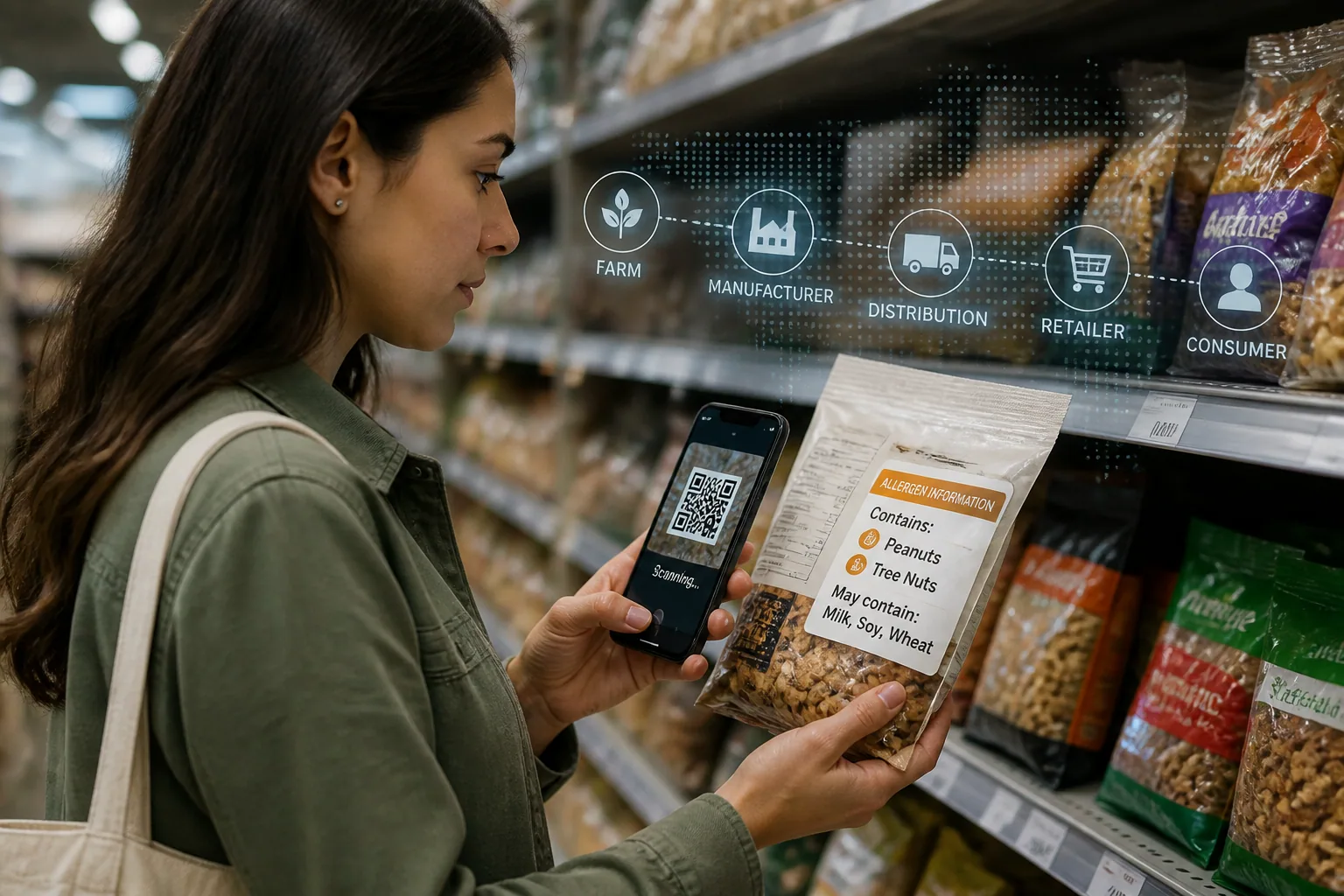
QR codes and digital package tools may also become more common as companies look for easier ways to connect shoppers to product data. In some cases, these tools may point to recall information, origin details, or product pages with updated safety notes. The key is to treat QR tools as a helpful layer, not as a substitute for ingredient review. Always check the allergen statement, the full ingredient list, and any advisory warnings before buying.
This is also where a product like Bokha: Food Allergy Scanner App can be genuinely useful. Bokha lets you scan barcodes and discover allergens in less than a second, which can save time when you are comparing products in store. Because it detects 13 allergens, plus traces and additives, it can complement the traceability information that companies are beginning to provide. If you want a fast way to cross-check packaged foods while shopping, you can learn more here: https://findthe.app/bokha
Apps and Retailer Features Bringing Traceability to Consumers
The future of traceability is likely to be more consumer-facing than it is today. Retailers may expand digital shelf labels, product pages, recall search tools, and loyalty-app alerts so shoppers can see whether a product lot is part of a safety notice. Food safety apps may also integrate barcode scanning, recall databases, and allergen filtering so the information is easier to use on the spot.
For allergy caregivers, the best tools will do two things at once. First, they will help identify whether a product fits dietary needs before purchase. Second, they will help connect that product to the traceability ecosystem if a recall happens later. The more the industry standardizes identifiers like lot codes and receiving records, the more useful these consumer-facing tools become.
That said, app quality will vary. Some tools are excellent at surface-level ingredient screening but weak on recall updates. Others may show traceability data but not interpret it well for allergen households. The smartest approach is to use digital tools as decision support, while still checking the package yourself and monitoring official recall channels for the foods you buy most often.
What Caregivers Should Watch for on Packaging in 2026
If you are shopping for someone with allergies, 2026 is a good year to become more intentional about packaging details. Watch for lot codes, production dates, barcode-based product pages, QR codes, and store recall notices. Keep an eye on whether the package has changed version, because reformulations and new sourcing arrangements can affect allergen risk even when the brand name looks the same.
It is also wise to pay close attention to foods that fall under the FDA traceability list, especially nut butters, eggs, leafy greens, fresh-cut vegetables, deli salads, and seafood categories. These foods can move through complex supply chains, so the package data may become more important when a recall develops. If you buy these regularly, take a moment to note recurring lot code patterns and save photos of safe product labels for comparison later.
Caregivers should also remember that not every package will look more informative right away. The traceability rule is a supply chain requirement first, and consumer visibility may arrive gradually through retailer systems and manufacturer tools. Even so, the underlying data discipline should eventually improve the quality of the information you can access.
Limits of the New System: What Traceability Still Can’t Prevent
Traceability is powerful, but it is not a cure-all. It cannot stop a cross-contact event from happening in the first place. It cannot guarantee perfect labeling, and it cannot eliminate human error in manufacturing or distribution. What it can do is make those problems easier to isolate and respond to once they are discovered.
It is also important to understand that the rule does not force every company to use advanced digital systems. Paper records can still be compliant if they are kept properly and can be produced on request. That means the system’s real-world effectiveness will depend on how seriously each business treats record quality and retrieval speed. A company can technically comply and still have weak internal processes that slow down a recall response.
Exemptions and partial exemptions also mean the safety picture is uneven. Some foods may not be covered in the same way, and some supply chains may exit the rule through processing changes or specific exemptions. For allergy families, this is a reminder that traceability is one safety tool among many, not a replacement for careful label reading and product verification.
A Smarter Grocery Cart: Practical Tips for Safer Allergy Shopping
The best way to use traceability in everyday life is to combine it with a clear shopping routine. Start by buying from brands and stores that make lot information easy to find. Save photos of safe products, especially those you buy repeatedly, so you have a visual reference if the package changes later. When possible, check the ingredient list and allergen statement every time, even for familiar items.
Next, use recalls as a habit, not just a reaction. If your household relies on foods from the FDA traceability list, keep an eye on recall alerts and store communications. If a notice includes lot codes or dates, compare them directly to the package before assuming a product is unsafe or safe. That small step can prevent unnecessary food waste and reduce last-minute meal stress.
Finally, mix official information with practical tools. QR codes, retailer recall pages, and allergy-scanning apps can help you move faster, but they work best when you already know what allergens matter in your home. Traceability will not make grocery shopping effortless, but it should make it more transparent. For allergy families, that is a meaningful shift. Over time, better records, faster recalls, and more precise alerts can turn the grocery cart from a place of constant uncertainty into one of more informed choices.