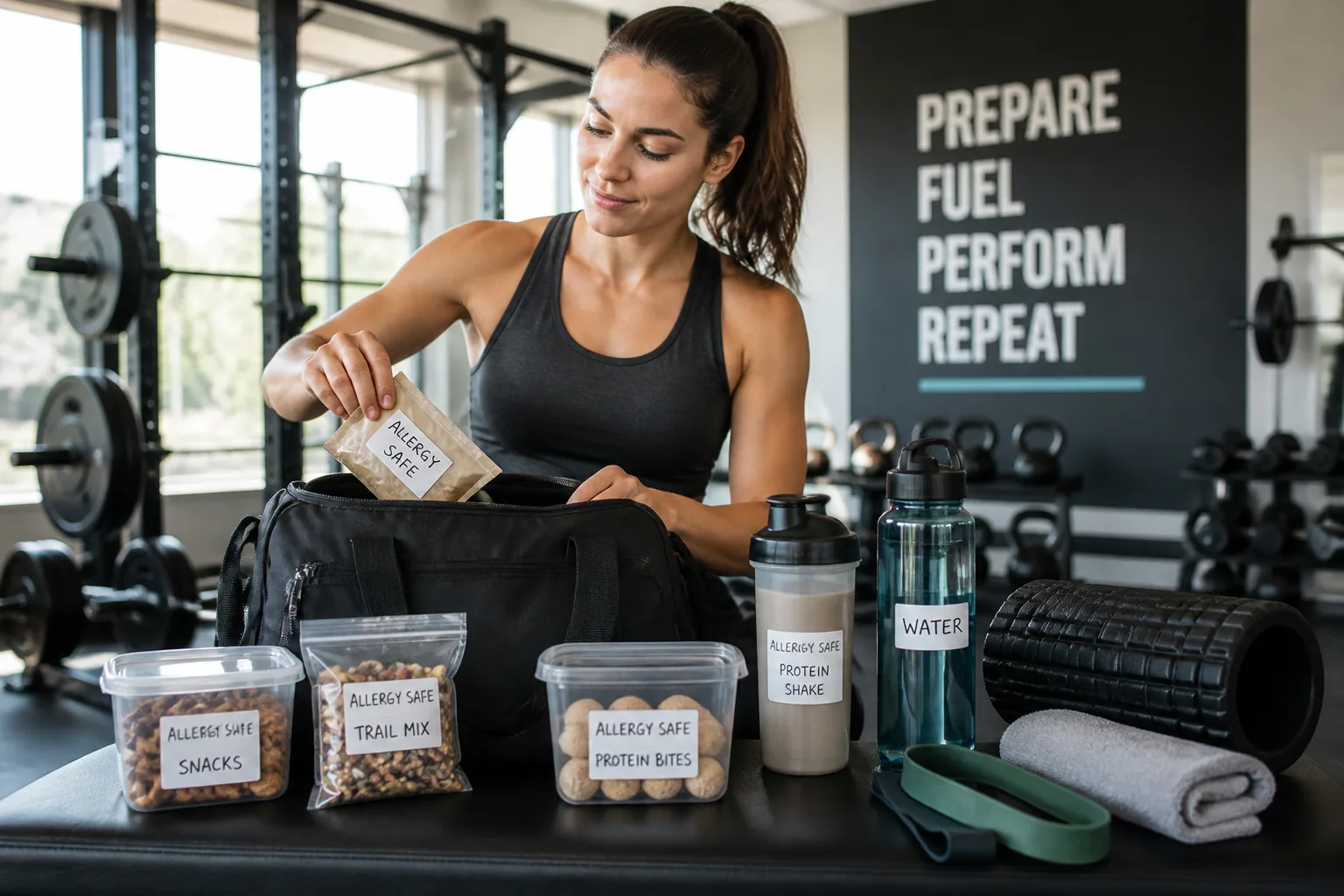
Fueling Fitness and Allergies: How Athletes Can Meet Performance Goals Without Compromise
For athletes, food is not just fuel. It is part of training, recovery, travel, and competition-day confidence. When food allergies enter the picture, that routine can become a lot more complicated. The challenge is not only avoiding obvious allergens, but also managing hidden ingredients, cross-contact, and the realities of team environments, shared kitchens, and busy tournament schedules.
This matters for a lot of people. Research suggests that about 5 to 8 percent of children and about 1 percent of adults live with food allergies, depending on the country and allergen type. That means many teen and adult athletes need sports nutrition strategies that support performance without creating unnecessary risk. The good news is that it is absolutely possible to fuel well, recover well, and stay safe at the same time.
Why Food Allergies Create Unique Challenges for Athletes
Athletes with food allergies have the same core nutrition needs as everyone else, but their margin for error is much smaller. Missing pre-workout fuel can affect energy, poorly timed recovery can slow adaptation, and an accidental exposure can end the day entirely. That means athletes are not just choosing foods for macros. They are also choosing foods for predictability, packaging, labeling, and handling safety.
The risk is especially high when athletes rely on convenience foods like bars, shakes, gels, school snacks, or cafeteria meals. These products often contain milk, egg, soy, wheat, peanuts, tree nuts, or less obvious allergens and additives. Hidden allergens can also show up through ingredients like mustard, lupin, pea protein, or through shared equipment and unclear manufacturing practices. In sports settings, where speed and convenience matter, these details are easy to miss.
There is also a cross-contact problem. Research has found allergen residues on supposedly cleaned surfaces, and even on surfaces designated for allergen-free prep. That means the issue is not only what is in the recipe, but also what touched the food before it reached the athlete. In other words, safe fueling requires both smart food selection and smart food handling.
Key Nutrition Goals for Training, Performance, and Recovery
The main goals of sports nutrition stay the same regardless of allergy status: provide energy for training, support muscle repair, replace glycogen after exercise, and keep the athlete hydrated and focused. The difference is that allergy-safe fueling needs to do all of that while avoiding trigger ingredients and minimizing uncertainty.
Before training or competition, athletes usually benefit from carbohydrate-focused meals and snacks, with enough protein to keep hunger in check and support muscle maintenance. During and after training, the body needs fluid replacement, carbohydrates to restore energy, and protein to repair tissue and support adaptation. For many athletes, the best results come from building a repeatable routine instead of improvising each day.
Timing matters too. Nutrition guidance commonly suggests eating 1 to 4 hours before exercise, depending on tolerance and meal size. After training, getting protein and carbohydrates within about 30 to 60 minutes can help kick-start recovery, followed by a more complete meal later. For athletes with allergies, that window is where planning really pays off, because the safest option is often the one that was packed ahead of time.
Allergy-Safe Protein Sources That Support Muscle Repair
Protein does not need to come from dairy-based shakes or standard gym supplements. There are many allergy-aware options that can support recovery just as effectively when they are used consistently. Whole-food proteins are often the easiest place to start: chicken, turkey, beef, fish, eggs if tolerated, beans, lentils, tofu if soy is safe, and edamame or other legumes depending on the athlete’s allergy profile.
For athletes who need portable options, plant-based protein powders can be useful when they are carefully chosen. Some blends use pea, brown rice, and chia, and can be dairy-free, soy-free, and gluten-free. Third-party certification also matters, especially for competitive athletes. A product such as Thorne Plant Protein, which is NSF Certified for Sport, shows how athletes can look for both allergy awareness and quality control in one supplement: https://store.mayoclinic.com/thorne-plant-protein-vanilla-nsf-certified.html
The key is not to assume that all plant-based products are automatically safe. Pea protein, for example, may be fine for many athletes, but it is not ideal for everyone. The best choice is the one that matches the athlete’s specific allergies, has clear labeling, and comes from a source that controls contamination risk. When in doubt, a very simple ingredient list is often better than a flashy formula with many additions.
Pre-Workout Meals and Snacks Without Common Allergens
A good pre-workout snack should be easy to digest, mostly carbohydrate-based, and familiar to the athlete. For many athletes, especially before harder sessions, that means keeping fat, fiber, and heavy protein lower than usual so the stomach stays calm. The goal is not to eat a giant meal. The goal is to arrive at training with stable energy and no digestive surprises.
Simple options can include fruit, applesauce cups, plain oatmeal made with a safe milk alternative, rice cakes with sunflower seed butter, homemade muffins made from tolerated ingredients, or a sandwich with a safe protein. The exact choice depends on the allergy profile and how close the snack is to the workout. A larger meal 3 to 4 hours before exercise can include rice, potatoes, pasta, lean meat, and vegetables, while a smaller snack 30 to 90 minutes before can be much simpler.
For teen athletes, pre-workout fueling often needs to fit around school schedules, practices, and transportation. That is why having two or three go-to snacks matters. Repetition reduces stress, and for athletes with allergies, repetition also reduces the chance of trying a new product at the last minute with unclear ingredients or cross-contact risk.
Post-Workout Recovery: Safer Alternatives to Bars, Gels, and Shakes
After training, the body is looking for carbs and protein quickly. Many athletes reach for bars, gels, or ready-to-drink shakes, but these are also some of the most common places for hidden allergens. Milk powders, whey, soy lecithin, nut inclusions, gluten-containing ingredients, and shared manufacturing lines can all create problems.
Safer alternatives do not have to be complicated. A post-workout recovery snack might be a turkey sandwich on safe bread, a rice bowl with chicken, a smoothie made from safe ingredients, dairy-free yogurt with fruit, or leftover dinner packed ahead of time. The purpose is to combine quick carbohydrate replenishment with enough protein to support muscle repair, then follow up with a full meal later.
Nutrition experts commonly recommend getting protein and carbohydrates within about 30 to 60 minutes after exercise, then eating a more complete meal with lean protein, starches, vegetables, and fluids. For athletes with allergies, this is often easier when the post-workout food is prepared before practice begins. A packed cooler or labeled container is often a better recovery plan than a vending machine.
How to Read Labels for Hidden Allergens in Sports Nutrition Products
Label reading is one of the most important skills an allergy-aware athlete can learn. In the United States, major allergens used as ingredients must be declared on packaged food labels, which helps a lot. The FDA also notes that milk is among the most common causes of recalls tied to undeclared allergens. That is why athletes should not rely on the front of the package alone.
The ingredient list is only the first step. Athletes should also scan for advisory statements such as may contain, processed in a facility with, or made on shared equipment. These warnings are not standardized in the same way as ingredient declarations, but they are still relevant when a severe allergy is involved. For products used around workouts, even small amounts of a trigger can matter.
This is where quick scanning tools can help. Bokha: Food Allergy Scanner App lets users scan barcodes and discover allergens in less than a second, including 13 allergens, traces, and additives. For athletes shopping in a hurry, it can be a practical way to save time and reduce guesswork: https://findthe.app/bokha
Still, no app replaces personal judgment or medical advice. If a product is new, especially a performance product used before competition, it should be tested in a low-stakes setting first and only if it fits the athlete’s allergy profile. Consistency is better than experimentation on game day.
Competition-Day Fueling Strategies for Teen and Adult Athletes
Competition day is not the time to wing it. The best plan is one that is simple, tested, and easy to repeat. On event day, athletes should already know what they will eat before the first event, what they will snack on between rounds, and what they will eat afterward. That reduces stress and protects performance.
A practical strategy is to build the day around safe, familiar foods: a carbohydrate-rich breakfast, a packed snack for the warm-up window, a recovery item for right after the event, and a full meal later. Teen athletes may need extra structure from parents or coaches because they are balancing nerves, irregular timing, and limited access to safe food sources. Adults may have more independence, but they also face the same issue of unpredictable venue food.
If a competition requires long waits between events, athletes should plan portable fuel that is both easy to digest and clearly labeled. This is especially important when relying on team coolers, concession stands, or shared buffets. One bad choice can mean not just an upset stomach, but a real allergic reaction and a lost performance opportunity.
Travel and Tournament Meal Planning Without the Stress
Travel is where many allergy-safe routines break down. Hotel breakfasts, airport food, tournament concessions, and restaurant stops all add uncertainty. Research shows that cross-contact in restaurants is a major concern, with about 22 percent of reported allergic reactions to restaurant meals traced to shared cooking or serving supplies rather than obvious ingredients. That means even a meal that looks safe may not be safe enough.
The easiest way to lower stress is to travel with a meal plan, not just snacks. Bring shelf-stable options, a cooler if possible, and a short list of backup foods that are known to be safe. If the athlete depends on specific products, pack more than you think you need. Delays happen, bags get lost, and schedules change.
It also helps to call ahead when eating out. Ask about ingredients, preparation surfaces, utensils, and fryers, not just the menu item itself. If the answer is vague, choose another option. On tournament weekends, being picky is not a weakness. It is part of performance protection.
Avoiding Cross-Contact in Shared Kitchens, Gyms, and Team Environments
Cross-contact can happen anywhere food is prepared or stored. In shared kitchens, residues from milk, egg, and gluten have been found on cleaned surfaces, and even supposedly exclusive allergen-free prep areas can still harbor residues. In restaurant kitchens, shared utensils and equipment have carried peanut protein residues even after routine cleaning, which shows how stubborn contamination can be.
The cleaning method matters. Research indicates that regular detergent alone may not be enough, while detergents with proteases, rinsing utensils before use, hand washing, and storing utensils covered or in cupboards can significantly reduce allergen residues. For athletes and families, that means the safest plan is not just wiping down a counter. It is creating a system.
In practical terms, that system can include separate cutting boards, dedicated containers, labeled shelves, personal water bottles, and clearly marked food bins in locker rooms or team fridges. Coaches should also be aware that shared serving utensils, communal snack tables, and post-practice pizza can all create avoidable risk. Small changes in setup can prevent big problems later.
Tips for Coaches and Parents Supporting Athletes With Food Allergies
Support starts with communication. Coaches, parents, and athletes should all know the allergy list, the emergency plan, and the food routine for practice days and competition days. The athlete should not be the only person responsible for safety, especially if they are younger or under stress.
Parents can help by packing backup meals, restocking travel bags, and teaching label reading early. Coaches can help by making team nutrition policies clearer, discouraging food sharing, and ensuring that shared coolers or snack stations do not become contamination points. It also helps to avoid assumptions. Not every athlete can just remove one ingredient and be fine. Some need a very different menu.
The best teams treat allergy-safe fueling as part of performance, not an inconvenience. When athletes trust that their food is safe, they are more likely to eat enough, recover well, and show up mentally ready to compete.
Sample Allergy-Safe Athlete Meal Plan Ideas
A sample training day might start with oatmeal made with a tolerated milk alternative, banana, and a safe seed butter. Mid-morning, an athlete could have fruit and a homemade muffin or rice cake snack. Lunch might be chicken, rice, and vegetables with olive oil or another safe dressing. Before practice, a simple carb snack like applesauce, pretzels if tolerated, or a banana can work well. After practice, a rice bowl with protein or a safe smoothie can help recovery, followed by dinner with lean meat, potatoes or pasta, and vegetables.
For a tournament day, the structure might look even simpler: a familiar breakfast, a packed lunch, two or three backup snacks, a recovery meal, and hydration throughout the day. The exact foods will vary by allergy profile, but the principle stays the same. Use foods the athlete already trusts, keep ingredients short and familiar, and avoid trying new products right before competition.
The most successful meal plans are not the most elaborate ones. They are the ones the athlete can actually follow under pressure.
Final Takeaways: Building a Safe, High-Performance Nutrition Routine
Food allergies do not have to stand in the way of athletic goals. With planning, athletes can meet their energy needs, protect muscle recovery, and stay safe in training and competition. The big ideas are straightforward: choose familiar foods, fuel on time, read labels carefully, prepare for travel, and take cross-contact seriously.
It is also worth remembering that safe fueling is a skill, not a one-time decision. The more an athlete, parent, or coach practices it, the easier it gets. From label scanning to packed recovery meals, every small habit lowers risk and supports performance.
When you combine smart sports nutrition with reliable food allergy management, athletes do not have to compromise. They can train hard, compete confidently, and recover well, all while staying within the boundaries that keep them healthy.