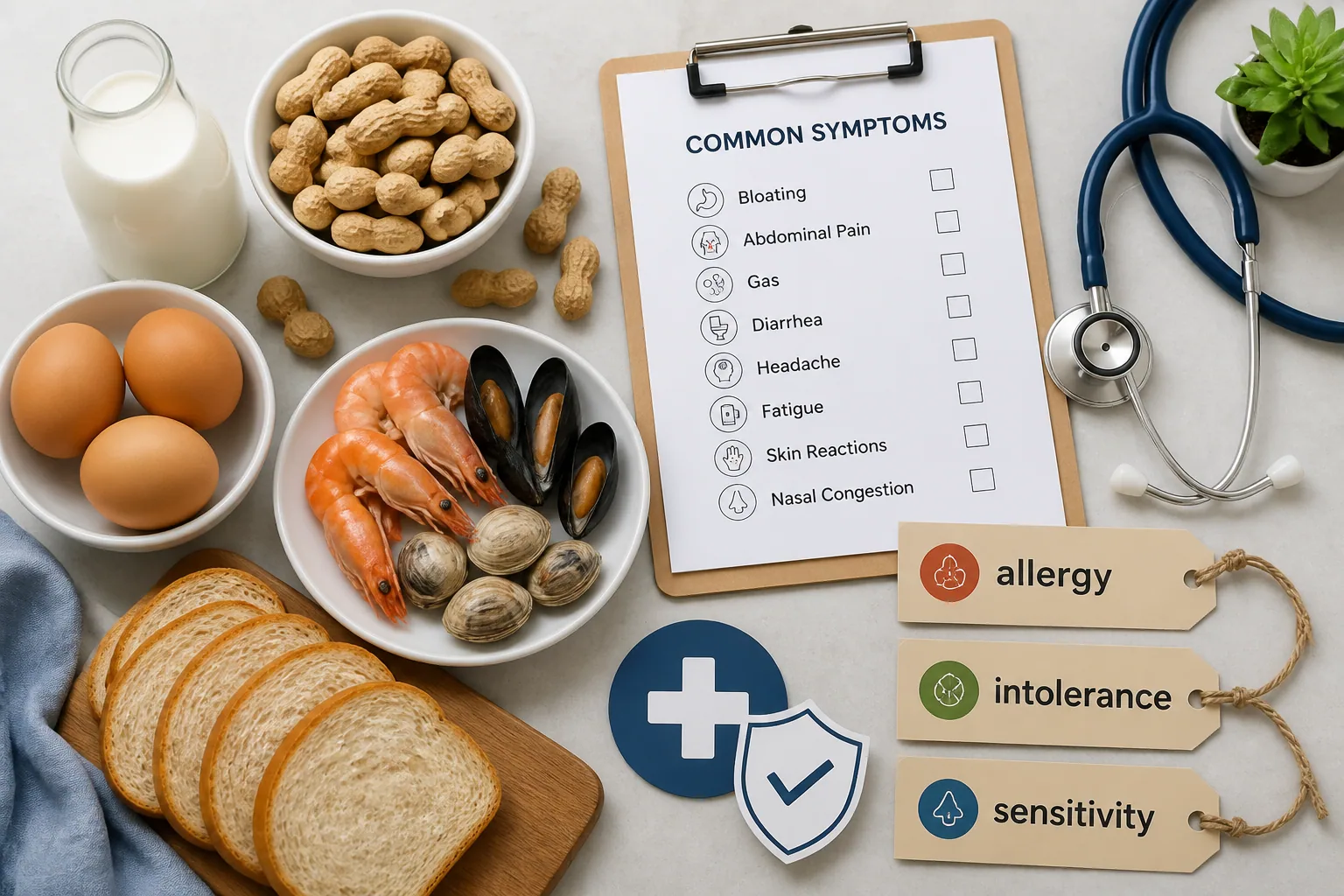
Food Allergy, Intolerance, Sensitivity: The Clear Guide to Understand What’s Really Going On
Food reactions can feel incredibly confusing because the words people use are often mixed together in everyday conversation. Someone says they have a food allergy when they really mean a stomach upset. Another person says they are sensitive to a food after feeling tired or bloated, while a third avoids an ingredient because it once caused hives. The problem is that these reactions do not all work the same way in the body, and they do not carry the same level of risk. Getting the label right matters because the difference between allergy, intolerance, and sensitivity can change everything from what you eat to whether you need emergency treatment.
This confusion is common. Research suggests that about 10.8% of U.S. adults have a convincing food allergy, while nearly 19% believe they do, which shows how often self-reported reactions do not match true allergy. In 2024, the CDC reported that 6.7% of adults and 5.3% of children had a diagnosed food allergy in the U.S. These numbers make one thing clear: many people are dealing with real symptoms, but not every reaction belongs in the same category.
Why So Many People Confuse Allergy, Intolerance, and Sensitivity
The biggest reason for confusion is that all three can make you feel bad after eating. A person with a true allergy may get hives, swelling, or breathing trouble. Someone with lactose intolerance may get gas, cramping, or diarrhea. A person describing food sensitivity may notice bloating, headaches, skin changes, or fatigue, but without a clear, universally agreed biological mechanism. Because the symptoms can overlap, people often assume the cause must be the same too, when it usually is not.
Another reason is timing. Some reactions happen quickly enough that the food seems obviously responsible. Others appear hours later, or even the next day, which makes the trigger harder to spot. That delay often leads people to search for answers through elimination, internet quizzes, or commercial tests, but those approaches can easily create false conclusions if they are not done carefully.
There is also a lot of language drift. In casual use, many people say they are “allergic” to a food when they mean they do not tolerate it well. But medically, allergy implies an immune reaction, while intolerance usually does not. That distinction matters because immune reactions can become severe, while digestive intolerances are often uncomfortable but not dangerous in the same way.
What a Food Allergy Really Is: IgE and Non-IgE Reactions
A food allergy is an adverse immune reaction to a food. It is not just a dislike of a food and not just an upset stomach. Food allergies are commonly classified into IgE-mediated, non-IgE-mediated, and mixed reactions. This framework helps explain why one person can react within minutes and another can react many hours later.
IgE-mediated food allergy is the classic immediate allergy. In this type of reaction, the immune system has formed IgE antibodies against a food protein. When that food is eaten again, the immune system responds rapidly. Symptoms typically appear within minutes to two hours after exposure. They can include hives, itching, swelling of the lips or face, vomiting, wheezing, throat tightness, dizziness, and in severe cases, anaphylaxis.
The foods responsible for most IgE-mediated allergies in the U.S. are often called the Big 9: milk, eggs, fish, crustacean shellfish, tree nuts, peanuts, wheat, soybeans, and sesame. These allergens account for about 90% of IgE-mediated food allergies. Knowing this list matters because these ingredients are common in packaged foods and restaurant meals, and accidental exposure can happen quickly.
Non-IgE-mediated food allergy works differently. In these reactions, the immune response does not rely on IgE and the symptoms tend to be delayed. They may show up hours to days after eating the food, and they often involve the digestive tract more than the airways. A well-known example is food protein-induced enterocolitis syndrome, or FPIES. Mixed reactions can include features of both IgE and non-IgE pathways.
The key point is that food allergy is not one single condition. Some allergic reactions are fast and potentially life-threatening. Others are delayed and more focused on the gut. But both are immune-mediated, which is what separates them from simple digestive intolerance.
What Food Intolerance Means and Why It’s Different
Food intolerance is usually not an immune reaction. Instead, it is a problem with digestion, absorption, or metabolism. The classic example is lactose intolerance. In that case, the body does not produce enough lactase enzyme to break down lactose properly, which can lead to bloating, gas, cramping, and diarrhea after dairy products.
This difference matters because intolerance is typically dose-dependent. A person may be able to eat a small amount of the trigger food without much trouble, but symptoms appear once the amount goes beyond their personal threshold. That is very different from an allergy, where tiny amounts can sometimes trigger a serious reaction.
Intolerances can also be influenced by other parts of the digestive system. Low-FODMAP diets are sometimes used for symptoms such as bloating and abdominal pain, because certain carbohydrates are poorly absorbed and can be fermented by gut bacteria. These approaches can help some people feel better, but they should be used with supervision so they do not become unnecessarily restrictive or nutritionally incomplete.
In one large EHR-based study, 3.6% of people had at least one recorded food allergy or intolerance, with shellfish, fruit and vegetables, dairy, peanut, and tree nuts among the most commonly reported food groups. That record shows how often intolerances and allergies get documented together, even though they are very different processes.
What People Mean by Food Sensitivity and Where the Confusion Starts
Food sensitivity is the messiest label of the three. People use it to describe a wide range of symptoms, from bloating and headaches to rashes, fatigue, brain fog, or joint pain. Sometimes those symptoms have a real, identifiable cause. Other times they do not map neatly to allergy or intolerance at all.
The issue is that food sensitivity is not a single, universally defined medical diagnosis. It is often used as a catch-all term when a person knows a food seems to bother them but the pattern is unclear. That can be a useful starting point for investigation, but it is not specific enough to guide treatment on its own.
This is also where misinformation tends to spread. If a test claims to identify dozens of “sensitivities” without solid clinical evidence, it may lead people to cut out foods that are not truly causing the problem. That can make eating more stressful and may increase the risk of nutrient gaps, especially if the person avoids dairy, wheat, eggs, or multiple staple foods at once.
Symptoms Compared: Skin, Gut, Breathing, and Whole-Body Reactions
The symptom pattern often gives the strongest clue about which category a reaction belongs to. Allergies commonly affect the skin, gut, and respiratory system. Hives, swelling, flushing, vomiting, coughing, wheezing, and throat symptoms are especially important warning signs. In severe cases, multiple body systems can be involved at the same time, which is why anaphylaxis is so dangerous.
Intolerances tend to show up more as digestive discomfort. Bloating, gas, abdominal pain, nausea, and diarrhea are common. While these symptoms can be miserable, they usually do not involve airway swelling or sudden blood pressure collapse.
Sensitivity is harder to categorize because it may involve more vague or less specific symptoms. People may report fatigue, headache, nausea, skin irritation, or a general feeling that something is wrong after eating a certain food. The challenge is that these symptoms can also be caused by sleep, stress, infection, medications, or unrelated health conditions, so timing and reproducibility become especially important.
One useful question is whether the reaction is repeatable. If a specific food reliably produces the same symptoms over and over, that pattern is worth investigating. If the symptoms are inconsistent or occur in many unrelated settings, the food may not be the true cause.
Timing Matters: Immediate Reactions vs Delayed Symptoms
Timing is one of the best clues for understanding what kind of reaction is happening. IgE-mediated allergy usually appears quickly, often within minutes and up to two hours after exposure. That rapid onset is one reason allergies are treated as potentially urgent.
Non-IgE reactions often take longer. They may appear several hours later or even days after the food is eaten. That delay can make the link harder to spot, especially if the person has eaten multiple meals in the meantime. It is one reason clinicians rely heavily on symptom history and structured reintroduction rather than memory alone.
Intolerances can also be delayed or dose-related. You may feel fine after a small amount and unwell after a larger serving. For people trying to identify a trigger, this makes detailed tracking essential. A food diary that records what was eaten, when it was eaten, and exactly when symptoms started can be far more informative than a vague recollection weeks later.
How Dangerous Is It? Understanding Risk Levels and Red Flags
Not all food reactions are equally dangerous. The highest-risk situation is a true food allergy, especially one that has ever caused breathing symptoms, throat tightness, fainting, or widespread hives. Severe reactions can escalate into anaphylaxis, which is a medical emergency.
Among adults with food allergies in one large survey, around 51% had severe reactions, 45% had multiple food allergies, and 38% had visited an emergency department for a food allergy at least once in their lifetime. That is a reminder that food allergy is not always mild or theoretical. For many people, it affects daily safety planning.
Red flags include trouble breathing, swelling of the tongue or throat, repeated vomiting, confusion, fainting, or a sense that symptoms are rapidly getting worse. If a reaction involves the respiratory system or whole-body symptoms, it should be treated urgently. Even if someone has never had a severe reaction before, that can change with the next exposure.
Intolerances are generally not life-threatening, but they can still affect quality of life and nutrition. Chronic symptoms, especially when people keep avoiding more and more foods without guidance, can lead to unnecessary dietary restriction and anxiety around eating. So the right label matters not only for safety but also for long-term wellbeing.
How Doctors Diagnose Food Reactions the Right Way
The first and most important diagnostic tool is a detailed medical history. Doctors look at which food may be involved, how soon symptoms start, what symptoms occur, how severe they are, and whether the reaction happens every time the food is eaten. Reproducibility is especially important because random or one-off symptoms are less likely to reflect a true food reaction.
From there, the workup may include skin prick testing and serum-specific IgE testing if an IgE-mediated allergy is suspected. These tests help show whether the immune system is sensitized to a food, but they do not automatically prove that the food causes symptoms. That is why results must always be interpreted in the context of the history.
Component-resolved diagnostics may be used in some cases to get more detail about which proteins are involved. This can sometimes help refine risk assessment, especially when the diagnosis is not straightforward. However, no test replaces a careful clinical story and expert interpretation.
The gold standard for confirming many food allergies is a physician-supervised oral food challenge. In this test, the person eats measured amounts of the suspected food under medical supervision so the team can observe whether symptoms actually develop. Because it can provoke a reaction, it should never be done casually at home when allergy is a concern.
Elimination Diets, Skin Tests, Blood Tests, and Food Challenges Explained
Elimination diets can be very useful when used the right way. The basic idea is to remove a suspected food or group of foods for a limited period, then reintroduce them one at a time to see whether symptoms return. This method is used in both suspected intolerances and some non-IgE immune reactions.
Common examples include eliminating dairy, soy, egg, or wheat, or using a low-FODMAP approach for digestive symptoms. But elimination should be structured and temporary. If many foods are removed without a plan, it can become hard to meet nutritional needs and even harder to know which food was actually responsible.
Skin prick testing and blood IgE testing are helpful when allergy is suspected, but they can show sensitization without clinical allergy. That means a positive result does not automatically mean a person will react when they eat the food. A negative result may be reassuring in some contexts, but it does not explain every possible food-related symptom either.
Oral food challenges are often the clearest answer when the history and testing do not line up. Because they are supervised, they allow doctors to observe real symptoms while reducing unnecessary fear and guesswork. When appropriate, they can prevent someone from avoiding a food forever based on a mistaken assumption.
Tests to Be Cautious About: What Isn’t Scientifically Proven
One of the biggest traps in food-reaction care is the commercial test that promises to identify hidden “sensitivities” from a single sample. IgG antibody tests are a common example. Expert groups such as the American Academy of Allergy, Asthma & Immunology do not recommend IgG food sensitivity testing because it lacks solid evidence and can lead to needless dietary restriction.
The problem with these tests is that they can make people believe a food is harmful when it may simply be one they eat often. That can create a false sense of certainty, unnecessary fear, and a much more limited diet than needed. In a condition where the difference between allergy, intolerance, and sensitivity already causes confusion, adding unreliable testing only makes things worse.
If a test result does not match your symptoms, or if it pushes you toward avoiding many foods without a proper clinical evaluation, it is worth being cautious. The best approach is still a careful history, targeted testing, and medically supervised challenge when needed.
Why the Correct Diagnosis Matters for Nutrition and Daily Life
Getting the diagnosis right is not just about medical labels. It affects what you buy, what you cook, how you eat out, and how much worry you carry every day. If someone wrongly believes they have a food allergy, they may avoid foods they could safely eat, which can make meals more complicated and restrictive than necessary.
On the other hand, if a true allergy is mistaken for a simple intolerance, the risk can be serious. A person might treat a dangerous reaction as if it were only a stomach issue and delay emergency care. That is why accurate classification is so important.
Nutrition can also suffer when people remove staple foods like dairy, wheat, eggs, soy, or nuts without guidance. Children, in particular, can be vulnerable to inadequate calories, protein, calcium, or other nutrients if diets become too limited. A structured diagnosis helps protect both safety and long-term health.
For many people, clarity also reduces anxiety. Once the real trigger and risk level are known, eating becomes easier to manage. You can focus on the foods that are truly safe instead of treating every meal like a mystery.
Label Reading, Cross-Contamination, and Preventing Accidental Exposure
Once a food allergy is confirmed, reading labels becomes a daily safety skill. In the U.S., food labeling law requires packaged foods to disclose the source of the major allergens. This makes it easier to spot obvious risks like milk, egg, peanut, tree nuts, wheat, soy, fish, shellfish, and sesame.
But label reading does not stop there. Advisory statements such as “may contain” or “processed in a facility that also handles” are voluntary and less strictly regulated. They can indicate possible cross-contact, but they are not always used in the same way by every brand. That means people with severe allergies often need to review labels every time, even on products they have purchased before.
Cross-contact can happen during manufacturing, food preparation, or serving. A safe ingredient list does not always guarantee a safe meal if utensils, surfaces, fryers, or hands have contacted the allergen. That is why people with allergies often need to think beyond the package and into the whole food environment.
This is where practical tools can help. If you shop frequently and need to scan products quickly, an app like Bokha: Food Allergy Scanner App can be useful. It lets you scan product barcodes and check allergens in less than a second, which can save time while comparing options in the supermarket. You can learn more here: https://findthe.app/bokha
When to Seek Urgent Care and How to Advocate for Yourself
Seek urgent care right away if a food reaction causes trouble breathing, throat tightness, swelling of the mouth or tongue, fainting, repeated vomiting, or rapidly worsening symptoms. These can be signs of anaphylaxis or another severe reaction that should not be watched at home.
If you suspect an allergy but have never been formally evaluated, do not assume that past mild symptoms guarantee future safety. Reactions can change over time, and new exposures can behave differently from old ones. A medical evaluation can help determine whether you need emergency medication, avoidance advice, or further testing.
Advocating for yourself also means describing symptoms precisely. Instead of saying “food makes me sick,” try noting the exact food, portion size, timing, symptoms, and whether the reaction happened before. This kind of detail helps clinicians separate allergy from intolerance and sensitivity much more accurately.
If you are unsure whether a reaction is serious, treat it as important and get evaluated. It is always better to clarify the label than to live with uncertainty or guess your way through a potentially dangerous condition.
A Practical Next-Step Plan if You Suspect a Food Reaction
Start by keeping a simple symptom log. Write down the food, the amount, the time you ate it, the time symptoms began, and exactly what happened. This can reveal patterns that memory alone misses.
Next, avoid making broad dietary cuts unless a clinician recommends them. If you remove too many foods at once, you may not know which one caused the symptoms and you may create nutritional problems that were not there before.
If your symptoms suggest allergy, especially if there is hives, swelling, breathing symptoms, or any sign of anaphylaxis, make an appointment with a qualified clinician or allergist. If the issue seems more digestive and delayed, a supervised elimination and reintroduction plan may be more useful than allergy testing alone.
Be skeptical of tests that promise easy answers without clinical context. Reliable diagnosis comes from a combination of history, targeted testing, and, when appropriate, supervised food challenge. That process may take a little more time, but it is far more likely to give you the truth.
The goal is not simply to avoid food. The goal is to understand your body well enough to stay safe, eat confidently, and stop giving every reaction the wrong name.