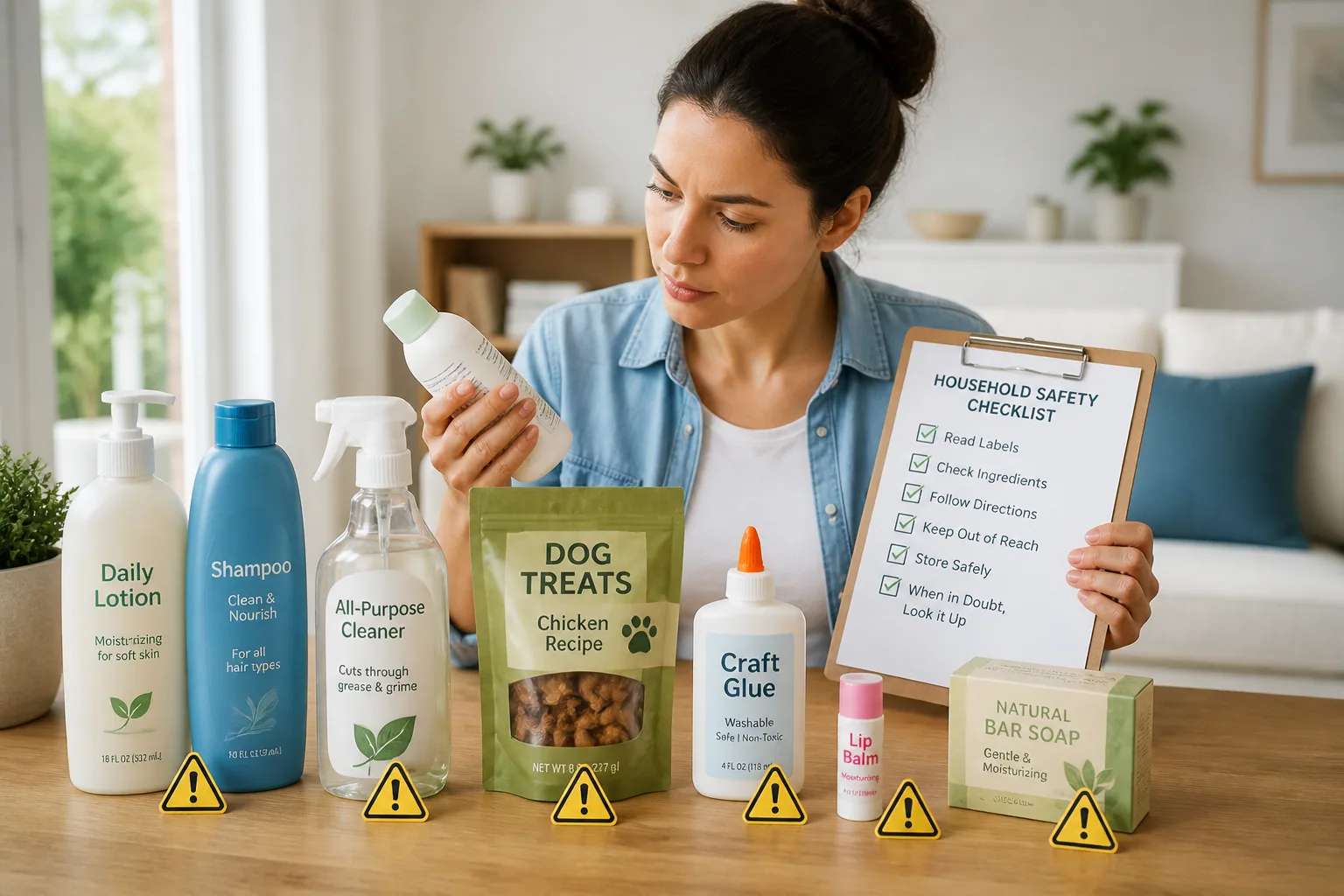
Food Allergen Exposure at Home: Everyday Products Beyond the Kitchen
When people think about food allergies at home, the first thing that usually comes to mind is what is in the fridge, pantry, or on the dinner table. But allergens do not always stay in the kitchen. They can show up in lotions, soaps, cosmetics, pet food, cleaning sprays, craft dough, vitamins, and even some medicines. For many families, that is where a lot of the confusion starts. You may be checking every ingredient label on snacks and still feel like you are missing something because exposure can happen through skin contact, hand-to-mouth transfer, inhalation, or residue on shared surfaces.
The good news is that a safer home does not require perfection. It requires a practical system. Once you know where allergens like milk, egg, soy, wheat, peanuts, tree nuts, sesame, and shellfish can hide outside of food, you can reduce risk without turning your house into a constant source of stress. That means looking at each room, each routine, and each product category with a fresh eye.
Why Food Allergens Can Show Up Outside the Kitchen
Food allergens are made of proteins, or ingredients derived from them, and those proteins are not limited to edible products. Manufacturers sometimes use food-derived ingredients for texture, moisture, scent, film formation, emulsifying, or conditioning. That is why almond oil may appear in a moisturizer, soy derivatives may appear in a supplement, or wheat-derived ingredients may show up in a craft material. These ingredients are not always obvious to the consumer, especially when a product is marketed as gentle, natural, or child-friendly.
This matters because the U.S. Food Allergen Labeling and Consumer Protection Act, or FALCPA, focuses on packaged foods and the eight major food allergens, but it does not cover cosmetics, household products, toys, or medicines in the same way. In other words, a product can be perfectly legal to sell and still be a problem for someone with a food allergy. That gap is one reason why families have to look beyond the food aisle and think more broadly about exposure.
Research also shows that these risks are not theoretical. In one study of skincare products marketed for atopic dermatitis in Poland, 32.1% contained at least one derivative of a major food allergen such as almonds, macadamia nuts, soy, cereals, sesame, or milk. The most common allergens in emollients and wash products were almond, macadamia nut, soy, and cereal derivatives like wheat and barley. The takeaway is simple: products meant to soothe sensitive skin can still include food-derived ingredients that matter to allergic users. Source: https://pmc.ncbi.nlm.nih.gov/articles/PMC10809837/
How Exposure Happens: Skin Contact, Inhalation, and Surface Residue
A food allergy exposure at home does not always mean someone eats the allergen. Skin contact can be enough to trigger irritation or, in some people, a more serious reaction. This is especially important when the product is used repeatedly, like hand cream, shampoo, sunscreen, or soap. Skin barrier damage, eczema, or cracked hands can make absorption and irritation more likely, which is one reason people with atopic skin often need to be extra careful.
Hand-to-mouth transfer is another common route. A child plays with a dough that contains wheat, rubs their eyes, eats a snack, or puts fingers in the mouth without washing well. A parent applies a lotion with nut-derived ingredients, then touches a child’s food, utensils, or face. These small moments can add up, especially in busy households where products are shared across family members.
Inhalation is also worth thinking about. Spray cleaners, powders, and some cosmetic products can create airborne particles. Pet food dust, baking mixes, and craft materials can also become part of the air in a room. Then there is surface residue. Counters, bathroom sinks, laundry baskets, toys, doorknobs, and pet feeding areas can all carry traces from one product to another. This is why a home safety plan works best when it considers routine cleanup, not just ingredient lists.
Personal Care Products to Check: Lotions, Lip Balms, Soaps, and Haircare
Personal care products are one of the most overlooked sources of allergen exposure. Lotions, lip balms, body butters, soaps, shampoos, conditioners, and shaving products often contain oils, extracts, proteins, or derivatives from food sources. Common examples include almond oil, oat extract, soy derivatives, milk proteins, shea butter blends with nut oils, and wheat-based ingredients used for conditioning or texture. Even when the ingredient is not the direct allergen itself, a person with a severe allergy may still want to avoid products with unclear sourcing.
Lip products deserve special attention because they are used near the mouth and can easily transfer to cups, utensils, or skin. Haircare also matters because residues can run onto the face, pillowcase, or hands. For people with food allergies and eczema, these products can be more than just cosmetic. They can become part of daily exposure, especially if multiple family members share a shower, sink, or towel area.
A good habit is to review the ingredient label before first use and again when a product is repurchased. Manufacturers can reformulate without making it obvious. If you are unsure about a botanical or derivative ingredient, it is reasonable to choose a simpler product with fewer ingredients and a more transparent label. The goal is not to fear every moisturizer, but to make your bathroom routine predictable and low-risk.
Cosmetics and Beauty Products That May Contain Food-Derived Ingredients
Cosmetics can be especially tricky because they often use plant oils, waxes, proteins, starches, and fragrance blends. Foundations, primers, mascara, face masks, makeup removers, and lip products may include ingredients derived from nuts, soy, wheat, milk, or other food sources. Some ingredients are there for texture and spreadability, while others are used for marketing appeal. Words like nourishing, natural, botanical, and plant-based do not automatically mean safe for food-allergic users.
One helpful detail from current regulation is that in the EU, certain fragrance allergens above threshold levels must be declared on cosmetic labels under Cosmetics Regulation 1223/2009. That improves transparency for fragrance allergens, but food-derived ingredients do not always receive the same clear disclosure in personal care items. Source: https://kosmetikon.io/knowledge/allergen-management-cosmetics-fragrance-food/
That means two products can look similar on the shelf and pose very different risks. If you wear makeup, share a bathroom, or help a child with face paint or costume makeup, take a moment to review ingredients carefully. Be especially cautious with products that sit near the lips, eyes, or hands, because these are the areas most likely to transfer residue into the mouth or onto food-contact surfaces.
Cleaning Supplies, Detergents, and Scented Products to Watch
Cleaning products can create exposure in less obvious ways. Liquid detergents, laundry boosters, dish soaps, hand soaps, and multipurpose sprays may contain enzymes, fragrance blends, or plant-derived ingredients. Some “gentle” or “natural” formulas also include oils or extracts from food sources. Even if a product is not a direct allergen concern, it can leave residue on shared fabrics, counters, toys, and towels.
Scented products deserve extra caution because fragrance can hide many ingredients under one umbrella term, and cleaning routines often involve spraying or misting. That creates a pathway for inhalation, especially in smaller rooms like bathrooms, laundry rooms, or entryways. If someone in the home has asthma or allergic rhinitis in addition to food allergies, reducing airborne irritants can make the whole environment calmer and easier to manage.
A practical step is to simplify. Use fewer products, choose fragrance-free when possible, and avoid leaving open containers where children or pets can touch them. In shared homes, it also helps to assign specific cleaning cloths, sponges, and towels to allergen-sensitive areas so residue does not get moved from room to room.
Craft Materials, School Supplies, and Kids’ Play Items with Hidden Risks
Children’s products are not always designed with allergen safety in mind. Modeling dough, finger paints, slime kits, play dirt, and craft pastes may use wheat, milk derivatives, soy, or nut-related ingredients. That is important because young children touch their faces constantly and are not great at avoiding hand-to-mouth contact. Even if a product is not eaten, it can still become an exposure source through fingers, tables, play mats, and toys.
Research and product labeling show that this is a real issue. For example, the modeling compound Muddy Puddy Clay Dough lists wheat among its ingredients, which means a child with wheat allergy could be exposed through handling, transfer to surfaces, or accidental ingestion. Source: https://www.halotoys.com/muddy-puddy-play-dirt-clay-dough.html
This is especially important for classrooms, playdates, art corners, and rainy-day activities at home. If your child has a known allergy, ask about ingredients in play materials just as carefully as you would ask about snacks. If an item does not have a clear ingredient list, consider replacing it with a simpler alternative that is explicitly allergy-aware. Keeping a small, safe craft kit at home can reduce last-minute stress when friends come over.
Pet Food, Pet Treats, and Feeding Areas as Overlooked Allergen Sources
Pet food is easy to overlook because it is not meant for people, but it often contains common food allergens such as beef, chicken, dairy ingredients, fish, wheat, soy, or even peanut-derived additives in some specialty treats. The bigger issue at home is not just what is in the bowl. It is the residue around the bowl, the dust from kibble, the crumbs on the floor, and the hands that touch the food and then touch a door handle, couch, or child’s toy.
Feeding areas can become hotspots, especially in kitchens, laundry rooms, mudrooms, or entryways where pets eat and people also walk through. If someone in the home has severe food allergies, it may help to create a dedicated pet-feeding zone that is easy to clean and away from food prep and child play areas. Wash hands after feeding pets, store pet treats securely, and vacuum or wipe around bowls regularly.
A small change in routine can make a big difference here. For example, one person can be responsible for pet feeding, and that person can wash hands immediately afterward before handling human food. That reduces the chance of cross-contact through handles, countertops, and shared household surfaces.
Medications, Supplements, and Oral Care Products Worth Reviewing
Medications and supplements are another place where food-derived ingredients may show up. Some products use soy lecithin or soybean oil as inactive ingredients, and while many people with soy allergy tolerate these forms, reactions have been documented in some individuals, especially those with more sensitive skin or compromised barriers. Source: https://www.drugs.com/inactive/soya-lecithin-266.html
For certain medicinal products, the concern can be more serious. The European Medicines Agency has noted that medicinal products containing soy lecithin may be risky for individuals allergic to soy or peanut, with case reports pointing to severe reactions for some intravenous or inhaled preparations such as propofol. Source: https://www.ema.europa.eu/en/documents/scientific-guideline/public-statement-allergenic-potency-herbal-medicinal-products-containing-soya-or-peanut-protein_en.pdf
This is why it is smart to review not only prescription labels, but also over-the-counter medicines, gummy vitamins, probiotic capsules, chewables, and oral care products like toothpaste and mouthwash. If a product touches the lips or is taken regularly, treat it as part of your allergy plan. When in doubt, ask a pharmacist, prescriber, or allergist about inactive ingredients and whether a safer alternative exists.
Room-by-Room Home Allergen Checklist
A room-by-room approach can make the problem feel more manageable. In the bathroom, check shampoo, conditioner, soap, lotion, makeup, razors, toothpaste, and hand cream. Look for nut oils, milk proteins, soy derivatives, wheat-based ingredients, and strong fragrance blends. Replace shared towels and washcloths often, especially if one person in the home uses products with known allergens.
In the laundry room, review detergent, stain removers, dryer sheets, and scent boosters. Make sure pet bedding is washed separately if pet food residue is a concern. Keep allergen-sensitive products on a higher shelf or in a clearly marked bin so they are not confused with regular household products.
In bedrooms, pay attention to pillowcases, hand lotions kept on nightstands, lip balms, face creams, and humidifier additives. In playrooms, check craft supplies, play dough, sensory bins, and toy cleanup routines. In entryways, look for pet bowls, dog treats, shoes that have walked through food residue, and family bags or lunch containers that may carry crumbs. The point is to spot where residue travels, not just where ingredients start.
Safer Product Swaps and What to Look For on Labels
When you are making swaps, look for simplicity first. Short ingredient lists are usually easier to review than long ones, and fragrance-free products often reduce uncertainty. For skin care, choose formulas that are clearly labeled for sensitive skin and then verify the ingredient list rather than relying on the front of the package. For cleaning, look for basic, unscented formulas with fewer botanical extracts. For children, prefer play products with transparent allergen statements or alternative materials like plain clay or non-food sensory tools.
Because labels can be inconsistent, it helps to know what you are trying to avoid. Terms like whey, casein, lactalbumin, albumin, lecithin, hydrolyzed wheat protein, tocopherols from soy, and nut oils can matter depending on the allergy. If you have more than one allergy in the household, or if your reaction history is severe, it is worth keeping a written list of ingredients and product types that are not acceptable. That list can live on your phone for quick checks while shopping.
This is also where a scanning tool can help streamline decisions. Bokha: Food Allergy Scanner App, available on iOS and Android, lets you scan product barcodes and discover allergens in less than a second, including 13 allergens, traces, and additives. It can be a useful time-saver when you are checking everyday products and want a faster first pass before reading the full label. You can learn more here: https://findthe.app/bokha
How to Talk with Family, Roommates, Caregivers, and Guests
A safer home depends on people, not just products. Start with simple, direct language. For family members or roommates, you might say: “Please do not bring in lotions, soaps, or snacks with my allergens listed in them, and let’s keep pet treats and craft materials in one designated area.” For caregivers, you might say: “Before using any cream, medication, or play material on my child, please check the ingredient list with me first.” For guests, a short request is often enough: “Please wash hands before helping in the kitchen, and avoid using scented products that may contain my allergens.”
The most effective conversations are specific. Instead of saying “be careful,” name the product, place, or behavior that matters. Ask people to wash hands after feeding pets, keep allergy-safe and non-safe products separate, and avoid bringing unfamiliar cosmetics or snacks into shared bathrooms and bedrooms. If there are children in the home, teach the rule in simple terms: ask first, wash hands, and do not share lip products or craft materials.
It also helps to make the system visible. A labeled basket for safe skincare, a separate bin for pet treats, a no-food rule in certain rooms, or a note on the pantry door can reduce repeated discussions. The goal is not to police everyone. It is to remove guesswork so people can help without feeling anxious or defensive.
Building a Lower-Stress, Allergy-Safer Home Routine
A realistic allergy-safe routine is built on habits, not heroics. Check new products before use, keep a running list of approved brands, and review labels again when items are repurchased. Create a few protected zones in the house where food, cosmetics, pet food, and crafts are not mixed. Wash hands after handling questionable products, and clean shared surfaces on a predictable schedule. Those small steps lower the chance of accidental exposure and make the home feel more controlled.
It is also important to remember that hidden exposures do not mean you have failed. They mean your allergy plan needs to include more of the home than the kitchen. Once you widen the frame, the situation often feels more manageable, because you can see the risk points and act on them one at a time. That shift from vague worry to specific action is what reduces anxiety over time.
If you want the biggest payoff for the least effort, focus on the products that touch skin, hands, mouths, or shared surfaces most often. That includes lotions, lip balms, soaps, haircare, detergents, pet food, and children’s play materials. With a few thoughtful swaps, clear household communication, and a habit of checking labels before use, you can make home feel safer without making it feel smaller.