Cross-Contact at Work: Protecting Food Allergy Safety in Shared Spaces
For people with food allergies, the workplace can be more than just a place to eat lunch and grab coffee. Shared kitchens, break rooms, refrigerators, and office celebrations can create real cross-contact risks, even when everyone is trying to be considerate. And because food allergy is common, this is not a niche issue. The CDC reports that 6.7% of U.S. adults have a diagnosed food allergy, and FARE estimates that more than 27 million adults in the United States live with at least one food allergy. That means many workplaces already include people who need safer systems, not just extra caution.
The good news is that safety and inclusion do not have to conflict. With better labeling, cleaner shared spaces, a few dedicated tools, and clear communication, it is possible to lower risk without turning lunch into a stressful event. In many cases, small practical changes make the biggest difference.
Why Shared Workspaces Can Be Risky for People With Food Allergies
Workplaces often assume that if food is not being actively served, it is safe. In reality, shared spaces are full of opportunities for cross-contact. A crumb on a counter, a splash in a microwave, residue on a fridge handle, or a spoon used in the wrong container can transfer allergens to food or surfaces people touch every day.
This matters because accidental reactions are not rare. Research on adult food allergy reactions found that around 11% of accidental reactions happened in the workplace, making work one of the most common places where these incidents occur, second only to home and restaurants. That is a strong reminder that break rooms and kitchenettes need the same kind of attention many people already expect in restaurants and home kitchens.
Part of the challenge is social, not just physical. In an office, people may share appliances, store food side by side, and assume that a quick wipe is enough. But for allergies, “looks clean” is not the same as “allergen-free.”
The Most Common Cross-Contact Hazards in Office Kitchens
The most common office hazards are usually the most ordinary ones. Microwaves, toasters, fridges, coffee stations, communal tables, and sink areas all create repeated touchpoints where allergens can spread.
Toasters are one of the clearest examples. Crumbs from nut-containing breads, pastries, or bagels can remain inside the appliance and transfer to another person’s food. Even if the outside looks clean, the inside can still hold residue. That is why shared toasters are often considered a high-risk hotspot for cross-contact.
Refrigerators create a different kind of problem. Leaking containers, unlabeled leftovers, shared shelves, and crowded doors make it easy for sauces, dressings, or packaged foods to touch each other. A food allergy-safe item stored beside a messy container is not really protected.
Coffee stations are often overlooked. Shared creamers, stirrers, condiment spoons, and sugar containers can all be contaminated when people dip a used utensil into a communal container. Even the counter around a coffee machine can carry residue from hands and cups.
Communal surfaces can also spread allergens long after lunch is over. A visual cleanup may remove spills, but proteins from egg, milk, peanut, tree nuts, or sticky foods can remain on surfaces and still trigger a reaction.
How Microwaves, Toasters, Fridges, and Coffee Stations Spread Allergens
Microwaves are especially tricky because they combine food splatter, touchpoints, and shared use. A person heating a cheesy pasta dish, soup, or sauce can leave residue on the turntable, door handle, keypad, or inside walls. If the next person heats a food allergy-safe meal without cleaning those surfaces, cross-contact can happen fast.
A simple end-of-day cleaning schedule is usually not enough for shared-use appliances. Best practice guidance for office breakrooms emphasizes cleaning between uses when appliances are shared, especially for microwaves, fridges, and coffee equipment. That is because allergen residue does not wait until closing time.
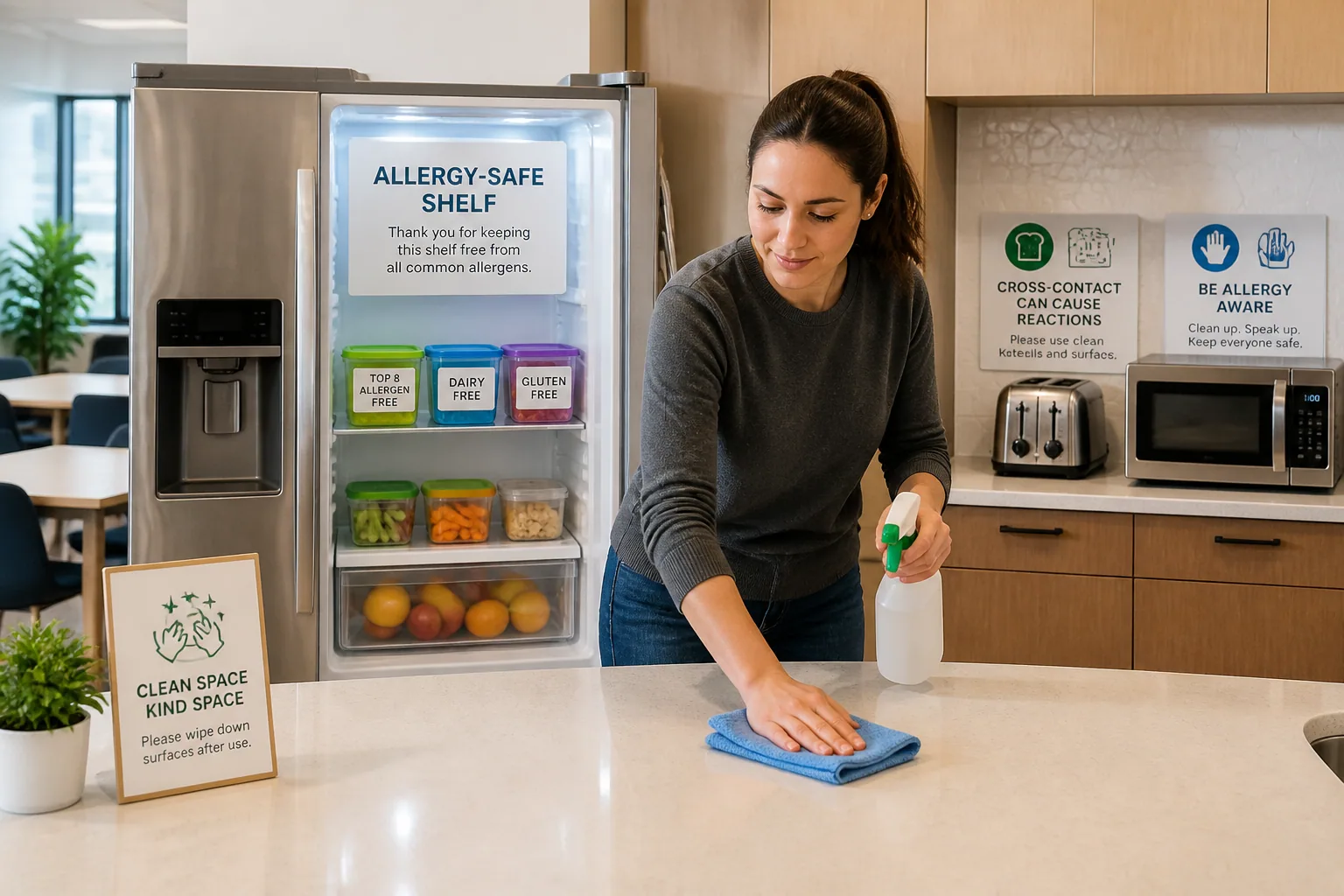
The same idea applies to refrigerator shelves and drawers. A sealed container is safer than an open bowl, but it still helps to have a system that keeps allergy-safe foods separate from mixed-use items. Dedicated zones, clear labels, and regular shelf cleanouts reduce the chance of accidental contact.
Coffee stations are another place where contamination happens quietly. A spoon left in the sugar can turn a communal condiment into a risk. If your workplace has a shared coffee area, the safest approach is to treat every utensil and every container as a possible contact point unless the system is intentionally designed otherwise.
Smart Labeling and Storage Tips for Personal Food
One of the easiest ways to reduce risk is to make personal food obvious, separate, and traceable. Clear labels help coworkers avoid mistakes and help you quickly identify your items in crowded shared spaces.
Use your name, date, and a short allergy-friendly label such as “do not share” or “allergy-safe food.” If possible, store food in sealed, hard-sided containers rather than loose wraps or open bowls. This helps in both fridges and dry storage areas.
In the fridge, choose a consistent spot. A top shelf or a clearly marked bin can help keep your items away from leaks and accidental handling. In a cabinet, a dedicated basket or container can work the same way. The goal is not to isolate yourself, but to reduce confusion.
It also helps to avoid generic labeling like “mine” or initials only, especially in large offices where food can be moved or mistaken. The clearer the system, the less room there is for error.
Cleaning Protocols That Actually Reduce Cross-Contact
Not all cleaning methods remove allergens equally. Research on cleaning allergens shows that sanitizing alone is often not enough. A safer process usually includes hot water at 55 C or above, detergent, physical scrubbing, and then rinsing. Using color-coded cloths or single-use cloths can also reduce transfer from one surface to another.
This matters because surfaces can look perfectly clean and still contain allergen residue. Research from the Allergen Bureau notes that visibly clean stainless steel, ceramic, and plastic surfaces can still carry allergen risk, especially when protein-rich foods such as egg, milk, and nuts are involved, or when residues are sticky and high in fat.
For workplaces, the practical takeaway is simple: wipeing something once with a dry napkin is not a meaningful control measure. If a surface or appliance is going to be shared, it needs a real cleaning routine, not an informal one.
A good breakroom standard is to clean touchpoints after each use when possible, especially microwave handles, buttons, turntables, counter surfaces, fridge handles, and coffee machine controls. If that sounds like a lot, it is because shared food spaces do create a lot of touchpoints. The solution is to build the system around reality instead of hoping for perfect behavior.
Creating Dedicated Allergy-Safe Tools and Prep Zones
Dedicated tools can make a major difference in office kitchens. For example, an allergy-safe set of utensils, a clearly marked cutting board, a clean sponge, or a separate mug can reduce the need to guess whether an item has been contaminated.
If your workplace has the space, setting up an allergy-safe prep zone is even better. This can be a small section of counter, a specific shelf, or a designated drawer reserved for sealed foods and clean equipment. The key is consistency. People are more likely to respect a system they can easily understand.
Color-coding can help. When a spoon, cloth, or container has a distinct color associated with allergy-safe use, it becomes easier for coworkers to avoid mixing it with general kitchen items. This is especially useful in busy offices where many people rotate through the same space.
If your workplace already uses shared kitchen supplies, ask whether one set can be reserved for allergy-safe use only. The cost is usually small, but the impact on safety can be significant.
How to Talk to Coworkers About Food Allergy Needs
Talking about food allergies at work can feel awkward, especially if you do not want to seem demanding or different. But clear communication is often the best way to prevent misunderstandings. The goal is not to police other people’s meals. It is to explain what keeps you safe.
Keep the message simple and specific. For example, you might say: “I have a food allergy, so I need the microwave to be wiped before I use it,” or “Please do not store open food next to mine in the fridge.” Specific requests are easier to follow than general warnings.
It can also help to frame the issue as a shared responsibility. Most coworkers do not want to create a risk, they just may not realize that a crumb, spoon, or splash matters. When people understand the reason, they are often more cooperative.
If you are comfortable, you can give a short explanation at the team level when you start a new job or join a new group. This can prevent repeated one-on-one conversations and set expectations early.
What to Ask From Managers, HR, and Workplace Policies
In the United States, food allergies may count as a disability, which means employers can have obligations under the ADA or Section 504 of the Rehabilitation Act to provide reasonable accommodations. Practical accommodations do not have to be dramatic. Often they are simple changes to routines, storage, or cleaning practices.
If you need support, you can ask for policy-based solutions rather than personal favors. That might include a designated allergy-safe storage area, permission to use a separate microwave container, a cleaning expectation for shared appliances, or rules that discourage unlabeled shared foods in common spaces.
Managers and HR can also help by standardizing communication. For example, they can remind teams to label food, avoid sharing utensils, and clean up after using communal stations. A written policy is much easier to follow than an informal culture of “just be careful.”
It is worth noting that many organizations are willing to accommodate food allergies, but support can still feel time-consuming or resource-heavy. A survey of food service professionals found that over 90% agreed accommodations were possible, while more than half found them time- or resource-intensive. That suggests the best workplace policies are the ones that are clear, simple, and easy to maintain.
Making Potlucks, Team Lunches, and Office Celebrations Safer
Office celebrations can be one of the hardest moments for people with food allergies, because food is often shared casually and quickly. Potlucks, birthday treats, and team lunches may seem harmless, but they are also prime cross-contact settings.
A safer approach starts with information. If food is being brought in, ask for ingredient lists or labeled dishes. If that is not realistic, suggest sealed, individually packaged foods or clearly identified allergy-safe options. This is usually more manageable than trying to guess which dish contains what.
Shared serving utensils should never move from one dish to another without washing. Ideally, high-risk items like desserts with nuts, dairy-heavy sauces, or dishes with common allergens should be kept separate from allergy-safe foods. Even then, people should avoid buffet-style serving if the environment is crowded and rushed.
If you are the one with allergies, you do not need to attend every meal to be a good team member. But if you want to participate, planning ahead helps. You can bring your own safe meal, eat before the event, or ask whether a specific dish will be set aside unopened for you.
The goal is inclusion without pressure. A workplace celebration should not require someone to take a health risk in order to appear sociable.
How Employers Can Support an Allergy-Safe Workplace Culture
Employers play a major role in whether a shared space feels manageable or hazardous. A strong allergy-safe culture starts with the basics: recognition, training, and consistent cleanup standards.
First, employers should understand that this is not an uncommon issue. With nearly 1 in 10 U.S. adults diagnosed with food allergy, a meaningful portion of the workforce may need accommodations or safer food environments. Ignoring that reality can make employees feel excluded, anxious, or forced to take unnecessary risks.
Second, policies should treat breakrooms like shared safety spaces, not casual afterthoughts. That means regular cleaning of appliance interiors and touchpoints, clear storage rules, and guidance about how to handle shared food events. A few posted reminders can change behavior when they are specific and visible.
Third, employers should encourage respectful communication. Workers should be able to raise allergy concerns without worrying about being seen as difficult. When food safety is normalized, people are more likely to disclose needs early and less likely to have a preventable reaction later.
For employees who also shop for their own safe foods, a scanner app like Bokha can be helpful outside the office too. Bokha: Food Allergy Scanner App lets you scan product barcodes and check allergens quickly, which can save time when you are choosing packaged foods for work lunches or snacks. You can learn more here: https://findthe.app/bokha
A Simple Daily Checklist for Safer Eating at Work
A simple routine can reduce a lot of stress. Before using shared space, check whether your food is sealed and clearly labeled. Keep your items in a dedicated shelf, bin, or fridge zone. Use your own utensils whenever possible, especially for snacks or prep.
Before microwaving food, inspect the appliance and wipe the handle, keypad, and inside if needed. Avoid using shared toasters unless they are dedicated to allergy-safe use. At the coffee station, skip communal spoons or containers if they may have been contaminated, and watch for spills or residue on counters and handles.
After eating, clean up your own area right away. Wipe the table, throw away wrappers, and wash anything you used. If you notice recurring problems, document them and bring them to a manager or HR so the workplace can improve the system rather than relying on individual vigilance alone.
Food allergy safety at work should not make anyone feel singled out. With clear expectations, cleaner shared spaces, and better communication, workplaces can become safer for the people who need it most while still staying warm, social, and practical for everyone.