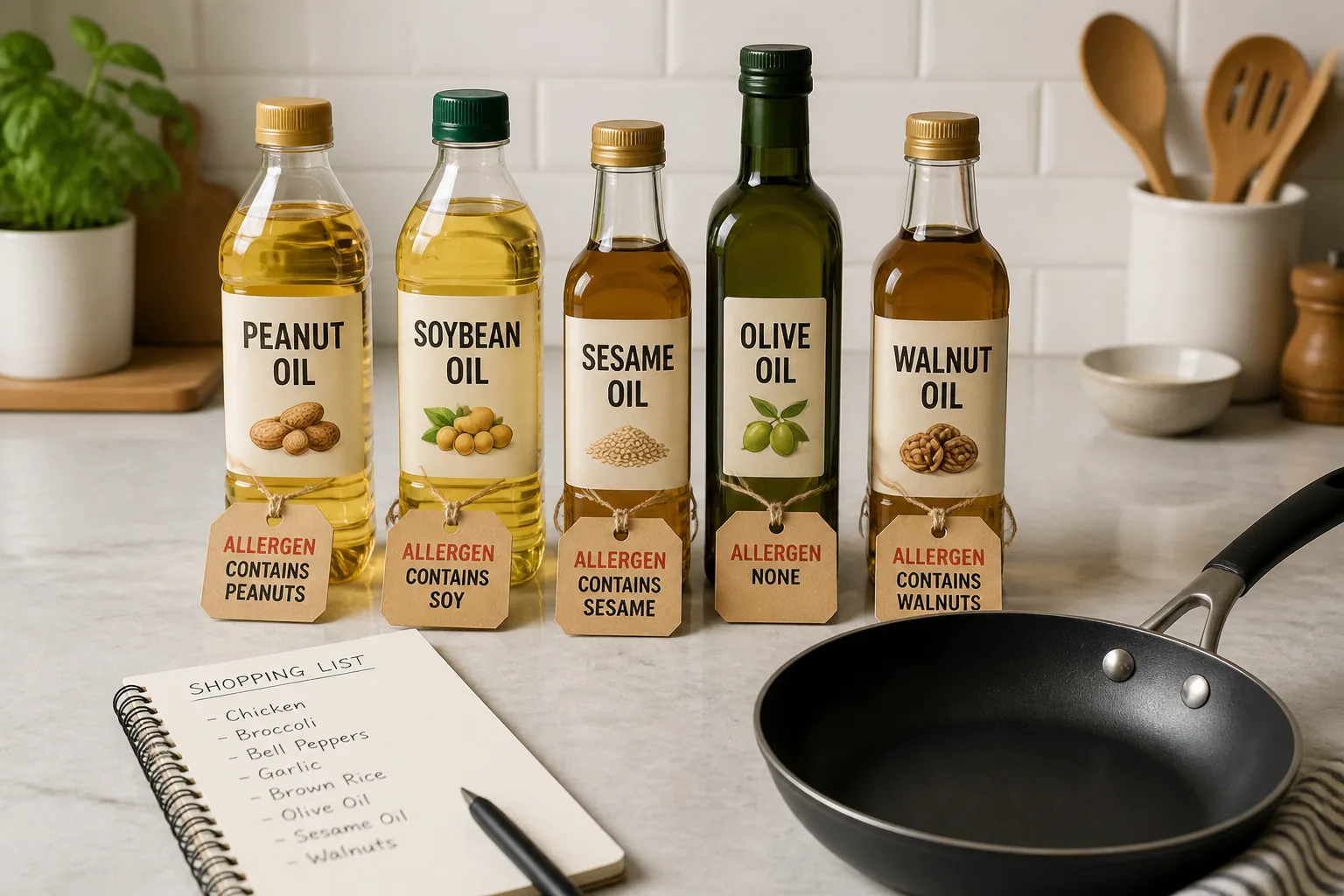
Cooking Oils & Allergens: What You Need to Know Before You Fry
For allergy-aware home cooks, cooking oil can be surprisingly confusing. An oil may look harmless on a label, smell neutral in a pan, and still raise questions if it comes from peanut, soy, sesame, or tree nuts. On the other hand, some highly refined oils are considered low risk because the refining process removes the allergenic proteins that trigger reactions. The problem is that not every oil is processed the same way, and not every product makes that easy to see at a glance.
If you are trying to avoid accidental exposure, the safest approach is to understand both the source of the oil and the method used to make it. That is the difference between a refined oil that is usually very low in protein and a cold-pressed or unrefined oil that may still carry measurable allergen residue. It also matters whether you are cooking at home, buying packaged foods, or eating food from a shared fryer in a restaurant.
Why Cooking Oils Can Be Confusing for People With Allergies
The main reason oils are tricky is simple: the allergen is usually not the fat itself, but the protein found in the source ingredient. Most cooking oils are mostly fat, so people assume they are automatically safe. Sometimes they are. But if the oil has not been refined enough, small amounts of protein can remain behind, which is where the risk starts.
This is why two oils from the same plant can behave very differently. A refined soybean oil may be treated differently from a cold-pressed soybean oil. A highly refined peanut oil may not contain measurable peanut protein in testing, while a less processed peanut oil may still contain enough residue to matter for someone with a severe allergy.
The confusion gets worse because label language is not always intuitive. Terms like virgin, cold-pressed, expeller-pressed, and unrefined sound natural and even premium, but from an allergy perspective they can mean the opposite of what you want. Those methods often preserve more of the original plant material, including proteins.
Do Oils Contain Allergen Proteins? The Science Behind the Risk
Yes, some oils do contain detectable allergenic proteins, especially when they are less processed. Research has shown that cold-pressed oils, also called unrefined or virgin oils, may contain detectable seed storage proteins. In one proteomic analysis, allergenic proteins from pumpkin, sunflower, and sesame were found in cold-pressed oils at levels ranging from about 0.01 to 14.8 ppm depending on the plant and extraction method: https://pmc.ncbi.nlm.nih.gov/articles/PMC7672054/
Another study found that cold-pressed rapeseed, also known as canola, contained the allergens cruciferin and napin, while a highly refined version did not show measurable allergenic proteins in the same tests: https://www.sciencedirect.com/science/article/abs/pii/S0308814614018135
That does not mean every person with an allergy will react to every trace amount, but it does mean the risk is not purely theoretical. If you are highly sensitive, or if you have reacted to tiny amounts in the past, even low levels of residual protein may be enough to cause a problem.
Refined vs Cold-Pressed vs Unrefined: What the Difference Means
The processing method matters because it changes how much protein stays in the oil. Refined oils are usually made through steps designed to remove impurities, odors, color, and most importantly allergenic proteins. Cold-pressed oils are extracted mechanically at relatively low temperatures, often keeping more of the original plant compounds intact. Expeller-pressed oils are also mechanically extracted, but with more friction and heat, so they may remove some proteins better than cold-pressed oils while still not reaching the same level of purification as highly refined oil.
In practical terms, cold-pressed and unrefined oils are more likely to contain protein residues than refined oils. Expeller-pressed oils sit in the middle. They may be cleaner than cold-pressed oils, but they are not automatically safe for someone avoiding a specific allergen.
This is why the words on the bottle matter so much. If the label says cold-pressed, virgin, extra virgin, or unrefined, you should treat it as a higher-risk oil unless you have clear allergy guidance that says otherwise. If it says highly refined, the risk is usually lower, but you still want to check the source and the product context.
When Highly Refined Oils May Be Lower Risk
Highly refined oils are usually considered lower risk because the refining process removes the proteins that cause allergic reactions. Health Canada states that highly refined oils derived from major food allergens such as peanuts, soy, fish, shellfish, tree nuts, and sesame are generally exempt from allergen labeling because refining removes the allergenic proteins: https://www.canada.ca/en/health-canada/services/food-nutrition/food-labelling/allergen-labelling/position-highly-refined-oils-derived-food-allergen-sources.html
U.S. regulatory guidance also says that highly refined oils from allergen sources, and ingredients derived from those oils, are exempt from mandatory allergen labeling if the refining process removes the allergenic protein and related regulatory conditions are met: https://www.law.cornell.edu/cfr/text/27/7.82
That said, lower risk does not mean zero risk in every real-world situation. For people with severe allergies, especially those with a history of anaphylaxis, it is still wise to confirm the exact oil and how it is used. A refined oil may be low in protein, but contamination, mislabeling, or shared equipment can still create exposure concerns.
A good example is canola. Cold-pressed canola oil has been shown to contain allergenic proteins, while highly refined canola oil may not show measurable allergens in testing. The same logic often applies to other source oils as well: the more refined the oil, the lower the likely protein content.
Oils That Commonly Raise Allergy Concerns: Peanut, Soy, Sesame, and Tree Nuts
Some oils deserve extra attention because they come from common allergen sources. Peanut oil is the most familiar example, but soy, sesame, and tree-nut oils can matter too. These are the oils that allergy-aware shoppers often scrutinize first, especially when a label uses unfamiliar processing language.
Cold-pressed peanut oil is a higher concern than highly refined peanut oil because the refining step is what usually removes the allergenic protein. The same idea applies to soy and sesame. Sesame is especially important now because it became the ninth major food allergen in the United States under the FASTER Act, and packaged foods and dietary supplements must clearly label sesame when present: https://www.fda.gov/food/nutrition-food-labeling-and-critical-foods/food-allergies
Tree-nut oils can also be confusing because different nuts behave differently and some products are marketed as gourmet or artisanal. If an oil is sold as a specialty ingredient, cold-pressed, or unrefined, it is wise to assume more residue may remain unless the manufacturer provides clear testing or refinement information.
How Allergen Labeling Rules Apply to Cooking Oils
Labeling rules exist to help, but they are not perfect. In many cases, highly refined oils are exempt from allergen labeling because the final oil is expected to contain no meaningful allergenic protein. But that exemption depends on the oil being refined enough to remove the protein, and it does not eliminate the need to think critically about the product.
For sesame, labeling has become more straightforward in the United States since it is now a major allergen. Still, the broader lesson remains the same: read the full ingredient list, look for source oils, and pay attention to processing terms. A label can tell you that an ingredient is present, but not always how much protein remains after processing.
If the ingredient list simply says vegetable oil, you may need to dig deeper. Vegetable oil can be made from soy, canola, corn, sunflower, or other sources. If the source is not stated, the safest move is to contact the manufacturer, especially if you are avoiding one of the common allergen oils.
Hidden Oil Risks in Packaged Foods, Sauces, and Snacks
Cooking oils are not only something you pour from a bottle. They also show up inside crackers, chips, salad dressings, marinades, sauces, baked goods, frozen meals, and snack mixes. This is where hidden exposure often happens because oil may be listed as a minor ingredient and overlooked during a quick shopping trip.
Packaged foods can be especially tricky when a recipe changes seasonally or a manufacturer switches suppliers. A snack that used to be made with sunflower oil may later use soy or peanut-derived ingredients. That is why ingredient checking has to be a habit, not a one-time task.
A quick label scan can help, but a product scanner can make the process much faster. If you want a simple way to check ingredients while shopping, Bokha: Food Allergy Scanner App can help you scan barcodes and identify allergens quickly: https://findthe.app/bokha
What to Ask About Frying Oils at Restaurants
Restaurant frying is one of the biggest practical risks because the issue is not only the oil itself. Shared fryers, spatulas, baskets, and prep surfaces can all carry allergenic proteins across foods. Even if the fryer oil is highly refined, cross-contact can still happen during cooking and plating.
When dining out, ask clear and specific questions. You want to know what oil is used, whether that oil is highly refined or specialty pressed, and whether the fryer is shared with breaded foods, shrimp, onion rings, or other common allergen items. If staff cannot answer confidently, that is useful information in itself.
It is also smart to ask about prep routines. Are fry baskets cleaned between uses? Are separate utensils used for allergen-free items? Is there a dedicated fryer for fries or other safe items? The FDA emphasizes cleaning and separation protocols as critical in allergen control, and that advice matters just as much in the kitchen as it does in manufacturing: https://www.fda.gov/food/nutrition-food-labeling-and-critical-foods/food-allergies
How to Read Processing Terms on Labels and Manufacturer Websites
The label terms you see on oils are often the most important clue you have. Refined, bleached, deodorized, or highly refined usually points to lower protein content. Cold-pressed, expeller-pressed, virgin, and unrefined usually point to more residual material and more uncertainty for someone with allergies.
Manufacturer websites can help fill in the gaps. Look for statements about extraction method, filtration, bleaching, deodorization, and allergen controls. If the company says the oil is refined but does not explain the source or process, you can contact them directly and ask whether the oil contains detectable allergenic protein or whether it is produced on shared equipment.
It helps to remember that marketing language is not the same as allergy safety language. A premium oil can be wonderful for flavor and still be a poor choice for someone avoiding a specific allergen.
Practical Tips to Reduce Exposure at Home
At home, the safest strategy is to make oil choices deliberately. Keep a short list of oils you trust, and avoid improvising with unfamiliar specialty oils when cooking for someone with an allergy. If you are unsure, choose a highly refined oil from a non-allergen source and verify the brand whenever possible.
Store oils separately from allergen ingredients, and avoid using the same spoon, brush, or pouring container for multiple products. Cross-contact can happen in a home kitchen too, especially when people drizzle oil directly from a bottle into dishes that also contain allergens.
When cooking for guests, it is wise to ask ahead rather than guess. Someone may be fine with canola oil but not with sesame oil, or may avoid all nut-derived oils entirely. Clear communication prevents a lot of accidental exposures.
When to Talk to an Allergist Before Trying a New Oil
If you have a diagnosed food allergy, especially a severe one, it is a good idea to speak with an allergist before introducing a new oil that comes from a known allergen source. This matters most if the oil is cold-pressed, expeller-pressed, virgin, or otherwise minimally processed.
An allergist can help you interpret your history, assess the likelihood of reaction, and decide whether an oral challenge or more conservative avoidance makes sense. That guidance is especially useful if you are choosing between a refined oil and a specialty pressed oil, or if you have reacted to trace exposures in the past.
People with multiple food allergies may also benefit from a written plan. If you often shop for yourself or your family, a plan can help you decide which source oils are acceptable, which ones need manufacturer confirmation, and which ones should be avoided outright.
A Simple Safety Checklist Before You Fry
Before cooking, ask yourself four simple questions. First, what is the source of the oil? Second, is it highly refined or minimally processed? Third, could there be cross-contact from shared equipment, especially in restaurants? Fourth, do I need to verify this product with the manufacturer or my allergist before using it?
If you want a practical rule of thumb, this is a good place to start: highly refined oils are generally lower risk, while cold-pressed, unrefined, virgin, and specialty pressed oils deserve more caution. Peanut, soy, sesame, and tree-nut oils deserve the most attention because they come from common allergens. And when in doubt, verify rather than assume.
A little extra checking at the start can prevent a lot of stress later. Once you know how to read the oil type, the processing method, and the setting where the food was prepared, you can make smarter choices at home and in restaurants without giving up the foods you enjoy.