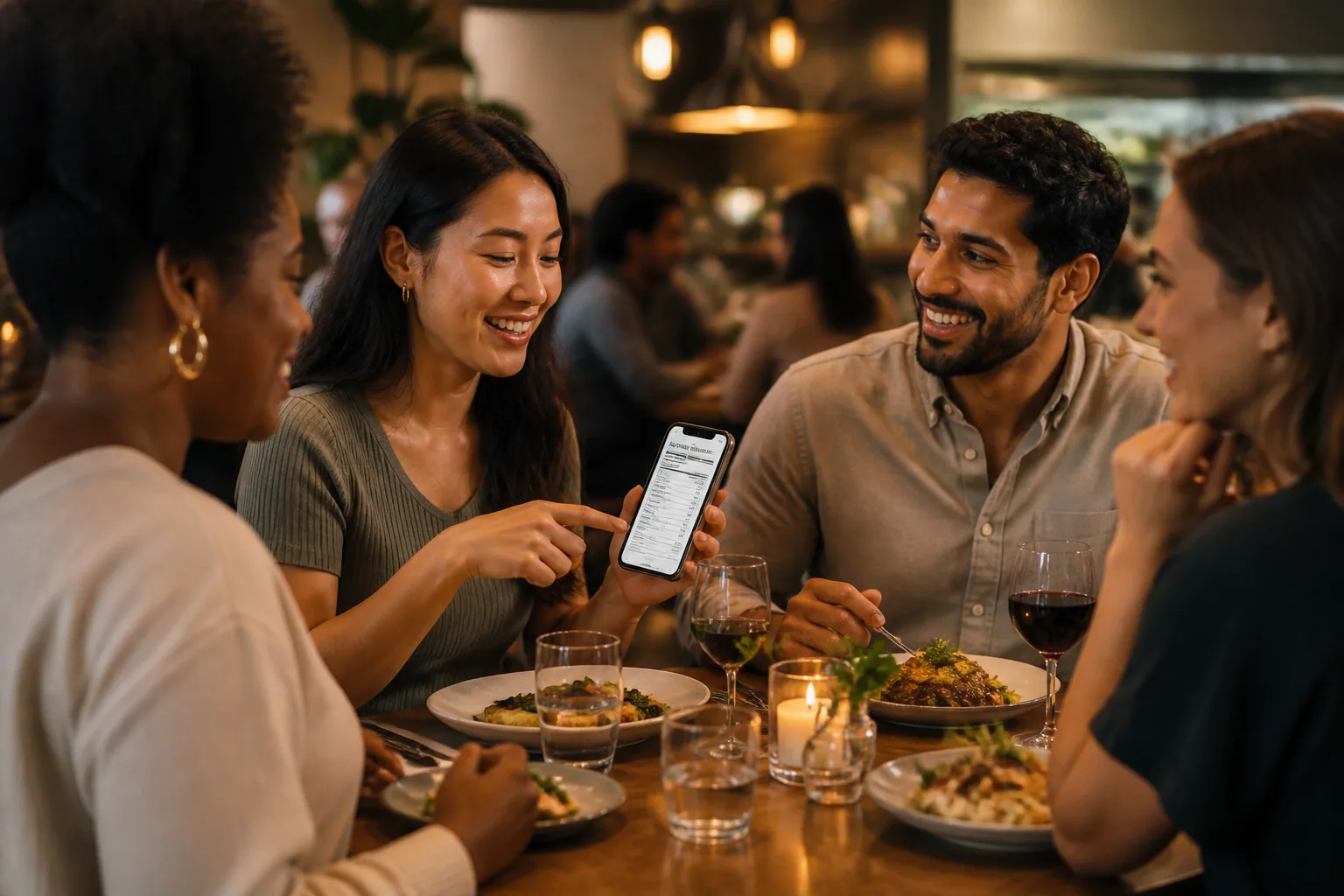
Alone Together: How Eating with Others Shapes Life With Food Allergies
Living with food allergies or intolerances is not only about reading labels and avoiding trigger ingredients. A lot of the hardest moments happen at the table, when other people are involved. Eating out with friends, joining a family dinner, or showing up to a potluck can feel simple from the outside, but for someone managing food allergy risks, these moments often carry a lot of pressure. You are not just deciding what to eat. You are also deciding whether to speak up, how much to explain, whether you will be understood, and how much risk you are willing to take in a social setting.
This is why social eating can feel harder than the allergy itself. Research from the FARE Patient Registry shows that 54% of patients with food allergies report anxiety related to eating trigger foods, and 32% report panic. The same research also points to social isolation and fear around meals as common emotional burdens of food allergy life. In other words, the stress is not imaginary. It is part of the condition for many people, and it deserves practical support, not just reassurance.
The good news is that safer social dining is possible. With clear communication, a few boundary-setting habits, and the right tools, meals with others can become less stressful and more predictable. That can mean asking better questions at restaurants, planning ahead for shared meals, reducing cross-contact in group settings, and using helpers like Bokha: Food Allergy Scanner App to check packaged foods quickly before you eat. Small steps add up to more confidence.
Why Social Eating Can Feel Harder Than the Allergy Itself
For many people, the food allergy is not the only challenge. The social meaning attached to food can be just as difficult. Food is how people celebrate, connect, comfort each other, and show care. So when you need to say no, ask for a change, or slow down a meal to check ingredients, it can feel like you are disrupting the flow of the moment. That can create embarrassment, guilt, or the fear of being seen as difficult.
This pressure is especially strong because the risk can feel invisible to others. A person without allergies may see a dish as harmless, while the person with allergies sees possible cross-contact, hidden ingredients, or an uncertain kitchen process. That gap in perspective is one reason social dining can be emotionally loaded. You may know the risk is real, but you still have to explain it in a way other people understand.
There is also a practical reason social dining feels intense. Dining out is the second most common setting for allergic reactions after the home, accounting for about 21% of reactions in one study of 2,822 U.S. food-allergic individuals. Of those dining-out reactions, 28.0% required one dose of epinephrine and 6.2% required two doses. That does not mean every restaurant meal is dangerous, but it does show why so many people feel hyperaware when eating away from home.
Speaking Up at Restaurants Without Feeling Awkward
Speaking up at restaurants is one of the most useful skills a person with food allergies can build. It can also be one of the most uncomfortable. Many people worry they are being annoying, difficult, or too demanding. But in reality, clear communication is part of basic safety, not a social flaw. If you need to protect your health, you are allowed to ask questions and request changes.
It helps to keep your language simple and direct. Instead of explaining your whole medical history, say exactly what matters. Name the allergen, mention cross-contact if relevant, and ask how the kitchen handles it. For example: “I have a severe peanut allergy. Can you tell me whether this dish contains peanut ingredients or is prepared with shared utensils?” That kind of wording is clear without being confrontational.
Still, it is important to remember that informing staff is not a guarantee of safety. In a U.S. study of restaurant reactions, more than half, 53.9%, happened even though the customer had already told restaurant staff about the allergy. That is a serious reminder that communication matters, but so does verifying details, choosing restaurants carefully, and knowing when to walk away if the answers do not feel solid.
Reading Menus, Asking Questions, and Watching for Red Flags
Before ordering, scan the menu for obvious allergens, but also for the less visible ones. Sauces, dressings, marinades, spice blends, breads, desserts, and fried foods are all common places where allergens can hide. If a dish sounds safe but the description is vague, ask what is actually in it and how it is prepared. Even apparently simple meals can involve unexpected ingredients.
It can also help to notice how the restaurant responds to your questions. A confident and safe response usually sounds specific. Staff should be able to tell you what ingredients are used, whether separate utensils or cookware are available, and whether the kitchen can reduce cross-contact. On the other hand, vague answers, rushed dismissals, or comments like “it should be fine” are warning signs. When in doubt, it is better to choose the safer option, even if it feels inconvenient in the moment.
There is a real reason to be careful. A CDC/EHS-Net study found that only about 44.4% of U.S. restaurant managers reported receiving food allergy training, and the rates were lower among food workers and servers. The same study found that 78% of surveyed restaurants did not have dedicated utensils or equipment for preparing allergen-free meals, and only 7.6% had special kitchen areas for allergen-free food. In another observational study across six U.S. sites, over 60% of establishments engaged in at least one action that could lead to cross-contamination. Those numbers do not mean restaurants are unsafe by default, but they do mean your questions are necessary.
How to Request Accommodations at Family Dinners and Potlucks
Family meals and potlucks can be emotionally tricky because the people involved often know you best, which can make you feel more exposed. You may worry about sounding controlling, ungrateful, or paranoid. At the same time, these are the settings where people are most likely to assume they already understand your needs. That is why it helps to be specific early, ideally before the event begins.
A useful approach is to separate the request from the emotion. You can say what you need without overexplaining. For example: “I’d love to come, but I need to know what ingredients are in the dishes so I can decide what is safe.” Or: “Could we keep one serving spoon for the allergen-free dish and place it on a separate part of the table?” The goal is not to make the meal revolve around you. The goal is to make participation possible.
If you are the host, or if you are speaking to a host you trust, it may help to offer a simple plan. Bring one safe dish you can eat, label it clearly, and ask that it stay separate from shared utensils. If you are the guest, consider contacting the organizer before the event so there is time to sort out ingredients without everyone rushing at the table. The more planning happens before people are hungry, the easier it is for everyone.
Avoiding Cross-Contact in Shared Kitchens, Serving Dishes, and Cookware
Cross-contact is one of the biggest risks in shared food settings because it often happens quietly. A crumb, a shared knife, a scoop dipped into multiple dishes, or a frying pan used for several foods can be enough to create a problem. That is why “it doesn’t have the allergen in it” is not always enough. The way food is handled matters just as much as the ingredient list.
In shared kitchens, it helps to think in layers. First, use clearly separate utensils and serving tools when possible. Second, keep allergen-free foods on a clean surface, away from shared breads, sauces, and toppings. Third, avoid double-dipping, reusing tongs, or placing safe food next to food that has been handled by multiple people. Fourth, if a dish is especially risky, consider not sharing it at all unless you can verify how it was made.
Cookware matters too. Shared pans, grills, strainers, toaster slots, and oil can all carry risk. Even a carefully made dish can become unsafe if it is cooked on a surface that was not cleaned well enough. This is where being the person who politely asks “Was this made in a separate pan?” can be a very practical act of self-protection. It may feel awkward, but awkward is better than unsafe.
Managing Anxiety, Guilt, and the Fear of Being a Burden
Food allergy management can become emotionally exhausting because every meal may require a decision. Should you ask again? Should you trust the answer? Should you skip the dessert? Should you explain yourself to avoid awkwardness? Over time, these repeated choices can create anxiety that goes beyond the food itself.
It is important to name the guilt many people feel. Some worry they are ruining the atmosphere, making things harder for the host, or being overly sensitive. But safety needs are not selfish needs. They are health needs. If you were asking someone to turn down the music because it hurts your ears, or to dim the lights because of a migraine, most people would understand that you are not being dramatic. Food allergy care deserves the same respect.
One helpful mindset is to separate inconvenience from burden. A request may be inconvenient, but that does not make it unreasonable. A host may need to adjust, but that is part of hosting well. And your own discomfort does not mean you are asking too much. Often, the hardest part is not the request itself, but the internal story that says you should not need to ask.
How to Respond to Judgment, Minimizing, or Allergy Myths
Not everyone will take food allergies seriously. Some people will minimize the risk, tell you that a little exposure is harmless, or suggest that you are being overly cautious. Others may joke about being picky or say they “wish they had an excuse” to avoid certain foods. Those comments can sting, especially when you are already trying to stay calm and safe.
It often helps to keep your response short and steady. You do not need to win the argument. You only need to protect yourself. A phrase like “This is a medical issue, so I need to take it seriously” is usually enough. If someone keeps pushing, repeating your boundary can be more effective than trying to educate them in the moment.
Education matters, but timing matters too. If you feel safe and have the energy, you can explain that food allergies can cause severe reactions and that cross-contact is a real risk. But if the person is determined to dismiss you, the most useful response may simply be disengaging. You do not have to stay in a conversation that makes your health feel negotiable.
What Hosts Can Do to Make Guests With Allergies Feel Safe and Welcome
If you host meals, you have real power to make the experience safer and more relaxed. The best hosting is not about creating a perfect allergy-free environment. It is about reducing uncertainty and showing that a guest’s needs matter. That starts with asking what is needed, instead of guessing.
A thoughtful host can send ingredient lists in advance, label dishes clearly, keep utensils separate, and make sure one area of the table stays free of shared crumbs and drips. It also helps to avoid last-minute surprises, like adding nuts to a dish after you already told a guest it would be safe. When possible, choose recipes with fewer hidden ingredients and simpler preparation steps. Simplicity often lowers risk.
Hosts should also be careful with the language they use. Saying “Don’t worry, I’m sure it’s fine” may sound reassuring, but it can feel dismissive to someone managing a real medical concern. A better response is, “Thank you for telling me. What would help you feel comfortable here?” That small shift can make a guest feel respected instead of difficult.
Using Food-Scanning Apps Like Bokha in Real Social Situations
One of the hardest parts of social dining is that decisions often happen quickly. You are standing in a kitchen, looking at a packaged snack, a dessert tray, or a supermarket ingredient list, and you need to know fast whether it is worth the risk. That is where a tool like Bokha: Food Allergy Scanner App can be useful. It lets you scan a product barcode and discover allergens in less than a second, which can save time and reduce guesswork in everyday situations. You can learn more at https://findthe.app/bokha.
Bokha detects 13 allergens, including gluten, peanut, egg, soy, fish, shellfish, tree nuts, wheat, mustard, celery, mint, sulphites, and lactose, plus traces and additives such as colorants and preservatives. In social settings, that kind of quick check can be especially helpful when someone offers a packaged dish, when you are choosing a snack to bring to a gathering, or when you want a second layer of confidence before eating something you did not prepare yourself.
Of course, no app replaces careful judgment, especially around shared kitchens and restaurant food. But tools like Bokha can reduce friction, shorten stressful decision-making, and help you ask better questions from a more informed place. Sometimes the difference between panic and confidence is simply having the information fast enough to act on it.
Building Everyday Routines for Safer, More Confident Social Dining
The goal is not to eliminate every risk or make every meal feel effortless. The goal is to build routines that make social eating more manageable over time. That can start with a few reliable habits: review the menu before you arrive, notify the host in advance, bring a safe backup food, carry your emergency medication if prescribed, and trust your instincts when something feels unclear.
It also helps to practice your script. The more you rehearse what you will say, the easier it becomes to say it calmly in the moment. Many people find it helpful to prepare a short version for restaurants, a slightly warmer version for family, and a firmer version for situations where they do not feel listened to. Having those words ready can make you feel less trapped.
Finally, remember that your confidence can grow without your fear disappearing completely. For people living with food allergies, some amount of caution will always be part of the picture. But caution does not have to turn into isolation. With clear communication, better host awareness, careful attention to cross-contact, and practical tools for checking food, eating with others can become less of a performance and more of what it should be: a shared moment that still keeps your safety in view.